Current Location:
How does high temperature affect starter motor performance?
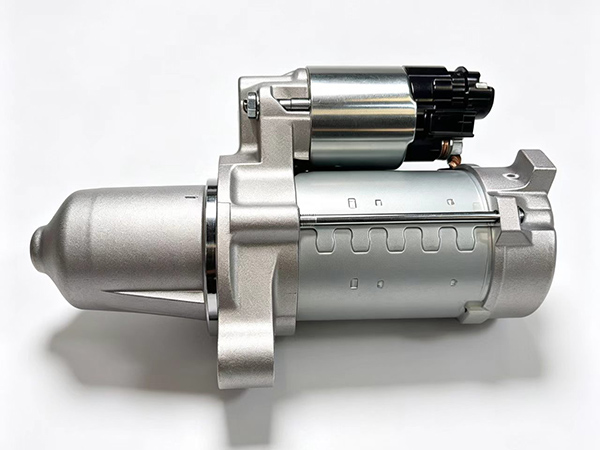
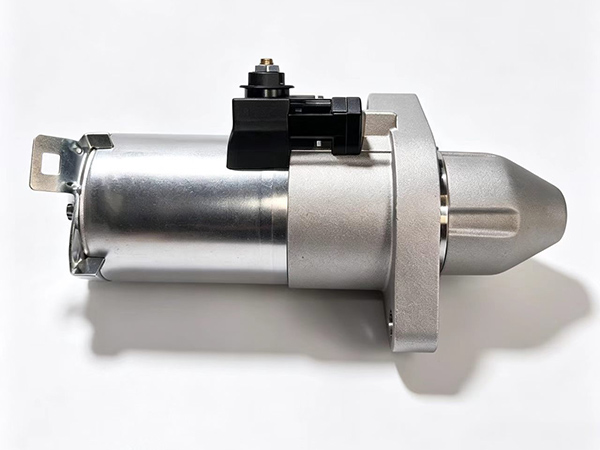
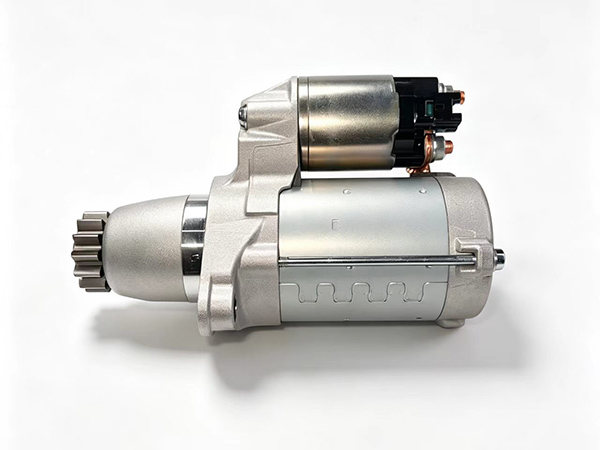
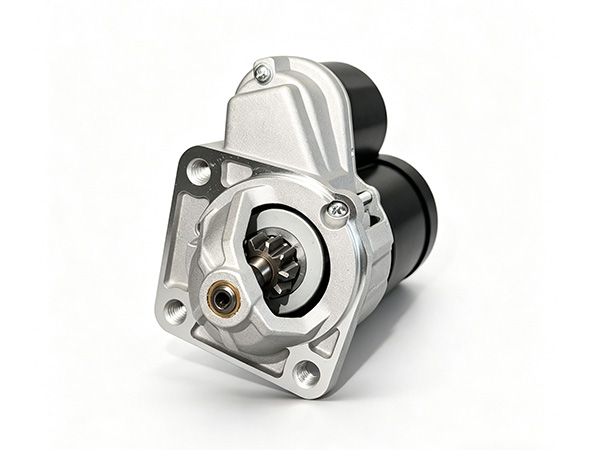
2026-09-02High temperature from engine exhaust,manifold heat and under‑hood heat soak degrades starter‑motor performance and accelerates component failure.Heat harms windings,solenoid,brushes,grease and rubber seals.Repeated high‑temperature exposure reduces peak cranking torque and shortens overall service life,especially for heavy‑duty machinery with limited heat shielding.
Armature and field coil windings are very sensitive to heat.Copper winding resistance rises as temperature increases.Higher resistance reduces output torque while generating more internal heat.Under extreme heat,magnet wire insulation softens,blisters and breaks down.This creates turn‑to‑turn short circuits inside the motor.Gradually,cranking speed drops,and in severe cases the starter suffers complete winding burnout.Heat soak after engine shutdown is particularly destructive:residual manifold heat cooks the stationary starter while there is no airflow for cooling.
Solenoid performance deteriorates under high heat.The pull‑in and hold‑in coil resistance increases,reducing solenoid pulling force.Solenoid may click weakly or fail to fully engage the pinion.High heat also accelerates oxidation and pitting of solenoid internal contact points.Bad contacts produce voltage drop,less power to the motor,slow cranking and intermittent starting faults.Solenoid rubber seals degrade under sustained heat,allowing dust,oil and moisture ingress.
Internal mechanical components suffer heat‑driven degradation.Grease inside gear‑reduction gears and overrunning‑clutch melts or carbonizes.Lubrication fails,leading to dry friction,metal‑to‑metal wear,noise and clutch slippage.High‑temperature expansion changes clearances in armature bushings.Increased friction slows armature rotation and increases amp draw.Carbon brushes wear faster in hot operating conditions;commutator surface also discolors and develops uneven wear.
Heat‑related secondary electrical issues occur at terminals.High under‑bonnet temperature speeds up corrosion and oxidation on solenoid studs,cable lugs and ground surfaces.Connection resistance goes up,creating additional voltage drop.Even good‑looking connections can become high‑resistance joints under sustained heat.
Common real‑world scenarios that worsen heat exposure:missing or damaged starter heat shields;starter mounted very close to hot exhaust manifolds;frequent short‑cycle hot restarts right after engine shutdown;exhaust leaks blowing directly onto starter housing.
Practical mitigation tips.Retain or reinstall OEM heat shields where fitted.Maintain good exhaust system condition to eliminate exhaust leaks.Route battery cables away from hot manifold surfaces.Avoid repeated immediate hot restarts;allow brief cool‑down period.Keep terminals clean and torqued correctly to minimize heat‑producing resistance.If heat damage is advanced,a new starter will quickly fail again unless root heat sources are addressed.
High temperature does not produce instant failure in most cases.It causes gradual performance loss:slower cranking,intermittent solenoid engagement,higher current draw and shortened service life.
GB/T 7714‑2015
FISHER L,ELLIS G.High‑temperature degradation mechanisms for automotive and heavy‑duty starter‑motor assemblies[J].Journal of Rotating Electrical Component Thermal Analysis,2024,20(3):253‑267.
APA‑7th
Fisher,L.,&Ellis,G.(2024).High‑temperature degradation mechanisms for automotive and heavy‑duty starter‑motor assemblies.*Journal of Rotating Electrical Component Thermal Analysis*,*20*(3),253‑267.
MLA‑9th
Fisher,Luke,and Gary Ellis.“High‑Temperature Degradation Mechanisms for Automotive and Heavy‑Duty Starter‑Motor Assemblies.”*Journal of Rotating Electrical Component Thermal Analysis*,vol.20,no.3,2024,pp.253‑267.