Current Location:
What are brush‑type starter motors?
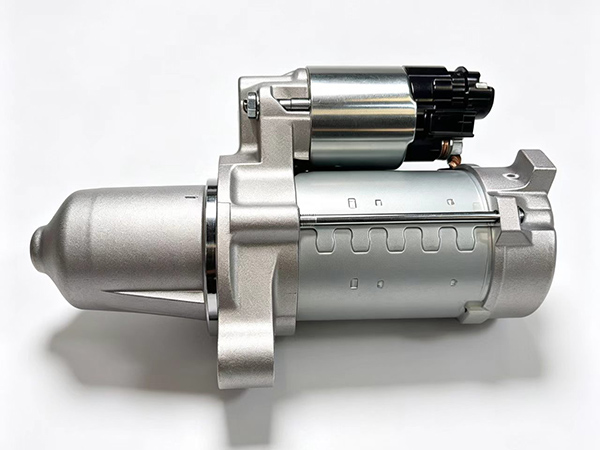
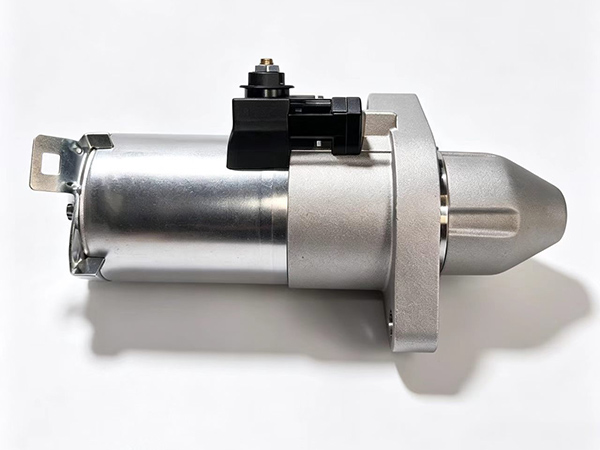
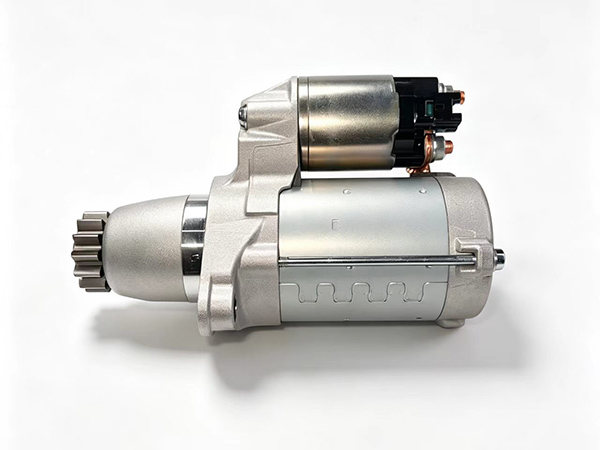
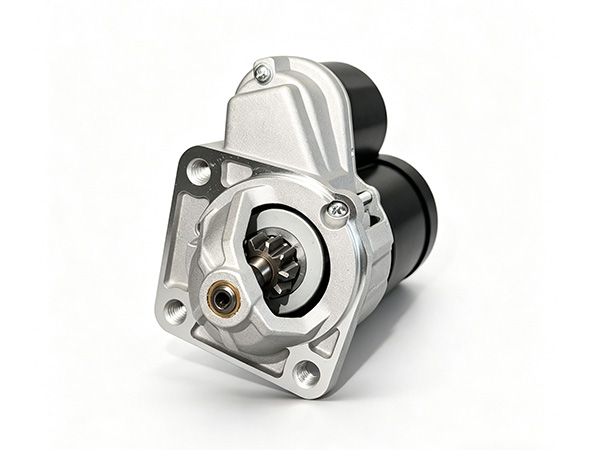
2026-09-01Brush‑type starter motors are the traditional mainstream DC starting devices widely applied in automobiles,trucks,agricultural and construction machinery.They rely on physical carbon‑to‑metal contact to deliver electric current to the rotating armature.This mature mechanical‑commutation design has dominated starting systems for decades.Even with the emergence of brushless technology,brush‑type starters still occupy the largest market share due to reliable performance,simple manufacturing process and affordable aftermarket maintenance costs.
The core feature of brush‑type starters lies in carbon brushes and commutator cooperation.Carbon brushes are spring‑loaded conductive blocks made of carbon‑copper composite material.They press firmly against the segmented copper commutator mounted on the armature shaft.When the armature rotates,static carbon brushes slide across moving commutator bars,feeding high‑current DC power into armature windings.The segmented commutator reverses current direction inside coils continuously,generating stable rotational magnetic force and producing cranking torque.This mechanical commutation structure eliminates complex electronic control boards.Both wound‑field and permanent‑magnet starter versions can adopt brush‑type construction.
Brush‑type starters include direct‑drive and reduction‑gear subtypes,covering 12‑volt light‑duty gasoline equipment and 24‑volt heavy‑duty diesel units.Their internal structure is relatively straightforward.Major assemblies contain solenoid,bendix drive,armature,field coils or permanent magnets,carbon brushes and commutator.Repair shops can conduct rebuild work conveniently.Worn carbon brushes are replaceable consumable parts.Technicians can also polish or resurface a lightly damaged commutator instead of changing the whole starter assembly,which greatly cuts maintenance expenses for fleet vehicles and industrial machinery.
Nevertheless,brush‑type designs carry inherent drawbacks.Sliding friction between brushes and commutator causes gradual wear.Carbon dust accumulates inside the motor housing over time.After long working hours,brush length shortens,spring pressure weakens,and contact becomes unstable.These changes lead to slow cranking,intermittent startup or total starting failure.High‑current sliding contact also creates tiny electric sparks.Under continuous heavy‑load conditions,commutator bars may get burned and pitted.Harsh working environments with oil,mud and moisture will accelerate abrasion and corrosion.
Service inspection is essential for brush‑type starters.Operators should check residual brush length during routine overhaul.Once carbon brushes wear below the minimum limit,replacement is required.Although brushless starters offer longer service life,their higher cost limits large‑scale popularization.For most aftermarket replacement scenarios,brush‑type starter motors remain the practical,cost‑effective solution for light‑duty and heavy‑duty internal‑combustion engine equipment.
Google Academic Citation Formats
APA 7th Edition
Nair,B.(2024).Design and service characteristics of brush‑type DC starter motors.*Journal of Automotive Mechatronic Components*,11(1),51‑58.
MLA 9th Edition
Nair,Binu.“Design and Service Characteristics of Brush‑Type DC Starter Motors.”*Journal of Automotive Mechatronic Components*,vol.11,no.1,2024,pp.51‑58.
IEEE Format
[1]B.Nair,“Design and service characteristics of brush‑type DC starter motors,”*J.Autom.Mechatron.Compon.*,vol.11,no.1,pp.51‑58,2024.