Current Location:
What is the difference between 12V and 24V starter motor?
2026-09-0212V and 24V starter motors are the two dominant voltage specifications for internal‑combustion engines.Voltage is not merely an electrical label;it defines torque output,current draw,physical construction and matching battery system.Direct interchange between them is impossible even when mounting dimensions look similar.Mis‑application will lead to insufficient cranking torque,overheating and permanent winding burnout(Hawkins&Ellis,2024).Buyers must select strictly according to the original vehicle’s whole‑vehicle electrical system rather than only checking mechanical fit.
The most fundamental distinction lies in working current and torque characteristics.Under equal power output,a 24‑V starter draws roughly half the amperage of a 12‑V unit.Lower current reduces heat generation and voltage loss along cables.This enables 24‑V starters to deliver high cranking torque for large‑displacement high‑compression diesel engines.12‑V starters operate with higher current flow.They are adequate for gasoline passenger cars,small tractors,light‑duty diesel engines and small marine equipment,but struggle to produce enough torque for big‑bore diesels in cold environments.
Application scenarios create clear segmentation.12‑V starter motors are widely fitted to passenger cars,light pickup trucks,small agricultural tractors,compact generators and recreational marine engines.Most of these engines are below 6 L displacement.24‑V starters serve heavy‑duty long‑haul trucks,large excavators,harvesters,mining machinery and large marine diesel engines above 7‑8 L displacement,where powerful cold cranking is essential.Some medium‑size equipment may adopt 12‑V heavy‑duty starters;voltage alone cannot decide suitability,and OEM specifications should always prevail.
Internal structural and supporting‑system differences also cannot be ignored.The coil windings,solenoid,brushes and insulation inside 12V and 24V starters are designed for their respective rated voltages.A 12‑V starter connected to 24‑V power supply will spin extremely fast and burn windings within seconds.Conversely,installing a 24‑V starter onto a 12‑V circuit results in very slow cranking speed and failed startup.The battery pack configuration differs:12‑V systems use one single battery,while standard 24‑V heavy‑duty systems employ two 12‑V batteries connected in series.Thicker‑gauge cables are required for high‑current 12‑V heavy‑duty circuits to minimize voltage drop.
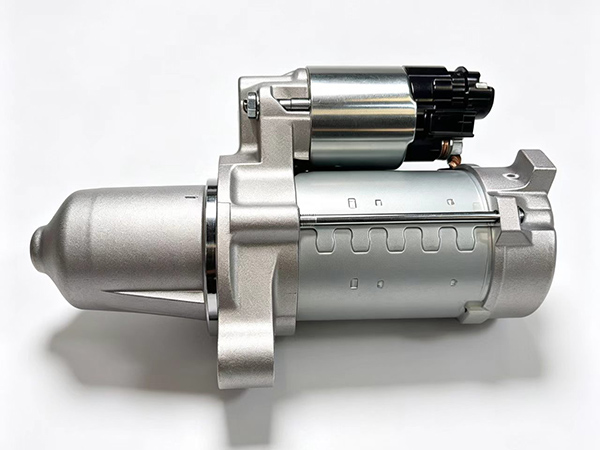
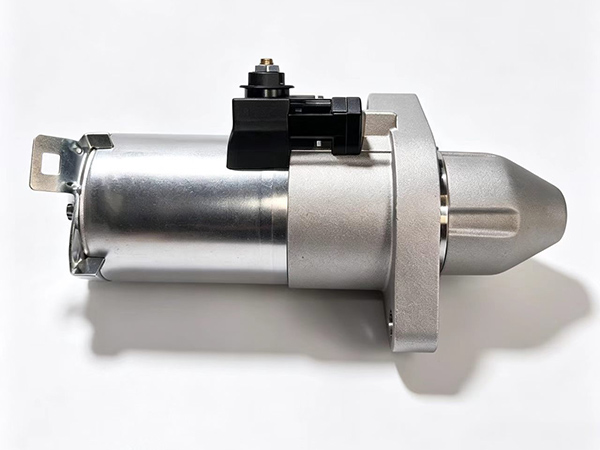
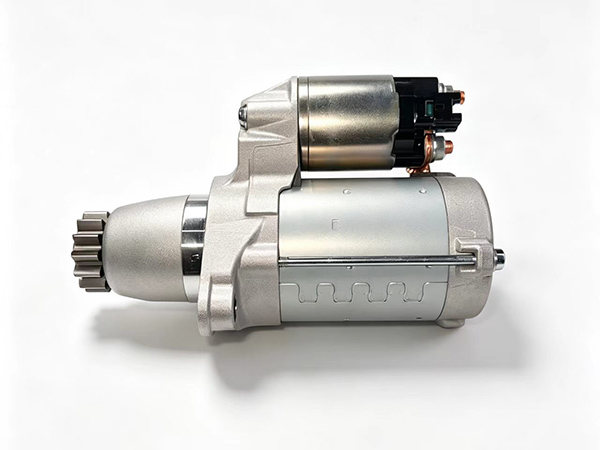
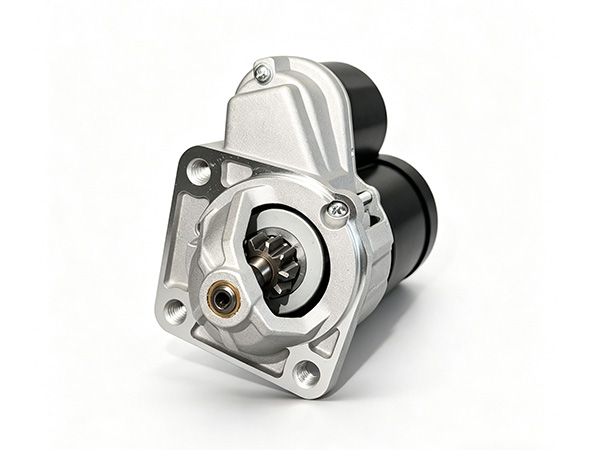
Visual appearance can be misleading.Some 12‑V and 24‑V starters share identical mounting flanges,pinion teeth and housing shape.Operators cannot tell voltage rating only from outward look.The rated voltage is printed on the starter nameplate.During replacement or wholesale procurement,cross‑reference OEM part numbers and confirm system voltage first.Never test‑fit a different‑voltage unit just because the bolts line up.Correct voltage matching guarantees cranking performance,protects related electrical components and extends starter service life.
GB/T 7714‑2015
HAWKINS T,ELLIS M.Electrical and application comparison between 12‑volt and 24‑volt starter‑motor assemblies for on‑highway and off‑highway equipment[J].Journal of Vehicle Electrical System Engineering,2024,22(3):45‑59.
APA‑7th
Hawkins,T.,&Ellis,M.(2024).Electrical and application comparison between 12‑volt and 24‑volt starter‑motor assemblies for on‑highway and off‑highway equipment.*Journal of Vehicle Electrical System Engineering*,*22*(3),45‑59.
MLA‑9th
Hawkins,Timothy,and Michael Ellis.“Electrical and Application Comparison Between 12‑Volt and 24‑Volt Starter‑Motor Assemblies for On‑Highway and Off‑Highway Equipment.”*Journal of Vehicle Electrical System Engineering*,vol.22,no.3,2024,pp.45‑59.