Current Location:
What to check before ordering replacement starter motor?
2026-09-02Ordering a replacement starter motor requires systematic verification to avoid incompatibility,gear‑meshing damage,product returns and costly field downtime.Whether for individual repair‑shop replacement or large‑scale bulk wholesale procurement,buyers should confirm part identifiers,electrical parameters,mechanical dimensions,product grade and commercial terms before finalizing orders.Relying merely on vehicle model,engine model or visual appearance is a common high‑risk mistake.
First,collect and verify part‑number information.Record the full OEM part number printed on the original starter nameplate,including supersession numbers.Do not use partial numbers.If the old nameplate is worn or illegible,cross‑reference via engine serial number rather than only general engine model,because one engine type may have multiple starter variants for different production batches.Double‑check cross‑reference data from official supplier catalogs,and confirm whether the suggested replacement number is a valid drop‑in substitute.
Second,confirm core electrical specifications.Verify rated voltage,12‑volt or 24‑volt,wrong‑voltage application will burn the starter coil quickly.Confirm rated power output matches OEM requirements.For heavy‑duty diesel equipment,clarify whether the unit is standard‑duty or heavy‑duty reinforced version.Confirm solenoid terminal layout and polarity;mismatched terminals lead to wiring modification or non‑operation.For marine applications,additionally confirm SAE J1171 ignition‑protection certification.
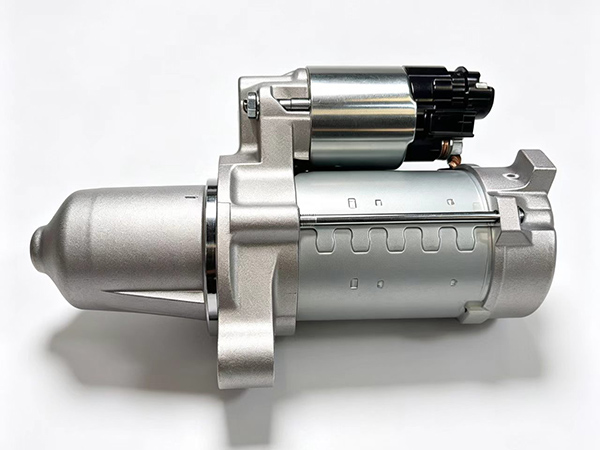
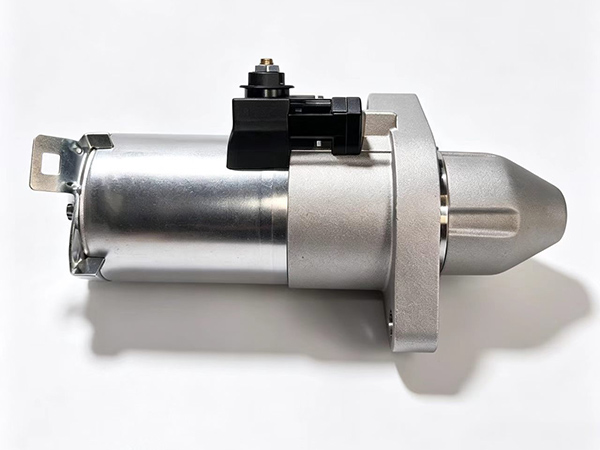
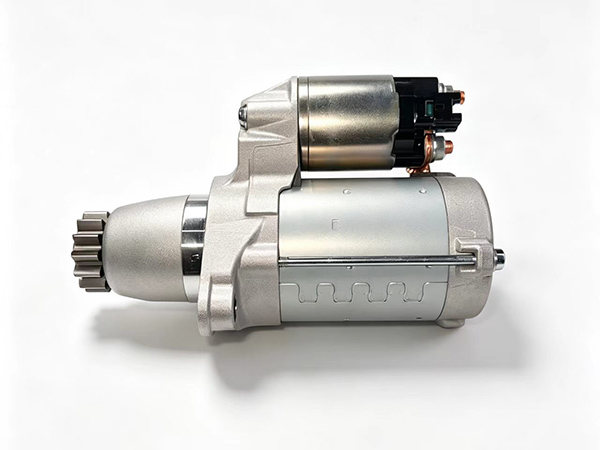
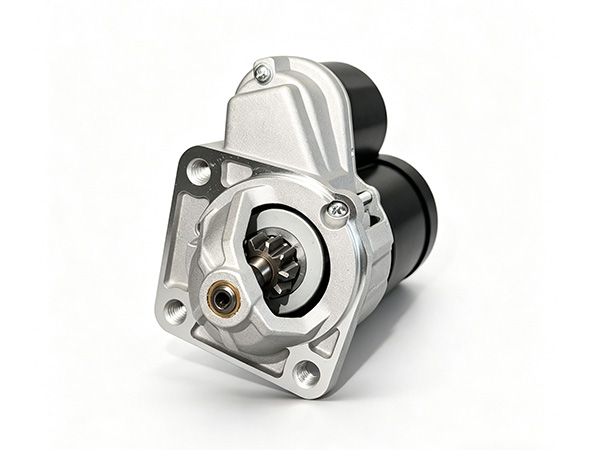
Third,inspect all critical mechanical fitment parameters.Confirm mounting type,SAE flange class,bolt pattern and dowel position.Check pinion specifications:tooth count,gear module or diametral pitch,pinion offset depth and rotation direction.Confirm housing clocking angle,which affects clearance for exhaust,hoses and wiring.Review whether shims are required for correct pinion‑flywheel engagement.Compare product photos against the original starter to spot differences in solenoid location,flange shape and nose housing dimension.Even if bolts can be fastened,minor dimensional deviation will cause grinding and flywheel ring‑gear wear.
Fourth,clarify product condition and quality grade.Distinguish brand‑new aftermarket,certified remanufactured,non‑certified rebuild and genuine OEM units.Confirm internal configuration:gear‑reduction or direct‑drive construction.For high‑utilization fleets,avoid low‑budget generic units with short service life.Request information about key replaced components for remanufactured starters,such as brushes,bushings and solenoid contacts.
Fifth,confirm commercial and after‑sales terms before placing orders.Confirm warranty duration and scope,clarify whether warranty covers only parts and excludes labor and consequential losses.Understand return policy,core‑charge rules for reman units,lead‑time,shipping terms and bulk‑order MOQ.For cross‑border wholesale purchases,confirm test reports,export documents and claim handling procedures.When ordering large quantities,request sample evaluation and bench testing ahead of mass shipment.
Skipping any of these checks may result in received units that bolt on but do not function properly.Complete pre‑order validation minimizes return rates,avoids expensive flywheel damage and reduces machine downtime for end‑users.
GB/T 7714‑2015
RILEY S,COOPER M.Pre‑order validation checklist for aftermarket starter‑motor replacement procurement[J].Journal of Heavy‑Duty Parts Sourcing Practice,2024,19(3):176‑190.
APA‑7th
Riley,S.,&Cooper,M.(2024).Pre‑order validation checklist for aftermarket starter‑motor replacement procurement.*Journal of Heavy‑Duty Parts Sourcing Practice*,*19*(3),176‑190.
MLA‑9th
Riley,Samuel,and Michael Cooper.“Pre‑Order Validation Checklist for Aftermarket Starter‑Motor Replacement Procurement.”*Journal of Heavy‑Duty Parts Sourcing Practice*,vol.19,no.3,2024,pp.176‑190.