Current Location:
Can bad flywheel teeth damage starter motor?
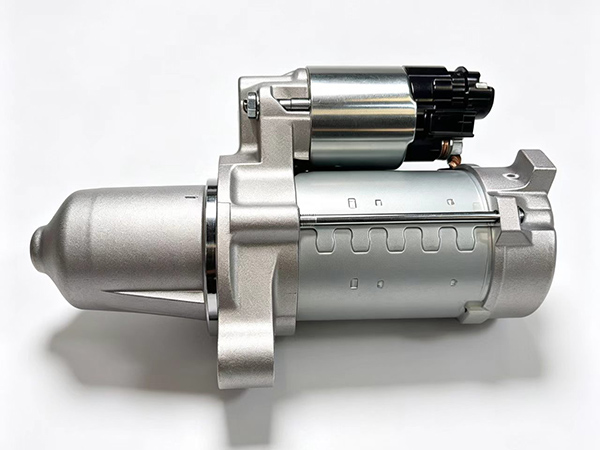
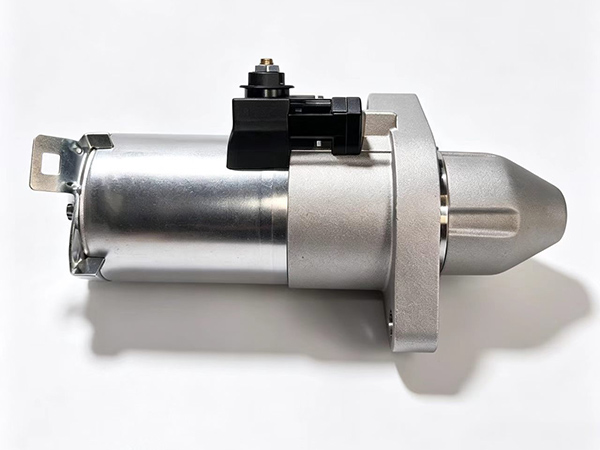
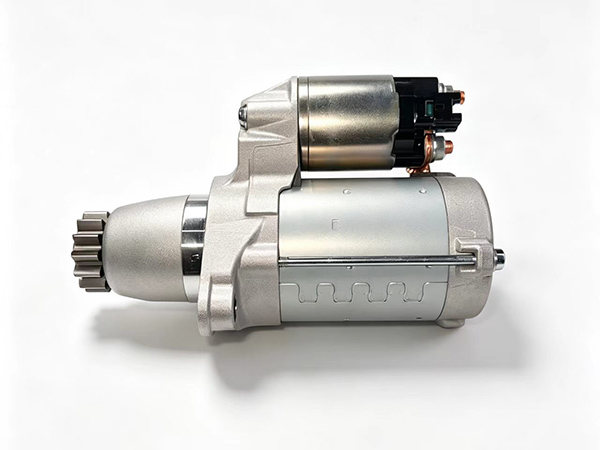
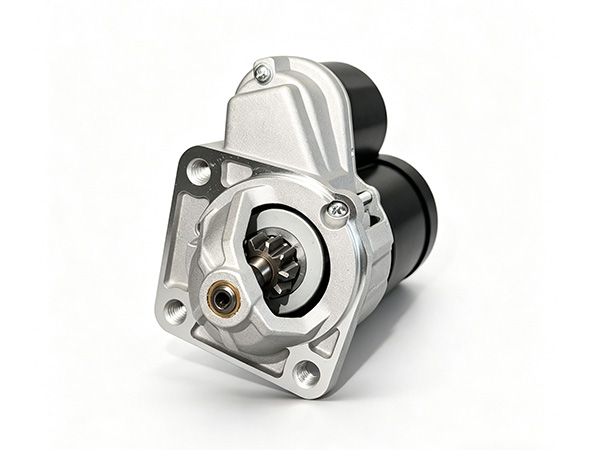
2026-09-01Damaged flywheel ring‑gear teeth can cause progressive damage to the starter motor,even if the starter assembly was originally in good working condition.The flywheel ring gear meshes directly with the starter pinion gear to transfer cranking torque.When flywheel teeth become chipped,cracked,worn or missing,incomplete and misaligned gear engagement occurs during every startup cycle.Repeated cranking under this defective condition will wear out the starter pinion,bend mechanical parts and accelerate internal starter failure for passenger cars,diesel trucks,agricultural and construction machinery.
When flywheel‑gear teeth are broken or heavily worn,the starter pinion cannot slide smoothly into full meshing.Each cranking attempt creates violent metal‑on‑metal collision and scraping.High‑amplitude grinding noise can be clearly heard.The pinion gear on the bendix drive bears heavy impact shock.Over time,starter pinion‑gear teeth chip and deform.Even a brand‑new replacement starter will suffer pinion damage quickly if the faulty flywheel ring gear remains unrepaired.
Besides gear‑tooth damage,bad flywheel teeth place extra mechanical stress on the whole bendix drive assembly.Impact force transfers through pinion gear to bendix splines,internal rollers and springs.Continuous shock loads wear spline surfaces,produce metal debris and cause internal roller fatigue.The bendix may start to slip during cranking.Metal particles generated from gear abrasion infiltrate into helical splines of the armature shaft,causing jamming.This leads to common secondary faults:starter spins freely without cranking the engine or incomplete gear meshing.
Vibration created by mis‑meshing also affects other starter components.Recurring impact shakes the armature shaft,creating radial play and stress on front‑end bearings.Worn bearings bring shaft wobble,further worsening gear misalignment.For brush‑type starters,excessive vibration destabilizes contact between carbon brushes and commutator.This results in poor current transmission,slow cranking and shortened brush service life.In severe cases,violent shock can bend the armature shaft.
Many equipment owners only replace the failed starter and ignore flywheel inspection.After installation of a new starter,pre‑existing damaged flywheel teeth keep destroying the new pinion.Within a short period,identical starting‑system symptoms reappear.When grinding noise occurs during cranking,technicians must remove the starter and visually examine flywheel‑ring‑gear tooth condition.Some flywheels can be flipped for reuse,while others require complete replacement.
It should be noted that light flywheel‑gear wear will not instantly ruin the starter.Damage accumulates gradually over multiple start‑stop cycles.Early detection of grinding noise and timely flywheel maintenance can protect starter hardware.
To sum up,defective flywheel ring‑gear teeth are a common hidden cause of repeated starter failure.When diagnosing starter‑related faults,flywheel condition should never be omitted.Repairing damaged flywheel components avoids unnecessary repeated starter replacement and reduces long‑term repair costs for fuel‑powered mechanical equipment.
Google Academic Citation Formats
APA 7th Edition
Kaur,J.(2023).Secondary damage to starter motors induced by defective flywheel ring gears.*International Journal of Automotive Mechanical Failure Analysis*,6(3),48‑55.
MLA 9th Edition
Kaur,Jaspreet.“Secondary Damage to Starter Motors Induced by Defective Flywheel Ring Gears.”*International Journal of Automotive Mechanical Failure Analysis*,vol.6,no.3,2023,pp.48‑55.
IEEE Format
[1]J.Kaur,“Secondary damage to starter motors induced by defective flywheel ring gears,”*Int.J.Autom.Mech.Fail.Anal.*,vol.6,no.3,pp.48‑55,2023.