Current Location:
Can corroded terminals ruin starter motor performance?
2026-09-01Corroded battery and starter terminals significantly degrade starter motor performance,even when the starter unit itself is in good condition.White,green or blue corrosion builds up on battery posts,cable lugs and starter power terminals due to battery acid leakage,moisture and oxidation.Corrosion creates high‑resistance layers at contact points.Under cranking load,voltage drops sharply,limiting power delivery to the starter solenoid and motor windings.This fault is very common on passenger cars,diesel trucks,farm and construction machinery,and is frequently misdiagnosed as a defective starter motor.
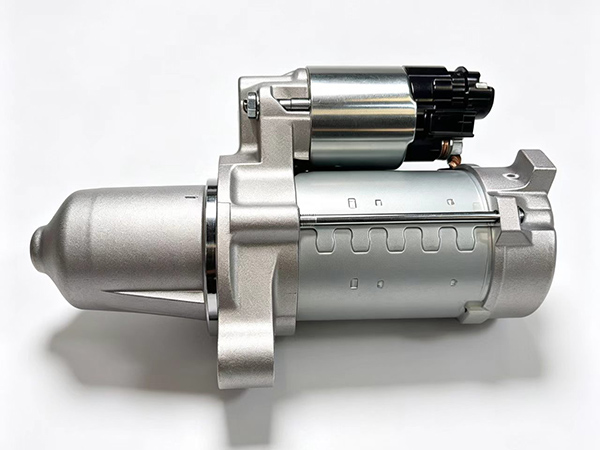
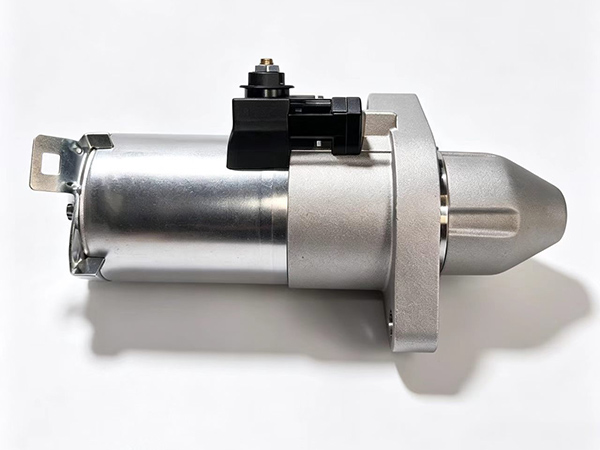
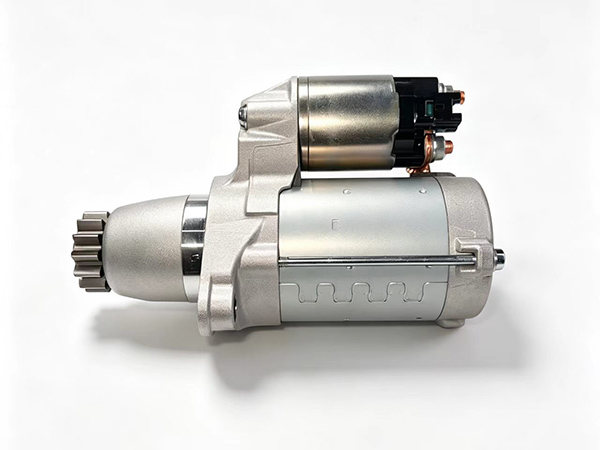
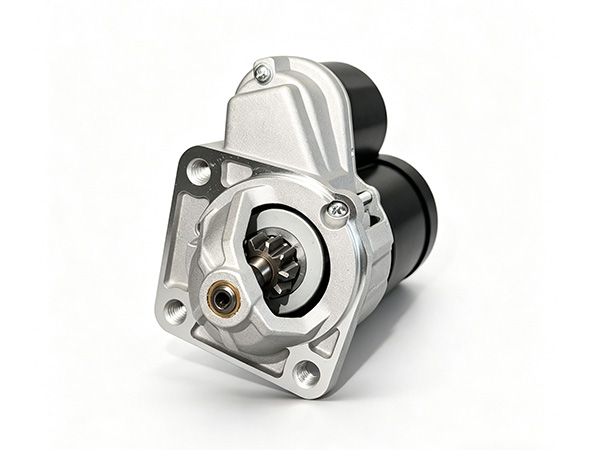
Heavy‑current main power terminals suffer the most obvious impact.Corrosion forms an insulating barrier between cable lug and battery post or starter main stud.Static open‑circuit battery voltage may read close to normal.But when the starter draws large cranking current,high resistance creates substantial voltage drop.The starter receives much lower operating voltage than rated specification.It draws excessive current to compensate for torque loss,resulting in slow cranking speed,weak turning force and overheating.In advanced corrosion cases,the circuit becomes almost open‑circuit.The starter shows zero response even with a good battery.
Corrosion on the small solenoid control terminal brings different symptoms.This thin‑wire terminal carries low‑amplitude trigger current for the solenoid coil.Corroded pins increase circuit resistance.The solenoid plunger may not pull in fully,producing weak click or no click sound.Intermittent starting occurs,where vibration slightly breaks or restores contact.Tapping cables sometimes brings temporary recovery.The starter may work on cool dry days and fail in humid conditions.
Corrosion‑induced secondary damage further harms the whole starting system.High‑resistance corroded points generate heat during cranking.Terminal lugs become hot,melt cable insulation and accelerate cable internal wire oxidation.Corrosive substances can creep along copper strands inside the cable,extending damage backward along wiring harness.Even after cleaning visible terminal surfaces,hidden internal cable corrosion remains and keeps creating variable resistance.
Ground‑side terminal corrosion is often overlooked.Corroded engine‑to‑chassis ground strap terminals break the current return loop.Even positive‑side terminals look clean,the starter cannot complete full high‑current circuit.Symptoms mimic starter internal failure completely.
Visual inspection is not enough to confirm corrosion‑related performance loss.Technicians should perform voltage‑drop testing during cranking.Excessive voltage difference across terminals proves bad corroded connections.Repair steps include removing cables,cleaning posts and lugs to bare bright metal,retightening to correct torque and applying anti‑corrosion grease.Badly pitted lugs require cable replacement.
Many technicians directly replace slow‑cranking starters without checking terminal corrosion.The new starter still operates under low‑voltage condition and delivers poor performance.Hidden corrosion will also shorten service life of brand‑new starter components.
To conclude,corroded terminals can severely ruin starter motor performance.They cause slow cranking,intermittent operation and total no‑crank failure,while the starter assembly itself may still be serviceable.Cleaning or replacing corroded terminals should always be part of starter‑system troubleshooting to avoid unnecessary component replacement and unexpected downtime for fuel‑powered mechanical equipment.
APA 7th Edition
Rajput,S.(2024).Performance degradation of starter motors caused by corroded electrical terminals.*Journal of Automotive Electrical Connection Research*,8(2),38‑45.
MLA 9th Edition
Rajput,Suresh.“Performance Degradation of Starter Motors Caused by Corroded Electrical Terminals.”*Journal of Automotive Electrical Connection Research*,vol.8,no.2,2024,pp.38‑45.
IEEE Format
[1]S.Rajput,“Performance degradation of starter motors caused by corroded electrical terminals,”*J.Autom.Electr.Connect.Res.*,vol.8,no.2,pp.38‑45,2024.