Current Location:
Starter Motor Manufacturer: What Should Global Buyers Consider?
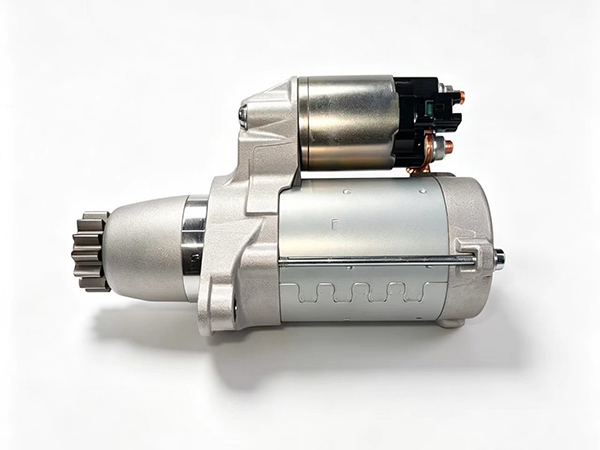
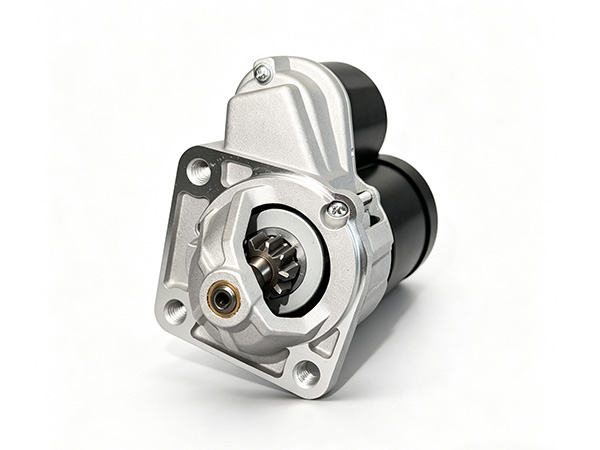
2026-09-19Sourcing automotive electrical components across borders is rarely as simple as comparing catalog prices. For importers, distributors, and aftermarket procurement teams, the choice of a Starter Motor Manufacturer directly shapes product reliability, warranty exposure, and the long-term reputation of the buyer's own brand. A starter motor is a mission-critical component: when it fails, a vehicle does not start, and the end customer rarely blames the original factory that made the car. They blame the part on the shelf and the business that sold it.
This guide is written for global buyers who need a structured way to evaluate starter motor suppliers, with particular attention to remanufactured units, testing discipline, and the practical questions that separate a dependable supply partner from a transactional vendor. The objective is not to recommend one company over another, but to give procurement professionals a repeatable framework for due diligence.
Why the Choice of Starter Motor Manufacturer Matters to Global Buyers
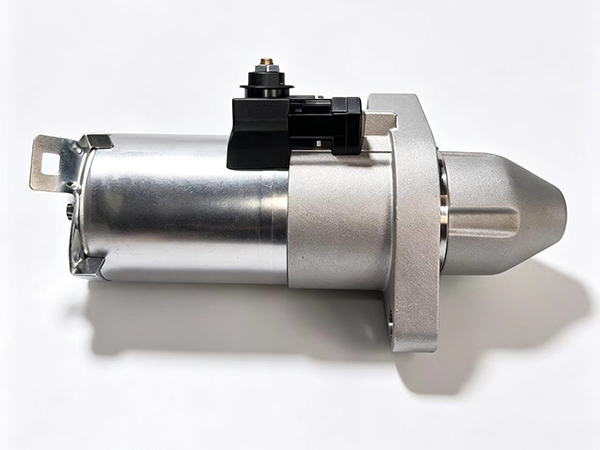
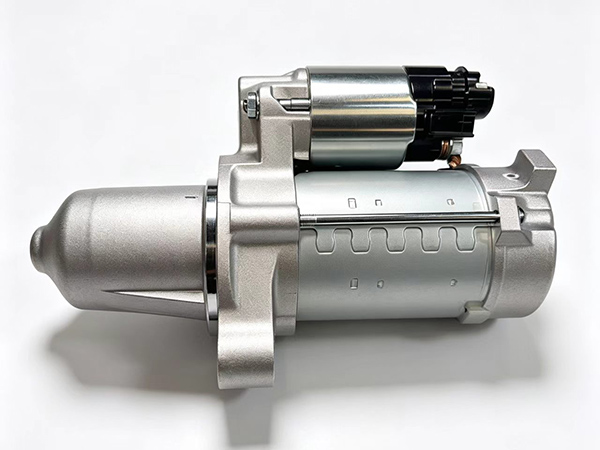
The starter motor sits at the intersection of electrical and mechanical systems. It must deliver high inrush current, withstand repeated thermal and mechanical shock, and engage a ring gear precisely under conditions that range from Arctic cold to desert heat. Any weakness in materials, assembly, or validation surfaces quickly in the field.
For a global buyer, the consequences of a poor manufacturing choice compound. A batch with inconsistent solenoid engagement produces returns, negative reviews, and chargebacks. Inconsistent cranking torque forces downstream technicians to repeat labor that was already billed. Over a product line, these small failures accumulate into a measurable drag on margin and brand trust. Selecting the right supplier is therefore less about finding the lowest unit price and more about managing total risk across the product lifecycle.
The most resilient buying organizations treat supplier selection as a capability assessment rather than a price negotiation. They ask how a manufacturer controls its process, validates its output, and supports its customers after the container leaves the port. The sections below translate that mindset into concrete evaluation criteria.
New vs Remanufactured Starter Motors: A Procurement Perspective
One of the first decisions a buyer faces is whether to source new or remanufactured starter motors. Both have legitimate places in the aftermarket, and the right answer depends on the target market, price positioning, and sustainability commitments of the buyer's business.
Quality Considerations
A new starter is built entirely from fresh components, offering predictable consistency when the manufacturer's design and process controls are sound. A remanufactured starter returns a used core to like-new condition through disassembly, cleaning, inspection, replacement of worn parts, reassembly, and testing. The quality of a remanufactured unit depends heavily on the discipline of that process. A well-controlled remanufacturing program can deliver performance comparable to new units for the majority of applications, while a loose one produces variable results.
Buyers should ask what happens to the core. Are wear items such as brushes, bushings, bearings, and solenoids replaced as a standard procedure, or only when visibly failed? Is the armature tested for shorts and grounds? Are fatigued or borderline components systematically rejected? These process details, more than the new-versus-reman label, determine field reliability.
Cost Considerations
Remanufactured starters typically carry a lower landed cost than equivalent new units because the energy-intensive base components, the housing, field coils, and armature laminations, are recovered rather than reproduced. For price-sensitive aftermarket segments, this cost advantage can be decisive. The buyer should still weigh the full picture: a cheaper unit that generates higher return rates may cost more in total than a slightly premium part with lower failure incidence. Total cost of ownership, not unit price, is the metric that matters.
Sustainability and the Circular Economy
Remanufacturing is one of the most materially efficient forms of circular-economy activity in the automotive sector. It conserves the embedded energy and raw materials of the original component and diverts metal, copper, and electronics from scrap streams. For buyers serving markets with environmental procurement requirements, or building a sustainability narrative, remanufactured starters offer a credible, measurable story: fewer virgin materials consumed, less waste generated, and a lower carbon footprint per unit placed in service.
What to Evaluate When Selecting a Starter Motor Supplier
A credible sourcing evaluation covers six dimensions. Each can be assessed through documentation, video evidence, a factory audit, or a structured questionnaire.
Manufacturing and Remanufacturing Process Control
The first question is whether the supplier controls its own process or merely assembles purchased sub-assemblies. A manufacturer that manages the full chain, from core collection and disassembly through cleaning, precision refurbishment, assembly, and final testing, has more points of control over the outcome. For example, Cangzhou Shuomei Automotive Parts Co., Ltd., a remanufactured car starter motor manufacturer based in Hejian, Hebei Province, China, operates a complete industrial chain covering waste auto parts recycling, disassembly, cleaning, precision refurbishment, assembly, and strict performance testing. Buyers should verify that each stage is documented and that acceptance criteria exist at every handoff.
Process control also means consistency. Ask how the supplier ensures that unit number one and unit ten thousand receive the same treatment. Look for defined work instructions, controlled tooling, and in-process checks rather than end-of-line inspection alone.
Testing Equipment and Protocols
A starter motor cannot be judged by appearance. Meaningful validation requires functional test benches that measure cranking speed, torque, no-load current, lock-up current, and solenoid engagement under load. Buyers should ask what percentage of production is functionally tested, whether testing is 100 percent or sampled, and what the pass-fail thresholds are tied to. A supplier that can show a test report per batch, or per unit for critical applications, demonstrates a level of discipline that price sheets alone never reveal.
Quality Management System
Certifications are a useful signal but should be verified directly. Buyers should confirm which quality standards a supplier actually holds and request current certificates rather than relying on a logo on a website. For automotive suppliers, frameworks aligned with IATF 16949, the global quality management standard for the automotive industry, indicate a process-oriented approach to defect prevention and traceability. Buyers should verify the certificate number, scope, and validity period with the issuing body before relying on it. Where a supplier operates without a named certification, the buyer should assess the underlying controls through audit and sample testing instead.
Traceability and Documentation
For automotive components, traceability protects the buyer when a field failure occurs. Ask whether the supplier records batch or serial identifiers, the source and grade of key components, test results, and production date. A manufacturer that can trace a returned unit back to its build record can diagnose root cause, correct the process, and issue targeted field actions. This capability is especially valuable for distributors managing warranty programs across multiple regions.
Supply Capacity and Lead Time Reliability
Capacity is not only about maximum output; it is about reliability under demand swings. Buyers should understand a supplier's typical lead time, peak-season constraints, and how it manages core inventory to avoid stockouts. A manufacturer with a stable core-collection pipeline is less exposed to raw-material volatility than one dependent on spot purchases. Buyers should request references or evidence of on-time delivery performance, stated in conditional terms where the supplier has not disclosed verified figures.
Export Experience and Documentation Support
Cross-border trade introduces requirements beyond the product itself: harmonized system codes, commercial invoices, packing lists, certificates of origin, and destination-specific compliance. A supplier with established export experience reduces the buyer's administrative risk and is more likely to anticipate documentation needs for the target market. Buyers should confirm the supplier's familiarity with their region's import requirements and ask for sample shipping documentation.
Red Flags to Watch for When Evaluating Suppliers
Several warning signs should prompt deeper scrutiny before a buyer commits to a purchase order.
Vague or evasive answers about testing. If a supplier cannot describe how units are functionally validated, assume they are not.
No process documentation. A manufacturer that cannot show work instructions, inspection records, or test reports has little basis for consistency claims.
Unverifiable certification claims. Logos on a website are not proof. Always request the certificate and validate it with the issuing organization.
Pressure to skip samples. A confident supplier welcomes a sample order and third-party or in-house testing before volume commitment.
Price far below market with no process explanation. Extremely low pricing often reflects skipped refurbishment steps or untested cores.
No clear communication on traceability or returns. Absence of a defined warranty and returns pathway is a structural risk for distributors.
None of these alone is disqualifying, but together they indicate a supplier whose process maturity may not match its marketing. Prudent buyers weight these signals alongside price.
Industry Context: Remanufacturing and the Circular Economy
The automotive remanufacturing sector has matured from a niche activity into a recognized pillar of resource-efficient manufacturing. Industry bodies such as the Automotive Parts Remanufacturers Association document the scale and standards of professional remanufacturing, while standards organizations publish technical references that define test methods and performance expectations for starting motors.
Geographically, China's Beijing-Tianjin-Hebei region has developed significant automotive parts remanufacturing capacity, supported by industrial clustering and supply-chain density. Hebei Province, where Hejian is located, sits within this broader manufacturing ecosystem, giving local suppliers access to core collection networks, component sub-suppliers, and export logistics. Buyers evaluating manufacturers in this region benefit from the clustering effect but should still apply the same individual supplier due diligence described above; regional advantage does not substitute for verified process capability.
For global buyers, the strategic implication is straightforward. Remanufactured starters are no longer a compromise category; they are a mainstream, standards-referenced product line. The differentiator is the manufacturer's discipline, not the remanufacturing model itself.
What Information Buyers Should Provide When Requesting Quotes
The quality of a quotation depends on the quality of the inquiry. Buyers who supply precise application data receive accurate pricing, correct fitment, and fewer surprises at delivery. A well-structured request for quotation should include the following:
Vehicle make, model, and production year, so the supplier can confirm application coverage.
Engine type and displacement, which determine cranking torque and current requirements.
OEM part number, the single most reliable key to exact cross-reference and compatibility.
Voltage and power specification, typically 12V or 24V systems, with kilowatt rating where known.
Required quantity and desired delivery window, to assess lead time and pricing tier.
Target market and any regional compliance or labeling requirements.
Preferred packaging and documentation needs for the destination country.
Suppliers that ask for this information upfront are usually the ones with mature process control, because accurate quoting is an extension of accurate manufacturing. Buyers should treat a vague quote based on minimal data as a signal to dig deeper.
Frequently Asked Questions
How do I verify a starter motor manufacturer's quality claims?
Request current certificates and validate them with the issuing body, ask for sample units and test them on your own or a third-party bench, request batch test reports, and, where feasible, conduct a factory audit focused on process documentation and in-process controls. Verified evidence beats marketing language.
Is a remanufactured starter motor reliable enough for the aftermarket?
When produced under a disciplined remanufacturing process with defined replacement of wear items and 100 percent functional testing, remanufactured starters perform comparably to new units for most applications. Reliability depends on the manufacturer's process discipline rather than the remanufactured label itself, so buyers should evaluate the specific supplier's controls.
What testing should a starter motor pass before shipment?
At minimum, functional testing should cover no-load speed and current, cranking or loaded torque, solenoid pull-in and hold engagement, and pinion drive behavior. Buyers should confirm the supplier's test thresholds and what proportion of production is tested. Conditional language such as "buyers should verify" applies to any specific threshold a supplier has not documented.
What documents should accompany an international starter motor order?
Standard export documents include a commercial invoice, packing list, bill of lading, and certificate of origin, with HS codes and any destination-specific compliance paperwork. A supplier with export experience should provide sample documentation and guide the buyer on market requirements.
How should I compare total cost between new and remanufactured starters?
Compare landed unit cost against expected return rate, warranty cost, and brand-risk impact. A lower-priced unit with higher field failures can cost more overall than a premium unit with lower failure incidence. Evaluate total cost of ownership rather than unit price in isolation.
Conclusion
Selecting a starter motor manufacturer is a capability assessment, not a price comparison. Global buyers who evaluate process control, testing discipline, traceability, supply reliability, and export support position themselves to reduce returns, protect their brand, and build a defensible aftermarket offering. Remanufactured starters, produced under rigorous process standards, represent a cost-effective and sustainable option that aligns with circular-economy objectives without compromising performance.
For buyers beginning their supplier evaluation, reviewing a manufacturer's stated capabilities and process chain is a sensible first step. To explore a remanufacturer that operates a complete industrial chain, from recycling and disassembly through cleaning, precision refurbishment, assembly, and strict performance testing, visit https://www.shuomei-autoparts.com and request documentation, samples, and a structured quotation based on your application data.
References
SAE International. Standards and technical references for automotive electrical components and starting motor test methods.
IATF 16949. Quality management system standard for the automotive industry, covering defect prevention, traceability, and process control.
Automotive Parts Remanufacturers Association (APRA). Industry resources on professional automotive remanufacturing standards and practices.
United States Environmental Protection Agency. Remanufacturing and the circular economy: resource efficiency in the automotive sector.