Current Location:
Starter Motor Cross Reference: How to Find a Compatible Replacement
2026-10-20When a starter motor fails, most buyers do not start with a brand name. They start with a number stamped into the side of the old unit, or a part number pulled from a vehicle's service catalog. The challenge is that the same physical starter motor can carry a dozen different identities depending on which carmaker, assembly plant, or aftermarket supplier is labeling it. A starter motor cross reference is the tool that stitches those identities back together so a compatible replacement can be found quickly and with confidence.
This guide explains what a starter motor cross reference is, why one part ends up under many part numbers, which attributes must actually align for a safe fit, the workflow that avoids wrong-fit orders, and the common mistakes that trip up even experienced parts buyers.
What a Starter Motor Cross Reference Actually Is
A cross reference is simply a mapping. It connects a single base starter design to every equivalent number assigned to it across the industry. In practice, it answers one question: "which other numbers are the same part as this one?" For buyers, that means a compatible starter motor can be sourced even when the original number is out of stock, superseded, or unknown.
The reason cross references exist comes down to how the automotive supply chain is organized. A vehicle manufacturer does not usually build the starter itself. It buys the unit from a tier-one electrical supplier, assigns its own internal part number, and prints that number on the service label. The same supplier may also sell the identical unit under its own brand, and aftermarket remanufacturers will list it under still more numbers. The result is a web of interchangeable identifiers built on top of one shared physical component.
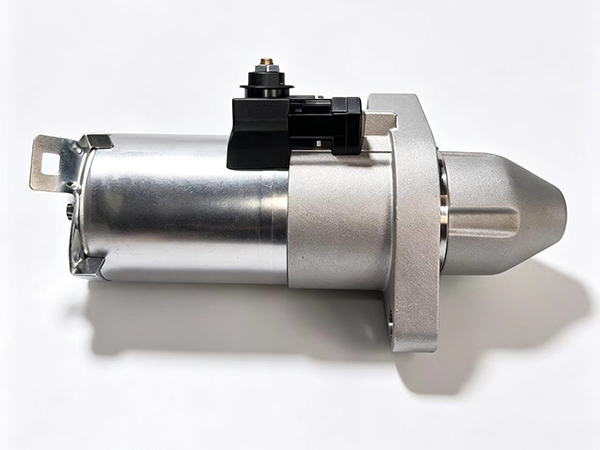
Why One Starter Maps to So Many OEM Numbers
Several forces multiply the number of identifiers attached to a single starter:
OE branding. Carmakers stamp their own catalog number on a part supplied by Bosch, Valeo, Mitsubishi Electric, Denso, or another maker, so the same unit appears under two labels from day one.
Supersession. Manufacturers periodically revise a design and replace the old number with a new one. A starter motor supersession does not mean the part changed dramatically — often it is a minor update — but the buyer now needs the cross reference to link the old and new numbers.
Regional variants. The same model sold in Europe, Asia, and the Americas can use different starter part numbers because of local emission, voltage, or transmission combinations.
Aftermarket interchange. Independent remanufacturers and distributors publish their own starter motor interchange lists so their catalog can claim coverage across many OEM applications.
This is why searching a single number is rarely enough on its own. A good starter interchange number lookup returns the whole family of equivalents so the buyer can choose whichever is available.
The Attributes That Must Align for a Compatible Replacement
A cross reference tells you which numbers are related. It does not, by itself, guarantee physical fit. Before confirming an order, the following attributes need to line up with the original unit.
1. Reference or OEM Number First
Always start from the most specific identifier available. The stamped reference or OEM number is the strongest anchor because it points to a known design. A find replacement starter by OEM number search should be the first step, with all other checks used to confirm rather than discover.
2. Voltage: 12V vs 24V
Most passenger and light-commercial vehicles use 12V systems, while heavy trucks and some industrial equipment use 24V. Mixing them is a hard fail — the motor will not operate correctly on the wrong system voltage.
3. Power Rating in kW
The kilowatt rating reflects cranking power. A lower-kW unit may fit but struggle to spin a cold or high-compression engine, while an overspec unit is usually acceptable but raises cost and may draw more current than the harness expects. kW should be matched or checked against the application requirement.
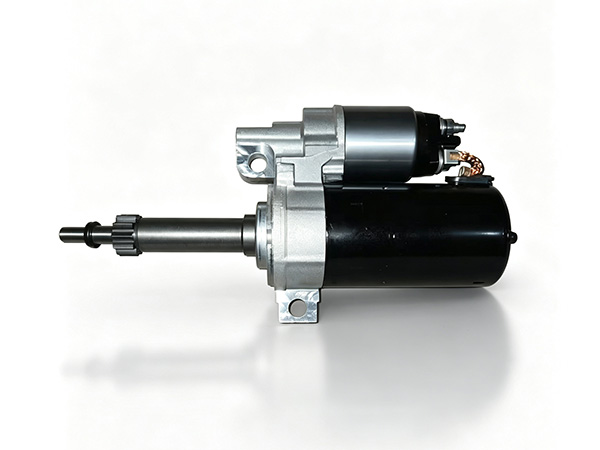
4. Pinion Teeth Count
The pinion gear must mesh with the flywheel ring gear. A wrong teeth count means the pinion will not engage cleanly, producing grinding or no engagement at all. This is one of the most overlooked fitment points.
5. Rotation Direction: CW or CCW
Starters spin either clockwise or counterclockwise as viewed from the drive end. Rotation is set by the internal gear set, so it cannot be flipped in the field. A reversed-rotation unit may physically bolt in yet drive the engine the wrong way or fail to engage.
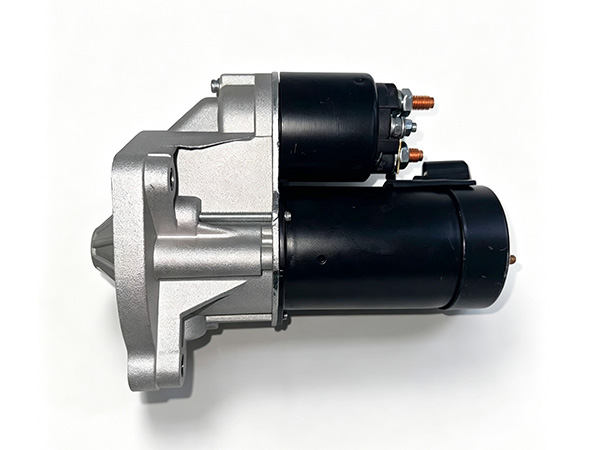
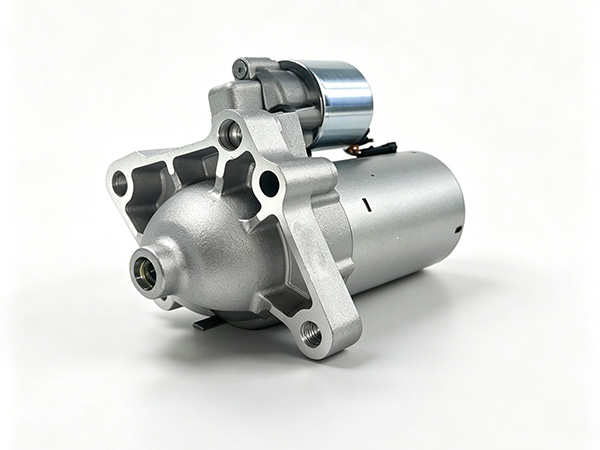
6. Mounting Flange and Bolt Pattern
The flange shape, bolt hole count, and spacing determine whether the unit seats against the engine block. Even a small offset in the bolt pattern prevents installation.
7. Nose Length and Configuration
The nose (or nose cone) positions the pinion at the correct depth relative to the ring gear. An incorrect nose length moves the pinion out of mesh range, causing intermittent or failed engagement.
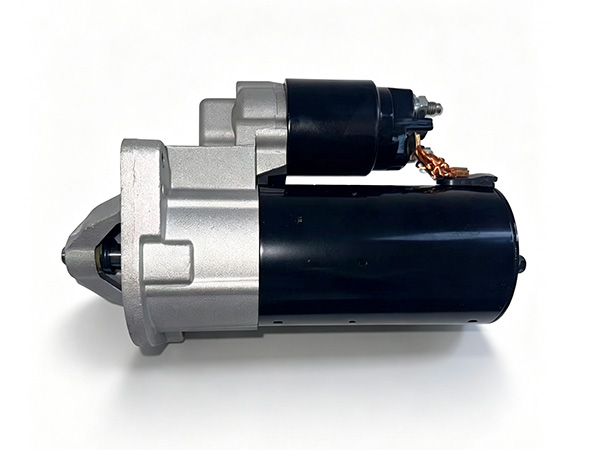
8. Electrical Terminal Type
Terminals differ in size, position, and type — threaded post, blade, or eyelet — and the trigger signal may be switched at the solenoid or the ignition switch. Mismatched terminals mean the unit cannot be wired without modification.
The Cross-Reference Workflow in Four Steps
A reliable process keeps wrong-fit orders low and speeds sourcing:
Step 1 — Read the stamped number. Remove the old unit and read the number stamped or laser-etched on its housing or solenoid. If the unit is gone, pull the number from the vehicle's parts catalog or build sheet instead.
Step 2 — Look it up. Enter that number into a cross-reference database or supplier catalog to retrieve the equivalent OE and aftermarket numbers.
Step 3 — Confirm the physical and electrical attributes. Check voltage, kW, teeth, rotation, mounting, nose, and terminals against the original so the replacement is genuinely compatible, not just number-adjacent.
Step 4 — Verify by VIN where possible. A VIN decoder resolves trim, engine, and transmission variants that change which starter fits, removing ambiguity when the stamped number is incomplete.
Tools and Catalogs That Power Cross Referencing
Professional buyers rely on a mix of sources rather than a single lookup:
OEM catalogs. The vehicle manufacturer's electronic parts catalog remains the authority for the original application and any supersession chain.
Supplier interchange databases. Tier-one and aftermarket suppliers publish interchange lists that map their numbers to competing and OE numbers, which is where most starter motor interchange coverage comes from.
VIN decoders. These convert a VIN into exact build data so the correct starter family is selected even without the old part in hand.
Remanufacturer reference data. Remanufacturers that rebuild to original specifications maintain detailed cross references tied to their tested cores.
Cangzhou Shuomei Automotive Parts Co., Ltd., based in Hejian, Hebei, China, operates a complete remanufacturing chain for remanufactured starter motors and applies this kind of reference discipline to match replacements against original specifications. Working with a supplier that tracks cross-reference data end to end reduces the risk of shipping a unit that looks right but does not fit.
A Brief Illustrative Example
To show how cross referencing works in practice, consider one common European-Asian family built around a Bosch base unit. The Bosch number F000CD0002 is referenced against several carmaker numbers, including Renault 8200266777, Nissan 2330000QAA, and Valeo 438128, among others. A buyer holding the Renault number can use a cross reference to recognize the Nissan and Valeo equivalents as the same underlying starter.
This example is shown for illustration only. It is catalog-sourced interchange data, not a product listing, and it does not imply that any specific supplier stocks or remanufactures these exact numbers. The point is simply that one physical starter can sit beneath many labels, and the cross reference is what reveals the connection.
Common Mistakes That Cause Wrong-Fit Orders
Even with a cross reference in hand, orders go wrong for predictable reasons:
Matching only on kW. Buyers see the same power rating and assume fit, ignoring rotation and teeth count that actually control engagement.
Trusting a partial number. A prefix or suffix match is a hint, not proof. Related families share blocks of digits while differing in mount or pinion.
Assuming all "12V" units fit. Voltage is necessary but far from sufficient; teeth, rotation, nose, and terminals still have to match.
Skipping the VIN check. Two cars of the same model year can use different starters because of engine or transmission options, so the VIN matters.
Relying on a single catalog. One database may miss a supersession. Corroborating across an OEM catalog and a supplier interchange list catches gaps.
Frequently Asked Questions
What does starter motor cross reference mean?
A starter motor cross reference is a list or database that maps one starter motor to all the equivalent part numbers used by different vehicle manufacturers and aftermarket brands. It lets a buyer find a compatible starter motor even when the original stamped number is unavailable or has been superseded.
What must match for a starter motor replacement to fit?
The reference or OEM number should be confirmed first, then the physical and electrical attributes: voltage (12V or 24V), power in kW, pinion teeth count, rotation direction (clockwise or counterclockwise), mounting flange and bolt pattern, nose length and configuration, and the electrical terminal type. If any of these differ, the unit may not engage or may physically not bolt in.
Can I trust a partial starter number when ordering?
A partial number is a useful starting clue but not proof of fitment. Many starters share the same prefix or suffix block, so a partial match can point to a different family with the wrong teeth count, rotation, or mounting. Always confirm the full stamped number and verify the physical attributes before ordering.
Why do two identical-looking 12V starters not fit the same car?
Voltage is only one of several fitment attributes. Two 12V units can have different pinion teeth counts, opposite rotation directions, different mounting flanges, or different nose lengths. Matching only on 12V and kW is a common cause of wrong-fit orders, because the motor may spin but the pinion will not engage the flywheel correctly.
References
SAE International — standards and technical papers on automotive starting systems and electrical component specifications.
Bosch Automotive Aftermarket — parts numbering and interchange convention for starter motors and alternators.
Automotive Parts Remanufacturers Association (APRA) — guidance on remanufactured starter and alternator standards and identification.
IATF 16949 — the automotive quality management standard applied by suppliers across the remanufacturing and component chain.
Conclusion
A starter motor cross reference turns a confusing list of unrelated part numbers into a single, manageable family of equivalents. The number gets you in the door, but a genuine compatible starter motor still depends on confirming voltage, kW, teeth, rotation, mounting, nose, and terminals against the original unit — and, where possible, validating the choice by VIN. Buyers who follow that discipline avoid the most common wrong-fit failures and keep vehicles on the road.
For buyers sourcing remanufactured units, working with a supplier that maintains its own cross-reference data and rebuilds to original specifications makes the whole process safer. Cangzhou Shuomei Automotive Parts Co., Ltd. in Hejian, Hebei, China runs a complete remanufactured starter motors remanufacturing chain and can help match the right replacement to your application. Learn more or start a sourcing conversation at https://www.shuomei-autoparts.com.