Current Location:
What starter motor fits diesel engine?
2026-09-02Selecting a suitable starter motor for diesel engines differs greatly from gasoline‑engine applications.Diesel units operate with high compression ratios ranging from 14:1 to 25:1,demanding significantly higher cranking torque to overcome compression resistance and thick cold‑engine oil viscosity,especially in low‑temperature environments.Installing gasoline‑spec starters will result in slow cranking,start failure or premature mechanical damage,so technicians must match electrical rating,mechanical dimensions,part‑number interchange records and operating‑duty requirements together rather than relying only on engine brand information.
Voltage configuration is the first selection checkpoint.Light‑duty passenger diesel vehicles and small generator sets normally adopt a 12‑V electrical system,while medium‑and‑heavy‑duty trucks,construction machinery and large stationary diesel engines widely use 24‑V starters to deliver higher torque under heavy cranking loads.12‑V and 24‑V assemblies cannot be swapped arbitrarily;voltage mismatch burns internal coils and solenoid components immediately.Power output should correspond to engine displacement.Small diesel engines below 3 litres usually require 2.0‑3.0 kW starters,whereas heavy‑duty diesel engines above 6 litres often need 4.0‑7.5 kW gear‑reduction‑type starters for reliable cold‑weather starting.Gear‑reduction starters are preferred for most modern diesel equipment,as they generate high torque with relatively compact housing dimensions compared with traditional direct‑drive starters.
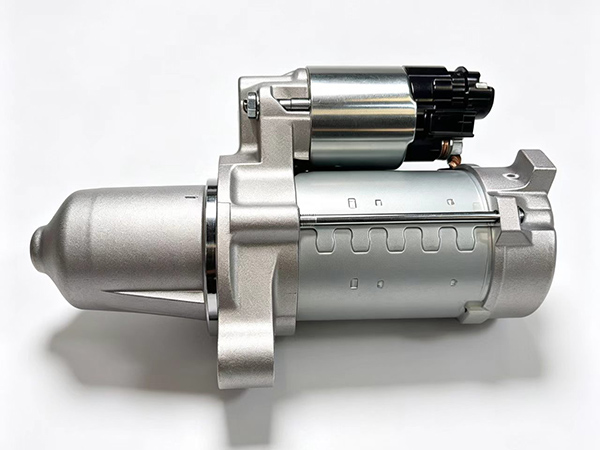
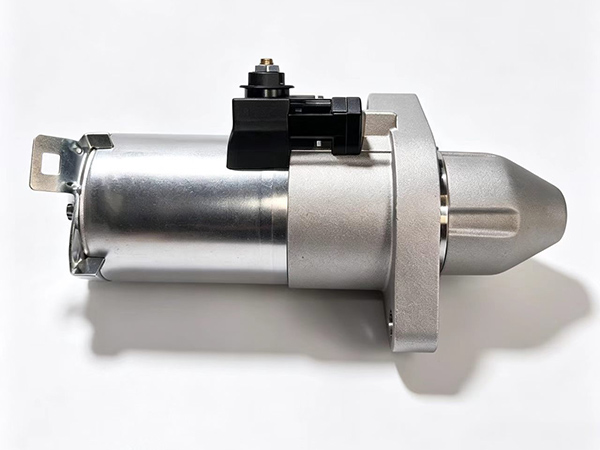
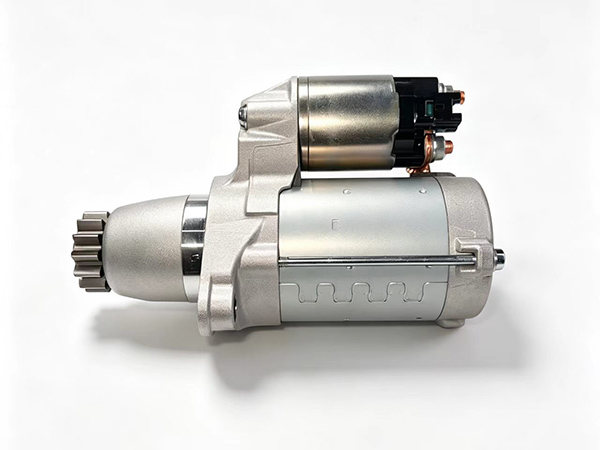
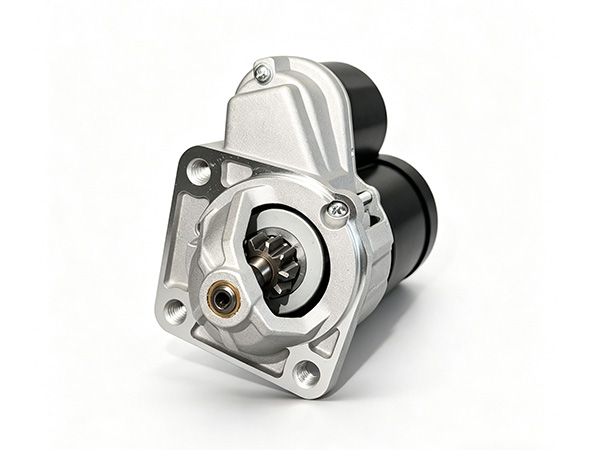
Mechanical fitting parameters determine physical compatibility.Users need to confirm OEM part numbers stamped on the original starter housing,cross‑reference supersession records and interchange catalogs to filter valid replacement SKUs.Critical mechanical checks include pinion tooth quantity and pitch,mounting‑bolt spacing,flange type,housing clocking angle and solenoid terminal layout.The pinion gear must mesh precisely with flywheel ring‑gear teeth;tooth‑count mismatch creates grinding noise and gradually destroys flywheel ring gear.Even when catalogs list positive compatibility,visual comparison with original‑unit photos helps eliminate database errors.
Special working‑condition factors should not be ignored.Diesel engines for mining,marine or off‑road machinery require starters with enhanced sealing and dust‑proof structures to resist vibration,moisture and particle pollution.Operators should also distinguish OEM original parts and qualified aftermarket alternatives,avoiding low‑grade products with insufficient duty‑cycle performance.VIN‑based factory configuration documents and official service‑manual parts lists serve as authoritative references for final confirmation.Following multi‑dimensional verification rules reduces return rates and unexpected downtime for diesel‑powered commercial and industrial equipment.
GB/T 7714‑2015
BROWN T,WILSON K.Matching rotating‑electrical components for high‑compression diesel powertrains[J].International Journal of Heavy‑Vehicle Maintenance,2023,21(1):19‑32.
APA‑7th
Brown,T.,&Wilson,K.(2023).Matching rotating‑electrical components for high‑compression diesel powertrains.*International Journal of Heavy‑Vehicle Maintenance*,*21*(1),19‑32.
MLA‑9th
Brown,Thomas,and Kevin Wilson.“Matching Rotating‑Electrical Components for High‑Compression Diesel Powertrains.”*International Journal of Heavy‑Vehicle Maintenance*,vol.21,no.1,2023,pp.19‑32.