Current Location:
How to confirm starter motor part number compatibility?
2026-09-02Replacing a starter motor with an incompatible unit leads to grinding flywheel damage,no‑crank failures,unexpected returns and costly re‑repair work.Accurate part‑number verification combines vehicle metadata,OEM marking cross‑checking,physical‑electrical dimension validation and catalog interchange screening,rather than merely matching vehicle model information.
The first critical step is gathering complete reference data.Users should retrieve the full VIN,vehicle production year,engine code,displacement and transmission type.The VIN provides factory‑original build configuration and eliminates confusion caused by multiple starter variants fitted on the same car model.Additionally,locate the OEM part number stamped on the metal tag or housing of the original starter motor.Both factory OEM numbers and existing aftermarket replacement numbers should be documented.Reliance only on model names frequently produces mismatches,as manufacturers update component specifications within identical model ranges during production cycles.
Next,cross‑reference part‑number interchange databases and OEM technical catalogs.Input the original OEM number to retrieve supersession records and equivalent aftermarket SKUs.Many old OEM numbers become obsolete and are superseded by updated revised part numbers;discontinued part codes should not be used for ordering.Every candidate replacement must explicitly cover the exact engine and production‑year window of the target vehicle.Partial range matches create hidden risks for installation breakdown.
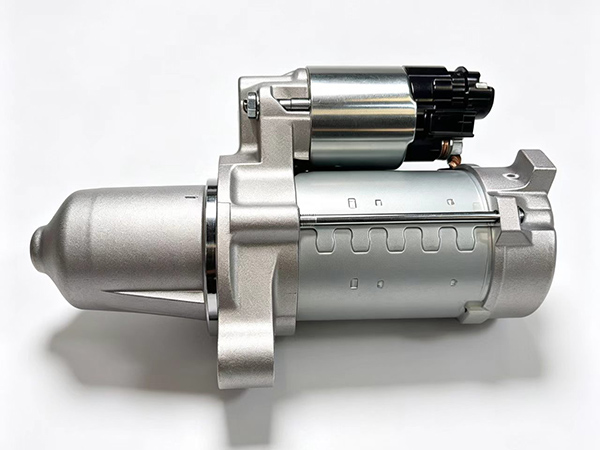
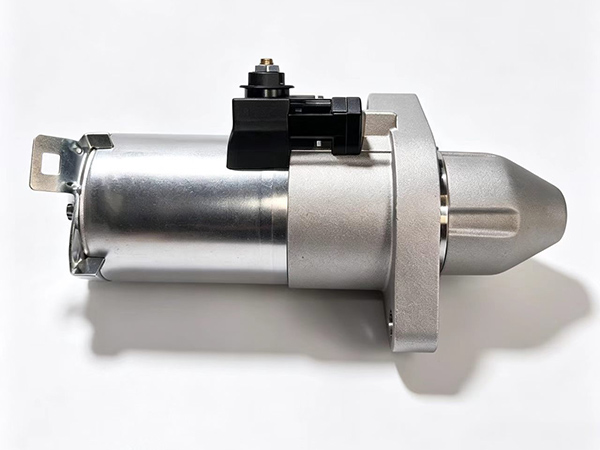
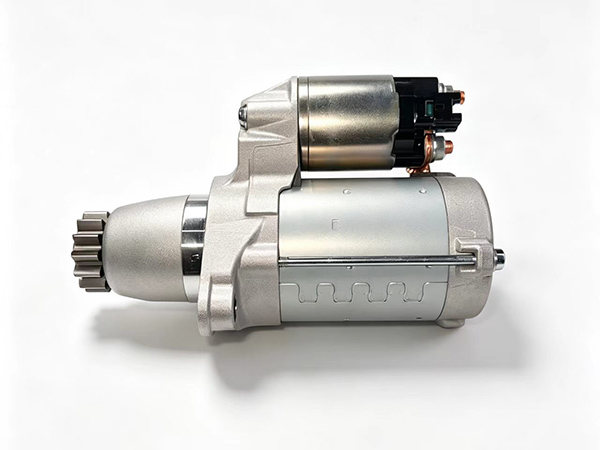
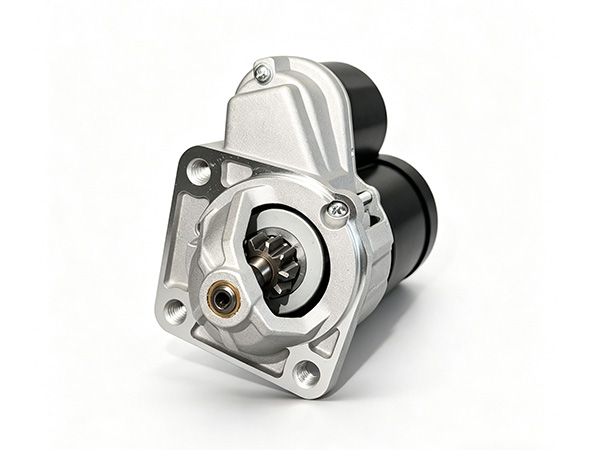
Mechanical and electrical parameter inspection cannot be skipped even when part‑number tables show compatibility.Technicians need to verify pinion tooth quantity and pitch,mounting‑bolt spacing,flange style,housing clocking angle,system voltage(12 V or 24 V),power rating,solenoid structure and terminal layout.Mismatched pinion teeth will abrade or crack the flywheel ring gear,while incorrect voltage burns out vehicle electrical circuits.Flywheel ring‑gear tooth count must align with starter pinion specifications,a commonly overlooked validation point in spare‑parts procurement workflows.
Visual comparison acts as final practical confirmation.Compare housing shape,solenoid orientation and mounting hole positions with photos of the original starter unit,correcting potential catalog database errors.Whenever feasible,cross‑check against official service‑manual parts lists filtered by VIN‑based engine configuration.Common mistakes include trusting general‑model‑only search outputs,ignoring supersession updates and skipping gear‑mesh specification checks.Systematic multi‑layer verification drastically reduces aftermarket‑part compatibility failures in automotive repair and fleet‑maintenance scenarios.
References
GB/T 7714‑2015
SMITH R,LEE J.Aftermarket automotive rotating‑electric‑parts compatibility validation for repair‑shop applications[J].Journal of Automotive Service Technology,2022,18(2):45‑58.
APA‑7th
Smith,R.,&Lee,J.(2022).Aftermarket automotive rotating‑electric‑parts compatibility validation for repair‑shop applications.*Journal of Automotive Service Technology*,*18*(2),45‑58.
MLA‑9th
Smith,Robert,and Jun Lee.“Aftermarket Automotive Rotating‑Electric‑Parts Compatibility Validation for Repair‑Shop Applications.”*Journal of Automotive Service Technology*,vol.18,no.2,2022,pp.45‑58.