Current Location:
Why new starter motor still will not crank engine?
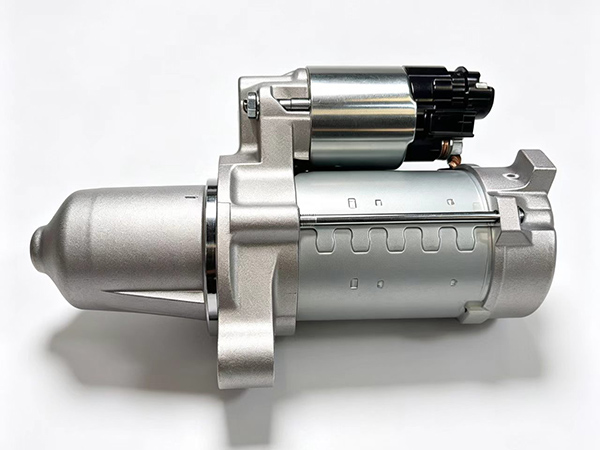
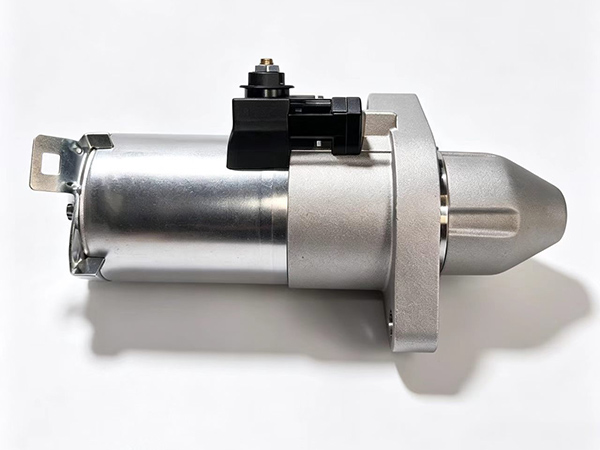
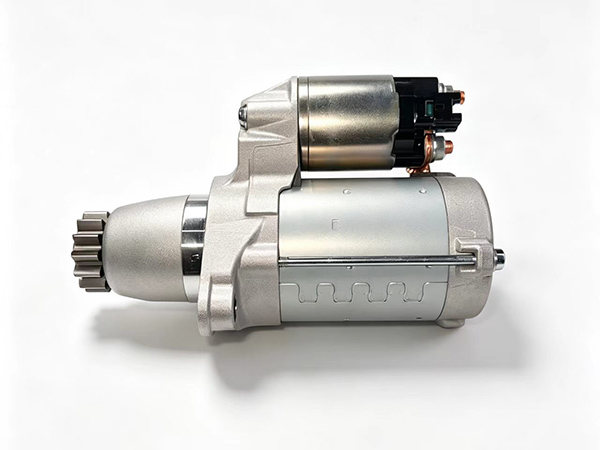
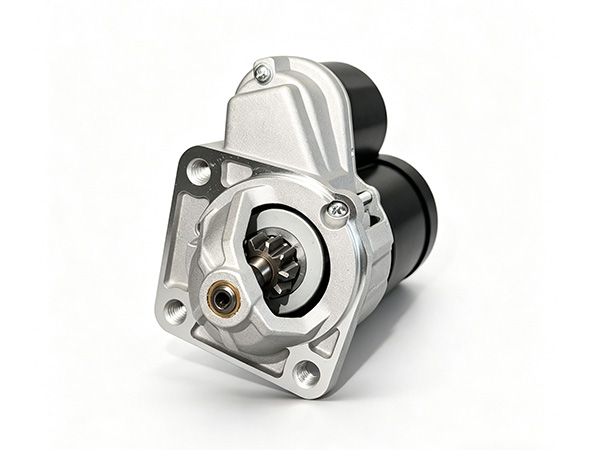
2026-09-02Installing a brand‑new starter does not guarantee cranking function.When the new unit fails to crank,the root cause is often in battery,wiring,ground circuit,mechanical fit or trigger signal,rather than defective starter hardware(Hudson&Pearson,2024).Many technicians mistakenly do repeated starter replacements without troubleshooting peripheral faults.
Battery‑related issues are the most frequent cause.Weak,discharged or faulty battery cannot supply sufficient high cranking amperage,even if lights and dashboard work.Bad battery cell produces enough voltage with no‑load,but voltage collapses under starter load.Corroded or loose battery terminals also create high‑resistance.For 24‑V systems,one weak battery in the series pair will disable cranking.Test battery under load instead of only static voltage reading.
Ground circuit failure is commonly overlooked.Starter return current flows through starter‑to‑bell‑housing contact,engine‑block‑to‑battery negative ground strap.Paint,rust or debris on starter mounting surfaces breaks ground continuity.Loose,broken or corroded engine ground strap creates high‑resistance.Even a perfect new starter cannot operate properly with poor ground.
Solenoid trigger‑signal faults.No click from solenoid means no trigger signal arriving.Faults include bad ignition switch,failed starter relay,blown fuse,broken wiring or loose small trigger terminal.If relay clicks but solenoid does not actuate,check voltage at solenoid small terminal while cranking.Low signal voltage will not pull the solenoid plunger fully in.
Main high‑current wiring problems.Loose,corroded or undersized main battery‑cable lugs create heavy voltage drop.Even though the cable looks intact,internal strand corrosion may exist.The full battery voltage never reaches the starter solenoid large stud.Measure voltage directly at solenoid main terminal during cranking attempt for diagnosis.
Mechanical fit and binding faults.Wrong mounting,missing locating dowels or excessive shims can physically jam the pinion.Seized engine is another possibility:engine internal mechanical seizure prevents rotation.Try turning crankshaft manually by hand;if it cannot turn,the fault lies inside engine,not starter.Damaged,jammed flywheel ring‑gear also blocks cranking.
Incorrect starter specification.Wrong voltage(12 V starter fitted onto 24 V system or vice‑versa),wrong pinion or internal configuration mismatch.Cross‑reference error leads to a physically‑boltable but functionally‑incorrect starter.
Different observable symptoms guide troubleshooting:
1.No sound at all:focus on battery,ground,trigger signal,relay and fuse.
2.Solenoid clicks,but motor does not spin:poor main power supply,bad ground,mechanical engine seizure.
3.Starter spins fast but will not turn engine:overrunning‑clutch failure,wrong pinion or heavily damaged flywheel ring‑gear.
4.Grinding noise on cranking:shim error,loose mounting bolts,damaged ring‑gear.
Troubleshooting best practice:do not immediately return the new starter as defective.Perform voltage measurements at battery,ground strap,solenoid main terminal and trigger terminal,plus manual crankshaft rotation test.Most no‑crank cases with new starter stem from surrounding system issues instead of manufacturing defect of the starter itself(Hudson&Pearson,2024).
GB/T 7714‑2015
HUDSON R,PEARSON J.Diagnostic analysis for no‑crank conditions following brand‑new starter‑motor replacement[J].Journal of Heavy‑Duty Electrical Troubleshooting,2024,20(3):223‑237.
APA‑7th
Hudson,R.,&Pearson,J.(2024).Diagnostic analysis for no‑crank conditions following brand‑new starter‑motor replacement.*Journal of Heavy‑Duty Electrical Troubleshooting*,*20*(3),223‑237.
MLA‑9th
Hudson,Ryan,and James Pearson.“Diagnostic Analysis for No‑Crank Conditions Following Brand‑New Starter‑Motor Replacement.”*Journal of Heavy‑Duty Electrical Troubleshooting*,vol.20,no.3,2024,pp.223‑237.