Current Location:
Can wrong pinion tooth count damage flywheel?
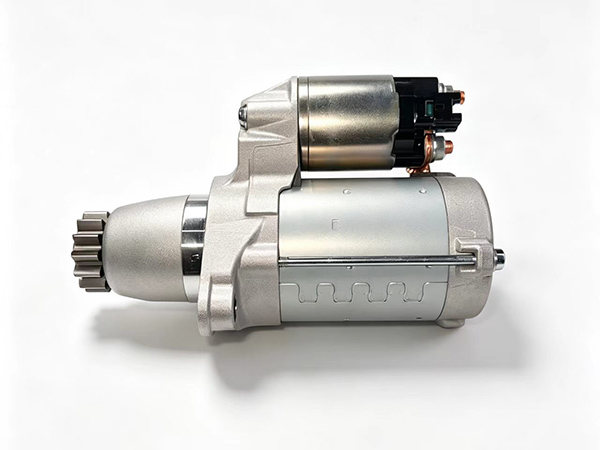
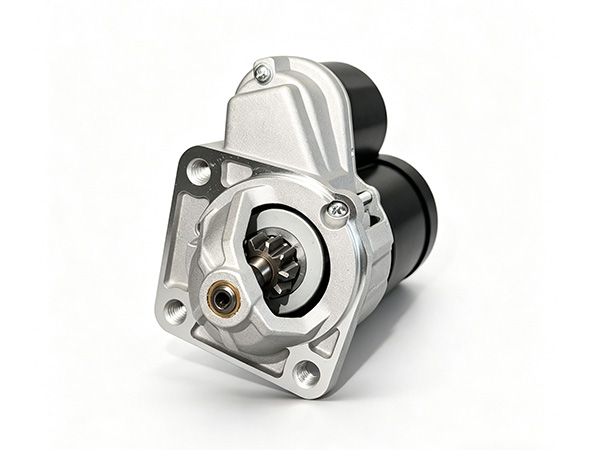
2026-09-02Using a starter pinion with incorrect tooth count will very likely damage the flywheel ring gear,even if the starter physically bolts onto the bell housing.Tooth count works together with gear module,pitch and engagement depth to achieve smooth meshing.Mismatched pinion cannot fully seat into ring‑gear teeth,generating shock loads,chipping and accelerated wear on expensive flywheel assemblies.Many operators overlook this risk because the starter can still spin when cranking,masking underlying gear‑meshing damage.
When pinion tooth count does not match the flywheel ring‑gear,the two sets of gears cannot achieve full‑tooth contact.Only partial tooth edges touch during cranking.Each startup creates sharp impact force on the tip of ring‑gear teeth.Repeated impacts gradually produce burrs,micro‑cracks,chipped teeth and broken ring‑gear segments.In mild cases,operators hear loud grinding noise on every cranking attempt.In severe scenarios,multiple flywheel teeth will fracture,and the starter pinion may jam and lock the whole crankshaft.Repairing or replacing a flywheel demands engine disassembly,which brings high labor and downtime costs for trucks,agricultural and construction machinery.
It is worth noting that matching tooth count alone is still not sufficient for safe operation.Two pinions with identical tooth quantity can still destroy the flywheel if gear module,diametral pitch or pressure angle differ.For instance,an 11‑tooth pinion with metric MOD 3 will not mesh properly with an 11‑tooth imperial DP 8‑10 ring gear.This common cross‑border aftermarket mistake creates identical damage symptoms as wrong tooth‑count application.Improper shimming leading to shallow or over‑deep engagement also brings similar destruction outcomes.
Several real‑world scenarios trigger this fault.Wholesale buyers mix‑match interchange parts without checking full gear specifications.Repair shops install cheaper replacement starters only verifying bolt mounting fit.Some users upgrade to high‑torque starters without confirming pinion parameters.Even a brand‑new high‑quality starter will ruin a good flywheel when paired with non‑matching pinion specifications.Early‑stage grinding noise should never be ignored as a minor nuisance;it is an early warning signal of ongoing gear damage.
Preventive measures are straightforward.Confirm OEM‑specified pinion tooth count,module or diametral pitch from part‑number cross‑reference documents.Compare against the original old pinion by physical counting and dimension measurement.After installation,listen carefully for abnormal grinding sounds during initial testing.If grinding occurs,stop cranking immediately and re‑inspect pinion specifications and shim thickness.Continuing to operate amplifies irreversible flywheel damage.Correct pinion‑gear specification is as critical as voltage and mounting pattern for reliable starter‑motor service.
GB/T 7714‑2015
MASON G,BENNETT T.Flywheel ring‑gear failure modes induced by mismatched starter pinion specifications[J].Journal of Heavy‑Duty Drivetrain Damage Analysis,2024,19(2):193‑207.
APA‑7th
Mason,G.,&Bennett,T.(2024).Flywheel ring‑gear failure modes induced by mismatched starter pinion specifications.*Journal of Heavy‑Duty Drivetrain Damage Analysis*,*19*(2),193‑207.
MLA‑9th
Mason,Gavin,and Timothy Bennett.“Flywheel Ring‑Gear Failure Modes Induced by Mismatched Starter Pinion Specifications.”*Journal of Heavy‑Duty Drivetrain Damage Analysis*,vol.19,no.2,2024,pp.193‑207.