Current Location:
How many teeth should starter motor pinion have?
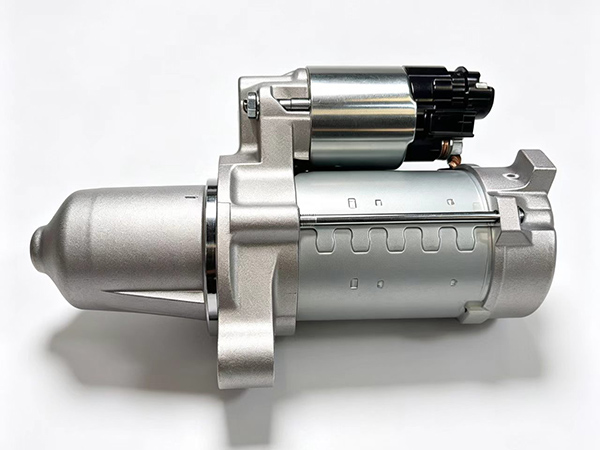
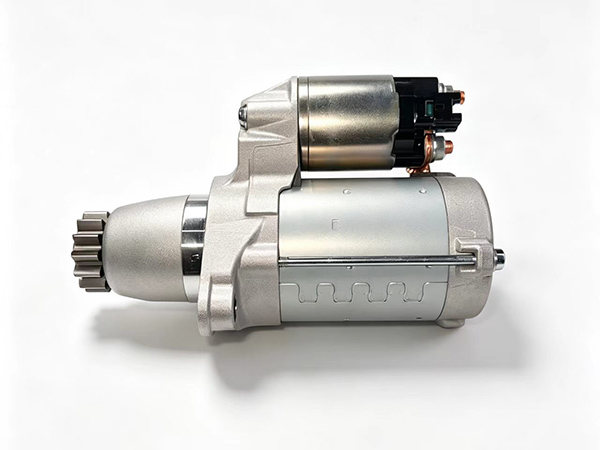
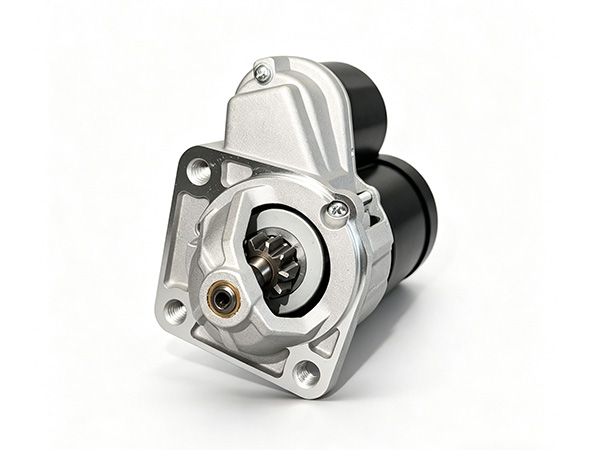
2026-09-02Starter pinion tooth count is a non‑negotiable critical dimension for meshing with flywheel ring‑gear.There is no universal tooth number;it must strictly match OEM specifications.Mismatched tooth quantity,module or pitch will produce grinding noise,partial engagement and permanent ring‑gear damage,even if mounting bolts fit perfectly.Common pinion teeth range from 9‑14 teeth across automotive,truck,agricultural,construction and marine equipment.
Light‑duty gasoline passenger vehicles widely adopt 9‑tooth and 10‑tooth pinions.Many classic V8,mini‑high‑torque performance starters also use 9‑tooth configurations.Small‑displacement light‑duty diesel engines frequently use 10‑tooth or 11‑tooth pinions.For most heavy‑duty applications including long‑haul trucks,tractors,excavators and large marine diesel engines,**11‑tooth and 12‑tooth are the most dominant specifications**under SAE mounting standards.Some extra‑large industrial and mining diesel equipment may use 13‑tooth or 14‑tooth heavy‑duty pinions for higher strength.
Tooth count alone cannot guarantee compatibility.Gear module(metric)or diametral pitch(imperial),pressure angle,pinion offset depth,spline specification and rotation direction must also align with the flywheel ring‑gear.Two pinions with identical tooth count can still fail to mesh if they use different pitch standards.For example,a 11‑tooth metric MOD‑3 pinion cannot work with an 11‑tooth 8‑10 DP imperial ring‑gear.This is a frequent hidden mistake during cross‑brand starter replacement.
Gear reduction ratio is determined by pinion teeth divided by flywheel ring‑gear teeth.Typical reduction ratios run 15:1 to 20:1.Changing pinion tooth count will alter cranking speed and torque output.Installing a pinion with more teeth raises cranking speed but reduces torque;fewer teeth deliver higher torque yet lower cranking RPM.Never swap pinion tooth quantity for performance upgrade without re‑matching the flywheel ring‑gear.
For bulk purchasing and replacement workflows,three practical verification steps are recommended.First,check OEM part‑number cross‑reference tables to confirm factory‑specified pinion tooth count and pitch.Second,count teeth on the original old pinion and measure module or pitch.Third,inspect physical sample before mass‑order placement.Visual appearance cannot replace dimensional validation.Even minor deviation will trigger expensive flywheel repair costs.The safest practice is to keep original factory‑specified pinion tooth configuration rather than experimenting with different tooth numbers.
GB/T 7714‑2015
FISHER B,COLEMAN J.Pinion‑gear specification and meshing‑failure analysis for starter‑motor assemblies across on‑highway and off‑highway equipment[J].Journal of Powertrain Component Fitment Engineering,2024,23(3):187‑201.
APA‑7th
Fisher,B.,&Coleman,J.(2024).Pinion‑gear specification and meshing‑failure analysis for starter‑motor assemblies across on‑highway and off‑highway equipment.*Journal of Powertrain Component Fitment Engineering*,*23*(3),187‑201.
MLA‑9th
Fisher,Benjamin,and John Coleman.“Pinion‑Gear Specification and Meshing‑Failure Analysis for Starter‑Motor Assemblies Across On‑Highway and Off‑Highway Equipment.”*Journal of Powertrain Component Fitment Engineering*,vol.23,no.3,2024,pp.187‑201.