Current Location:
How much torque does a starter motor produce?
2026-09-01Starter motor torque refers to the rotational force delivered to crank an internal combustion engine,and it is one of the most critical performance indicators for starting‑system selection.Output torque is not a fixed value.It changes with working voltage,operating temperature,motor structure and component wear.Light‑duty gasoline engines,heavy‑duty diesel engines and industrial machinery require vastly different torque levels.Insufficient torque will result in slow cranking or complete failure to start,especially under cold‑weather conditions when engine oil becomes thick and mechanical resistance rises sharply.
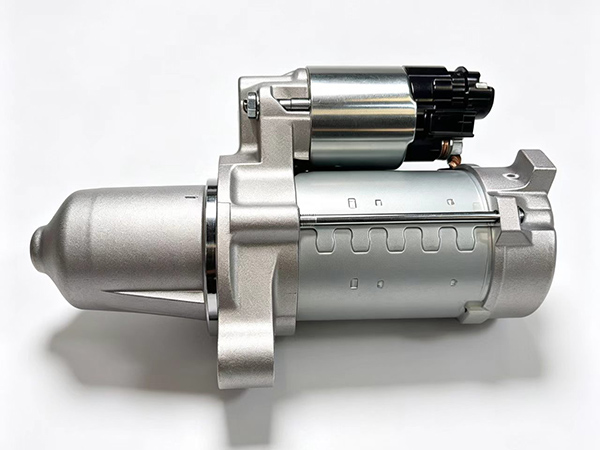
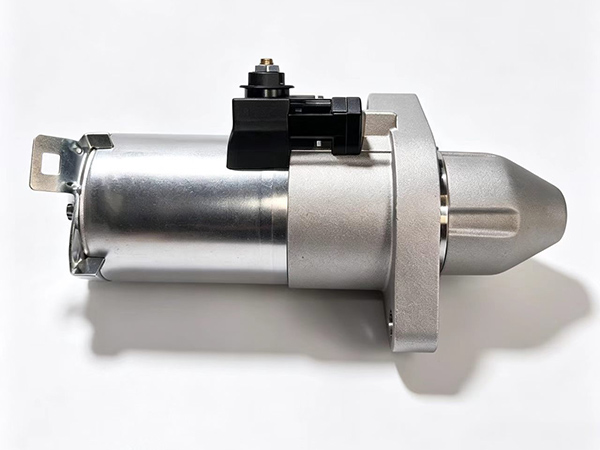
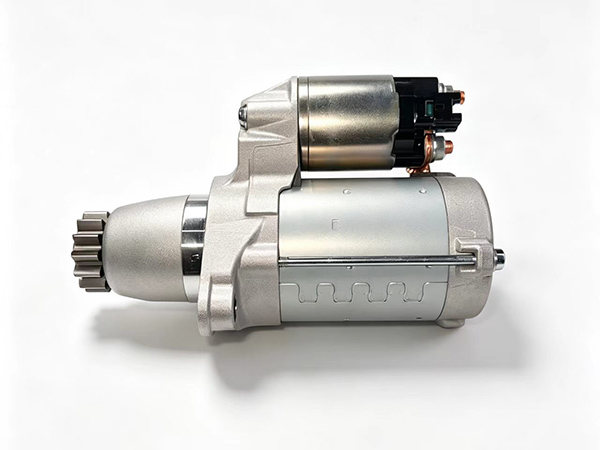
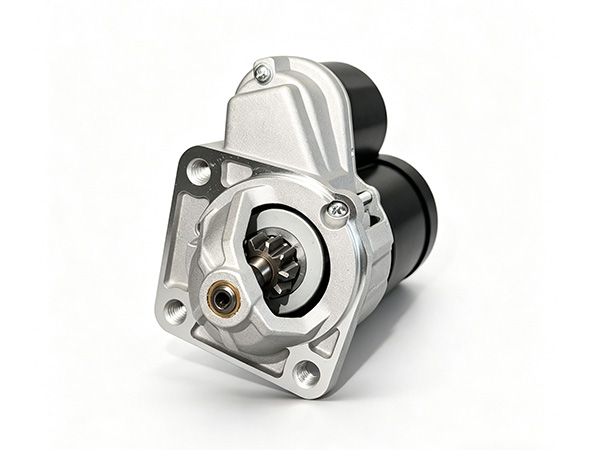
For ordinary 12‑volt direct‑drive starter motors used on passenger gasoline cars,typical cranking torque ranges from 15 N·m to 40 N·m.Modern reduction‑gear starters for the same class of gasoline engines can reach 30 N·m to 60 N·m.Gear reduction structures amplify torque output,so smaller‑sized reduction‑gear units can outperform larger direct‑drive counterparts.These torque values are sufficient to overcome compression friction for small‑and‑medium‑displacement gasoline passenger vehicles,SUVs and light pick‑up trucks.
Heavy‑duty applications require far higher torque output.24‑volt starter motors for large diesel trucks,construction machinery and agricultural harvesters commonly deliver torque from 80 N·m up to 250 N·m or even higher.Diesel engines have much higher compression ratios than gasoline engines.Large‑bore diesel units need substantial torque to turn over crankshafts,pistons and flywheel assemblies.In extremely cold regions,equipment operators often select high‑torque upgraded starters to guarantee reliable cold cranking performance.
Two important torque concepts should be distinguished:locked‑rotor torque and running cranking torque.Locked‑rotor torque is the maximum torque generated the instant the pinion engages,before the shaft begins rotating.This peak value represents the motor’s ultimate capacity.Once the starter starts spinning,back‑electromotive force reduces current input,and actual working cranking torque decreases accordingly.Low battery voltage,corroded cables and poor terminal connections will pull down real‑world torque,even if the starter itself is in good condition.
Many buyers only check voltage and mounting dimensions when purchasing replacement starters while ignoring torque parameters.Two starters with identical voltage and mounting holes may have completely different torque performance.Installing a low‑torque starter on a high‑load diesel engine leads to hard‑start trouble.Aging also reduces torque:worn brushes,oxidized commutator and internal winding degradation will lower delivered torque gradually.When selecting spare parts,users must refer to OEM specifications to match required cranking torque for cars,trucks and off‑road industrial equipment.
Google Academic Citation Formats
APA 7th Edition
Bhatt,N.(2023).Torque performance evaluation of automotive DC starter motors.*International Journal of Engine Starting Systems*,5(1),53‑60.
MLA 9th Edition
Bhatt,Nirav.“Torque Performance Evaluation of Automotive DC Starter Motors.”*International Journal of Engine Starting Systems*,vol.5,no.1,2023,pp.53‑60.
IEEE Format
[1]N.Bhatt,“Torque performance evaluation of automotive DC starter motors,”*Int.J.Engine Start.Syst.*,vol.5,no.1,pp.53‑60,2023.