Current Location:
What is the difference between PM and wound‑field starter motor?
2026-09-01Permanent‑magnet(PM)starter motors and wound‑field starter motors are two mainstream magnetic‑circuit designs widely adopted for automotive and industrial starting systems.Their core difference lies in how they generate internal magnetic fields.PM starters rely on high‑strength permanent magnets,while wound‑field starters create magnetic force through energized copper field coils.This fundamental structural distinction brings gaps in weight,cost,load‑bearing capacity,temperature tolerance and applicable scenarios,which should be fully considered during component selection and replacement.
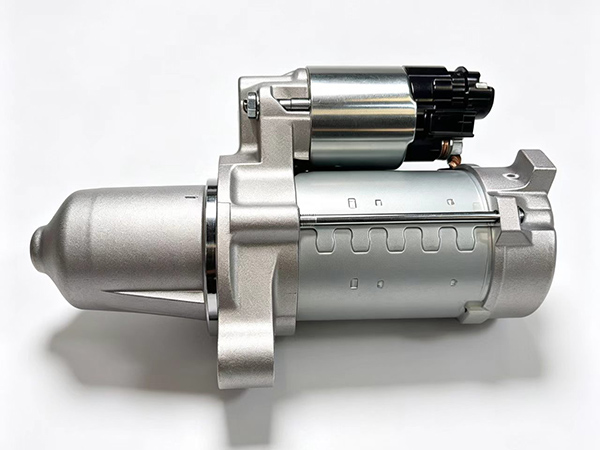
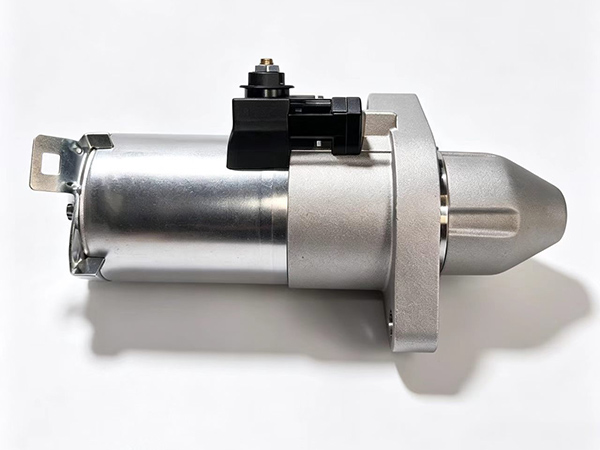
In PM starter motors,powerful permanent magnet blocks are fixed inside the motor housing to supply static magnetic fields.There is no heavy copper field‑winding assembly.Without field coils,the overall motor weight is reduced significantly,and internal power consumption drops.PM designs are mostly paired with reduction‑gear structures,achieving compact size and light weight.These advantages make PM starters ideal for light‑duty 12‑volt gasoline engines such as passenger cars and small light‑commercial vehicles.Nevertheless,permanent magnets are sensitive to extreme high temperature.Sustained overheating may cause partial demagnetization,which permanently weakens magnetic strength and reduces output torque.Severe shock impact can also damage magnet blocks.
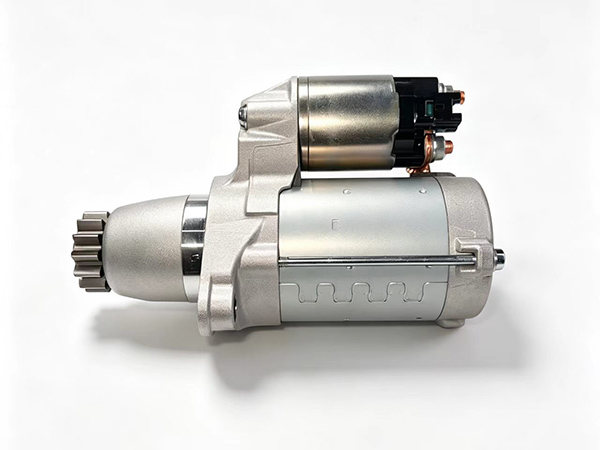
By contrast,wound‑field starter motors use thick copper field coils mounted inside the housing.When cranking current flows through these coils,strong electromagnetic fields are produced.Magnetic intensity varies with input current.Wound‑field structures can withstand heavy shock loads,high instantaneous current and harsh working temperatures.They maintain stable torque output under heavy cranking resistance,so they dominate heavy‑duty applications including large‑displacement diesel trucks,construction machinery and farm equipment with 12V or 24V electrical systems.The obvious downside is extra weight and larger volume brought by copper windings,together with higher internal power loss during operation.
Their failure modes also differ.Common PM‑starter faults include magnet demagnetization,magnet cracking and brush wear.For wound‑field starters,typical failures are coil short‑circuit,open‑circuit and burnt field windings.External visual inspection cannot tell them apart;users need to check nameplate specifications or original part numbers.Interchanging these two types is not allowed even with identical mounting dimensions and voltage.A PM starter cannot handle heavy‑duty diesel load,while a wound‑field unit may be unnecessarily bulky for light gasoline engines.
In aftermarket practice,remanufactured PM starters require strict magnet performance testing.Wound‑field rebuilds focus on coil insulation inspection.Understanding these differences helps mechanics and procurement personnel pick suitable starting motors for different equipment,avoiding premature failure and unexpected downtime.
Google Academic Citation Formats
APA 7th Edition
Gupta,R.(2024).Comparative study of permanent‑magnet and wound‑field starter motors.*Journal of Automotive Electromechanical Components*,9(2),38‑45.
MLA 9th Edition
Gupta,Ravi.“Comparative Study of Permanent‑Magnet and Wound‑Field Starter Motors.”*Journal of Automotive Electromechanical Components*,vol.9,no.2,2024,pp.38‑45.
IEEE Format
[1]R.Gupta,“Comparative study of permanent‑magnet and wound‑field starter motors,”*J.Autom.Electromech.Compon.*,vol.9,no.2,pp.38‑45,2024.