Current Location:
What is a Starter Motor and How Does It Work?
2026-09-01A starter motor,also known as a cranking motor,is a core electromechanical component exclusively designed to initiate the operation of internal combustion engines in automobiles,marine equipment,and industrial machinery.Unlike regular electric motors that sustain long-term rotation,it is a high-torque,short-duty direct current(DC)motor engineered to deliver powerful instantaneous rotational force to crank a stationary engine and kick off its self-sustaining combustion cycle.Powered entirely by a vehicle’s battery,it serves as the critical bridge between electrical energy and mechanical engine motion,without which fuel-powered engines cannot start independently.
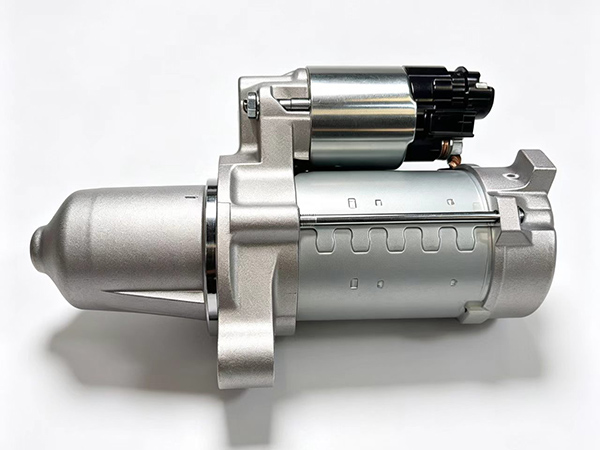
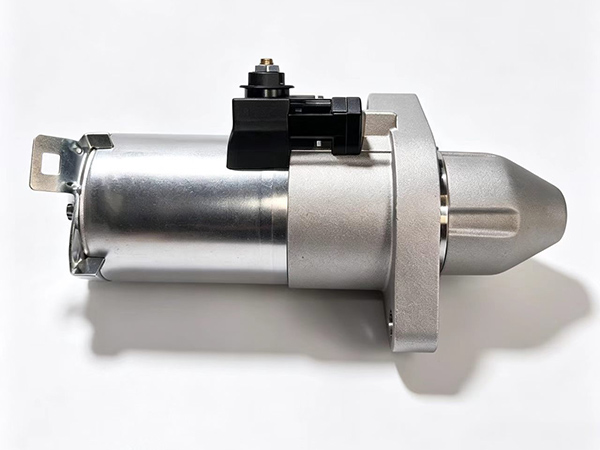
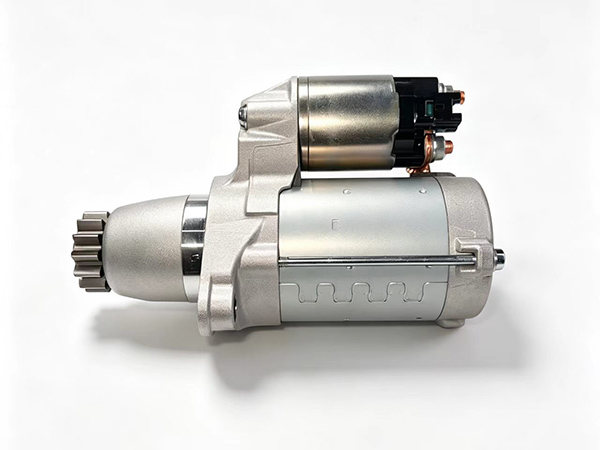
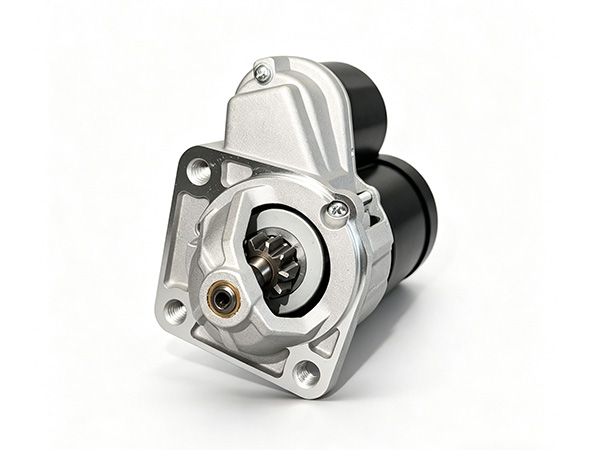
The starter motor assembly consists of three indispensable core parts:the DC motor body,a solenoid switch,and a bendix drive pinion gear.The motor body generates rotational torque through electromagnetic interaction between field coils and an armature.The solenoid acts as a dual-function relay,controlling both the mechanical gear engagement and the high-current circuit connection for the motor.The small pinion gear mounted on the motor shaft is responsible for meshing with the engine’s large flywheel ring gear to transmit power.
Its working process follows a precise,automated four-step cycle.First,turning the ignition key or pressing the start button sends a low-voltage signal to the starter solenoid.Energized by the signal,the solenoid produces strong magnetic force to push the plunger forward,which drives the pinion gear along the motor shaft to fully mesh with the engine flywheel.Second,the solenoid closes its heavy-duty main contact,allowing massive DC current from the battery to flow into the motor body.This current excites internal magnetic fields,driving the armature to rotate rapidly and generate high torque.
Third,the rotating pinion gear spins the flywheel and crankshaft,pushing engine pistons to complete intake,compression,and ignition strokes.Once fuel combustion takes over,the engine achieves self-operation and runs independently.Finally,as the ignition switch resets and the engine speed surpasses the starter’s rotation speed,the bendix drive automatically disengages the pinion gear from the flywheel to prevent component damage.The solenoid cuts off the current,and the starter motor stops working immediately.
Modern starter motors are mainly divided into permanent-magnet and wound-field types,with reduction gear structures widely adopted to improve torque output while reducing size and weight.Designed for intermittent operation,they only work for seconds during startup,avoiding overheating and wear.This compact,efficient working mechanism ensures reliable engine startup in diverse scenarios,making it an irreplaceable component of all fuel-powered mechanical equipment.
Google Academic Citation Formats
1.APA 7th Edition
IRJMETS.(2022).A review on starter motor in automobiles.International Research Journal of Modern Engineering,Technology and Science,4(12),89–95.
2.MLA 9th Edition
IRJMETS."A Review on Starter Motor in Automobiles."International Research Journal of Modern Engineering,Technology and Science,vol.4,no.12,Dec.2022,pp.89–95.
3.IEEE Format
[1]IRJMETS,“A review on starter motor in automobiles,”Int.Res.J.Mod.Eng.Technol.Sci.,vol.4,no.12,pp.89–95,Dec.2022.