Current Location:
What are the main parts of a starter motor?
2026-09-01A starter motor is a high‑torque direct‑current electromechanical device that cranks internal‑combustion engines.Every functional unit works cooperatively to convert battery electric power into mechanical rotation,complete gear engagement and disengagement,and withstand huge instantaneous current during cranking.Understanding its main components helps technicians conduct fault diagnosis,routine inspection and part replacement for automotive,heavy‑duty and industrial starter motors.
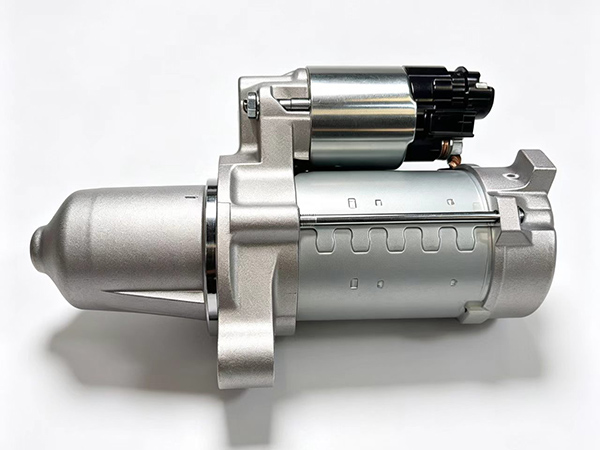
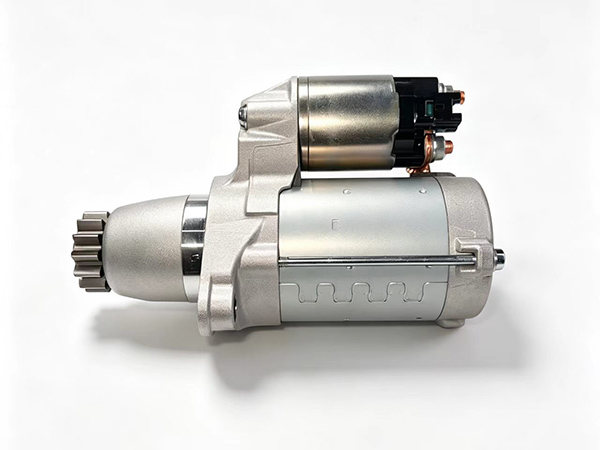
The solenoid is one of the most critical assemblies.It acts as both a magnetic relay and a mechanical actuator.Inside the solenoid housing,two coils generate magnetic force once receiving the starting signal from ignition system.The movable plunger inside pushes forward to shift the pinion into mesh with flywheel ring gear.Meanwhile,internal heavy‑duty contacts close to conduct large‑ampere current from battery to the starter motor.Damaged solenoid contacts commonly lead to clicking noise or no cranking response.
The DC motor section generates driving torque.Field coils or permanent magnets build stable magnetic field inside the motor housing.The armature,assembled with commutator and copper windings,spins under magnetic interaction.Carbon brushes press tightly against the commutator,delivering direct current to armature windings.Worn brushes,burnt commutator bars or short‑circuited armature windings are frequent failure points,which cause slow cranking or intermittent starting problems.
Bendix drive,also known as overrunning clutch,connects armature shaft and pinion gear.When starting,the screw‑type helical shaft pushes pinion outward to engage flywheel teeth.After the engine fires up and runs faster than the starter,the overrunning clutch slips automatically.This prevents high‑speed engine rotation from destroying starter armature.Worn springs or broken clutch rollers will result in spinning without engaging the flywheel.
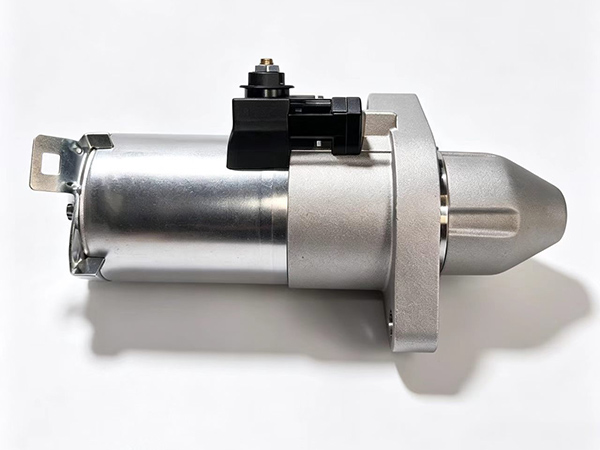
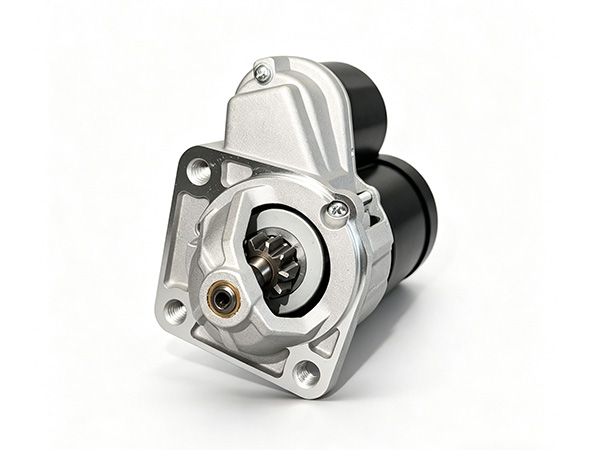
Other essential parts include the pinion gear,housing,end frames and mounting brackets.The pinion meshes with engine flywheel ring gear to transfer cranking torque.Metal housing offers mechanical protection and magnetic circuit path.Front and rear end frames support armature bearings and fix the whole unit onto engine block.All these components are designed for short‑time intermittent operation,since continuous running will quickly trigger overheating and permanent damage.
In practical aftermarket work,many starter malfunctions originate from a single failed part rather than full‑unit damage.Rebuild services replace brushes,solenoid contacts or bendix assembly instead of purchasing brand‑new starters,cutting maintenance cost for trucks,agricultural machinery and construction equipment.Recognizing each main part’s function allows users to distinguish whether faults come from starter itself,battery or wiring circuits.
Google Academic Citation Formats
APA 7th Edition
Kumar,S.(2023).Component analysis and failure mode study of automotive starter motors.*Journal of Automotive Engineering Research*,5(2),41‑48.
MLA 9th Edition
Kumar,Suresh."Component Analysis and Failure Mode Study of Automotive Starter Motors."*Journal of Automotive Engineering Research*,vol.5,no.2,2023,pp.41‑48.
IEEE Format
[1]S.Kumar,“Component analysis and failure mode study of automotive starter motors,”*J.Autom.Eng.Res.*,vol.5,no.2,pp.41‑48,2023.