Current Location:
What is the difference between a starter motor and alternator?
2026-09-01Starter motor and alternator are two essential electrical components fitted on internal‑combustion engines for vehicles,trucks and heavy‑duty machinery.Although both connect with the vehicle battery and work closely within the engine electrical system,they perform opposite energy‑conversion tasks and cannot substitute for one another.Confusion between these two devices often leads to misdiagnosis of electrical faults,wrong‑part purchasing and unnecessary maintenance expenses.
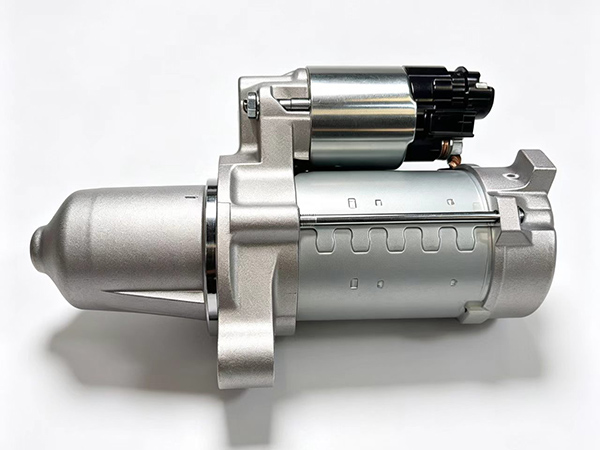
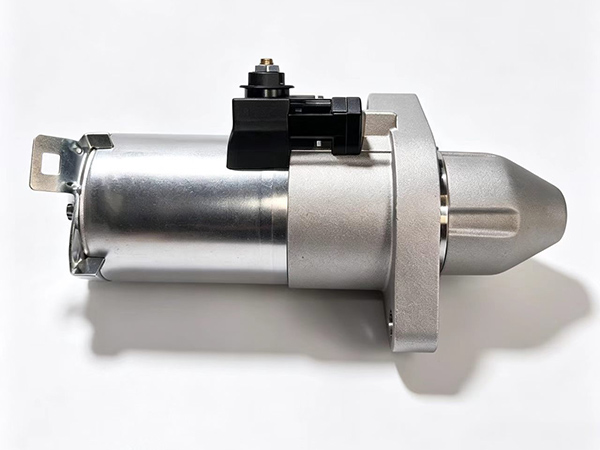
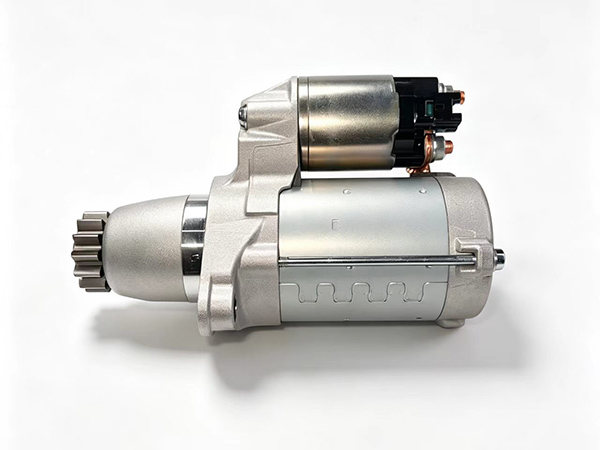
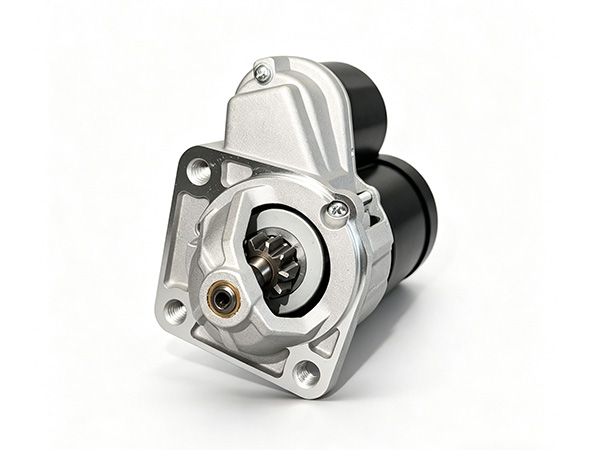
A starter motor is a high‑torque direct‑current motor powered by the battery.Its core mission is to consume electric energy and turn it into mechanical rotational power.When the engine remains stationary,the starter draws extremely large short‑burst current from the battery to crank the flywheel and start combustion.It only operates for a few seconds during startup.Once the engine runs independently,the starter stops completely.Structurally,it is equipped with a solenoid and bendix drive,which push the pinion gear to mesh with the flywheel ring gear temporarily.It is built for intermittent duty,and prolonged continuous rotation will cause rapid overheating and burnout.
In contrast,an alternator functions as an electric generator driven mechanically by the running engine.It takes mechanical power from the engine crankshaft via belt drive and converts it into alternating current,which is then rectified into direct current.Instead of consuming battery power,the alternator supplies electricity for vehicle electrical loads and recharges the battery after engine startup.It keeps running throughout almost the whole engine working cycle.It contains rotor,stator,rectifier diodes and voltage regulator,without meshing gear assemblies.Its working current is moderate and stable,designed for long‑duration continuous operation.
Their typical failure symptoms also differ greatly.A faulty starter motor usually brings clicking noise,slow cranking or zero cranking response when users try to start the machine.The vehicle may have a fully charged battery yet fail to crank the engine.A defective alternator rarely affects initial engine startup.Common signs include dim lights,warning lamp illumination and gradual battery drain during operation,because no sufficient charging power is provided.
To sum up,the starter motor drains battery power to start the engine,while the alternator is powered by the engine to recharge the battery.One works briefly to begin combustion,the other runs continuously to maintain the whole electrical system.Clear identification of their functional differences helps mechanics and equipment operators locate electrical faults accurately and select correct replacement components.
Google Academic Citation Formats
APA 7th Edition
Rahman,M.(2024).Functional comparison of starter motor and alternator in automotive electrical systems.*International Journal of Vehicle Components*,6(1),27‑34.
MLA 9th Edition
Rahman,Md.“Functional Comparison of Starter Motor and Alternator in Automotive Electrical Systems.”*International Journal of Vehicle Components*,vol.6,no.1,2024,pp.27‑34.
IEEE Format
[1]M.Rahman,“Functional comparison of starter motor and alternator in automotive electrical systems,”*Int.J.Veh.Compon.*,vol.6,no.1,pp.27‑34,2024.