Current Location:
What is the function of starter motor solenoid?
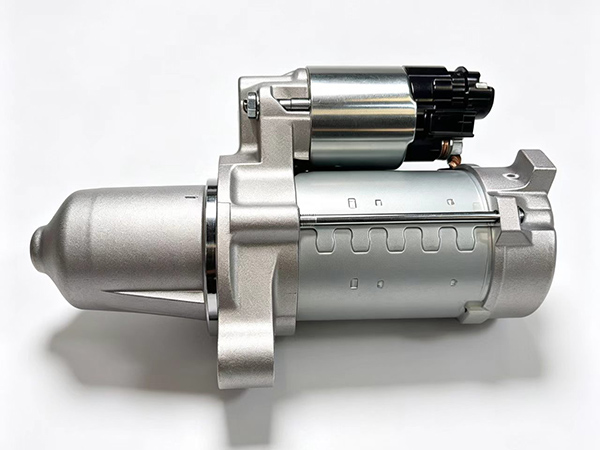
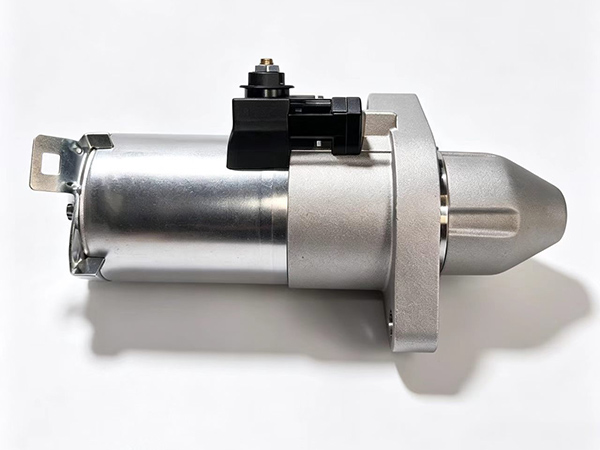
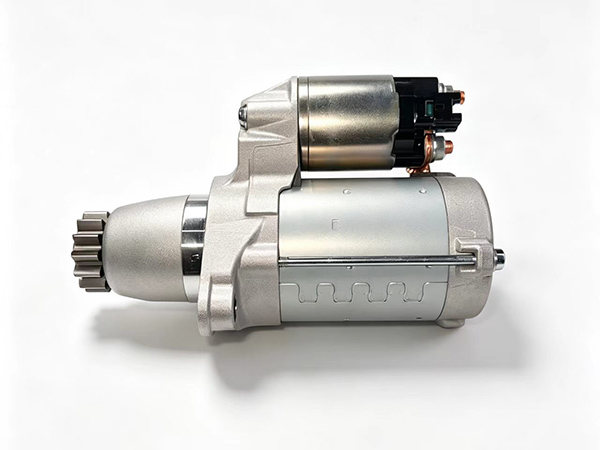
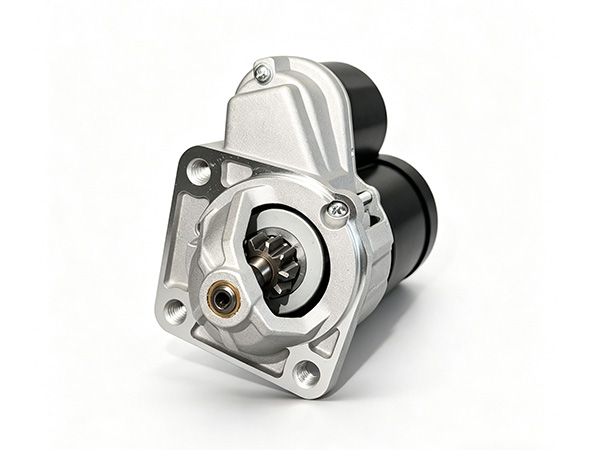
2026-09-01The starter motor solenoid is a multifunctional electromagnetic assembly mounted on the upper body of most starter motors.Often regarded as the control heart of the starting system,it serves as both a high‑current electrical relay and a mechanical actuator.Without a working solenoid,the starter motor cannot mesh with the flywheel or receive large cranking current,even if the DC motor itself remains in good condition.Many starting failures are directly linked to worn or damaged solenoids rather than defects inside the motor windings.
First of all,the solenoid completes mechanical gear engagement and disengagement.When the ignition switch or start button is activated,a small low‑current control signal flows into the solenoid’s internal pull‑in and hold coils.The energized coils generate powerful magnetic attraction,pulling a metal plunger inward.Connected to the plunger is a shift lever that pushes the bendix drive and pinion gear forward along the armature shaft.This movement forces the pinion to mesh precisely with the flywheel ring gear before the starter begins to rotate.Once the engine starts and the starting signal is released,magnetic force disappears.Return springs push the plunger back,pulling the pinion gear away from the flywheel to prevent damage caused by high‑speed engine rotation.
Secondly,the solenoid acts as a heavy‑duty relay to switch the huge battery current.Vehicle ignition switches and start‑control circuits can only handle small amperage.They cannot directly conduct the hundreds of amps required by the starter motor.Inside the solenoid,large copper main contacts close when the plunger moves into place.These contacts connect the thick battery cable to the starter motor terminal,delivering massive DC current to drive armature rotation.Burnt,pitted or corroded contact surfaces will cause poor conductivity,resulting in clicking noise,weak cranking or no starter rotation.
The dual‑coil structure brings another key function.The pull‑in coil provides strong magnetic force to move the plunger and pinion into position.After full engagement,the hold coil maintains the plunger position with less power.This design reduces energy consumption and avoids overheating of solenoid coils during short cranking cycles.If either coil burns out,the solenoid will fail to engage or cannot stay locked.
Common solenoid faults include coil burnout,worn main contacts,stuck plunger and broken return springs.Some starter units allow separate solenoid replacement,while others require whole‑starter assembly change.When troubleshooting starting issues,technicians must separate solenoid malfunctions from motor brush or armature damage.Understanding the dual electrical‑mechanical function of the solenoid supports accurate fault diagnosis for passenger cars,trucks and heavy‑duty industrial equipment.
Google Academic Citation Formats
APA 7th Edition
Yadav,V.(2024).Operation and failure analysis of starter motor solenoid.*International Journal of Automotive Mechatronics*,7(2),49‑56.
MLA 9th Edition
Yadav,Vikas.“Operation and Failure Analysis of Starter Motor Solenoid.”*International Journal of Automotive Mechatronics*,vol.7,no.2,2024,pp.49‑56.
IEEE Format
[1]V.Yadav,“Operation and failure analysis of starter motor solenoid,”*Int.J.Autom.Mechatron.*,vol.7,no.2,pp.49‑56,2024.