Current Location:
Can a bad battery damage the starter motor?
2026-09-01A defective or poor‑condition battery will indirectly cause damage to a starter motor,even though the starter itself is not inherently broken.Many operators misunderstand that battery issues only lead to hard starting.In fact,weak,degraded or under‑charged batteries create harsh working conditions for the starting system.Long‑term abuse will accelerate wear and bring permanent failure for 12‑volt and 24‑volt starters used in passenger cars,trucks and heavy‑duty industrial machinery.
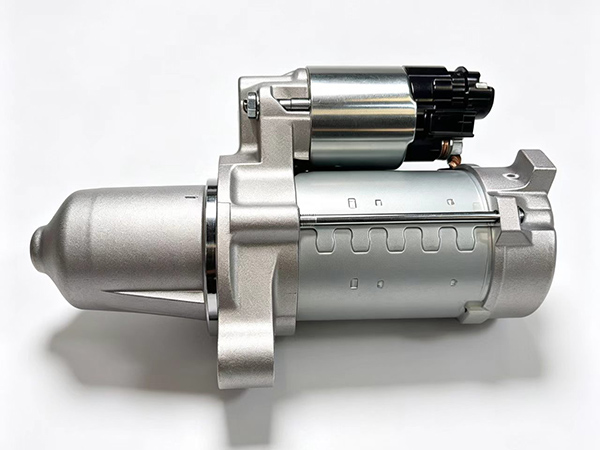
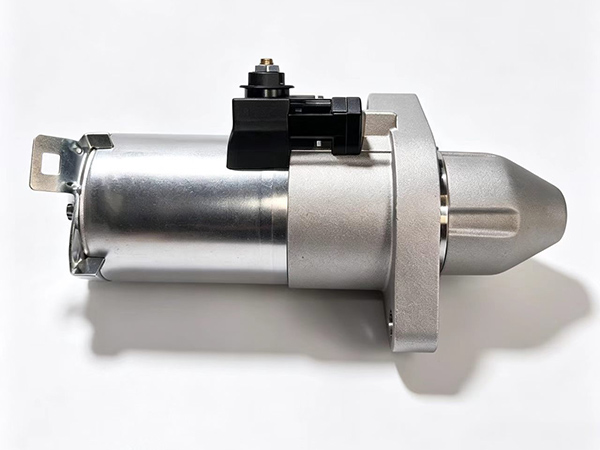
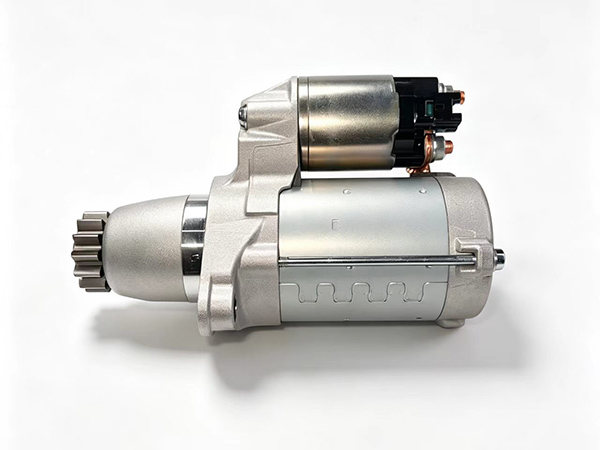
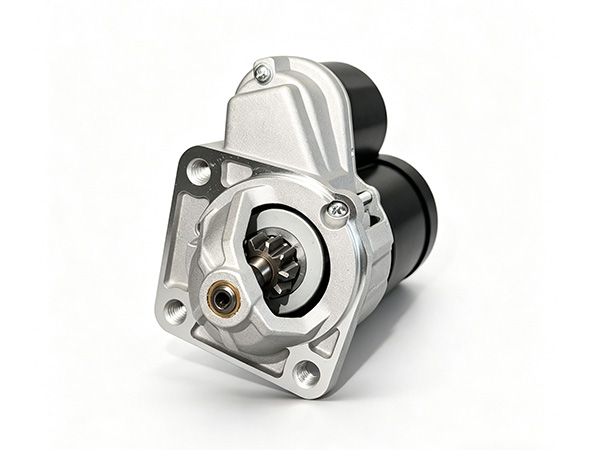
A weak battery cannot sustain stable voltage during cranking.When the start switch is activated,terminal voltage drops sharply.To generate required cranking torque,the starter motor draws far higher current than its normal working range.Excessive current produces extra heat inside the starter housing.Since starters are designed for short‑time intermittent duty,accumulated heat burns carbon brushes,pits the commutator surface and degrades winding insulation.For permanent‑magnet starter motors,sustained high‑temperature operation may trigger irreversible magnet demagnetization,permanently lowering torque output.
A failing battery also encourages improper operating habits.When the engine fails to fire due to insufficient battery power,users often hold the start button for extended periods or perform repeated consecutive cranking attempts.Without adequate cooling intervals,heat builds rapidly inside the starter.What starts as a simple battery problem gradually develops into mechanical or electrical damage to the starter assembly.In many repair cases,technicians replace a damaged starter,yet ignore the underlying bad battery,resulting in repeated premature starter failure.
Apart from under‑voltage conditions,other battery‑related faults also create risks.Severely sulfated or internally short‑circuited batteries can produce unstable voltage spikes.These voltage surges may harm the solenoid coils and built‑in electronic boards on brushless‑type starters.Loose battery terminals caused by battery degradation add circuit resistance.Large voltage drop at connection points forces the starter to work harder under heavy‑current status,further raising thermal stress.
It is important to clarify that a bad battery does not destroy a starter instantly.Damage accumulates gradually over multiple cranking cycles.If the battery is replaced promptly at early warning stages,the starter can remain intact.When troubleshooting starting‑system faults,battery health testing should always come before starter disassembly.Measuring open‑circuit voltage and cranking voltage helps technicians separate battery defects from genuine starter failure.
To sum up,a faulty battery is a major hidden cause of premature starter damage.Equipment owners should maintain batteries in good condition,avoid long‑time continuous cranking,and resolve battery‑related problems in time.Otherwise,simple battery replacement will turn into expensive dual‑component repair work for automotive,agricultural and construction machinery.
Google Academic Citation Formats
APA 7th Edition
Siddiqui,A.(2024).Secondary damage to starter motors caused by defective vehicle batteries.*Journal of Automotive Power‑System Reliability*,10(3),37‑44.
MLA 9th Edition
Siddiqui,Aamir.“Secondary Damage to Starter Motors Caused by Defective Vehicle Batteries.”*Journal of Automotive Power‑System Reliability*,vol.10,no.3,2024,pp.37‑44.
IEEE Format
[1]A.Siddiqui,“Secondary damage to starter motors caused by defective vehicle batteries,”*J.Autom.Power Syst.Reliab.*,vol.10,no.3,pp.37‑44,2024.