Current Location:
Why does starter motor keep running after engine starts?
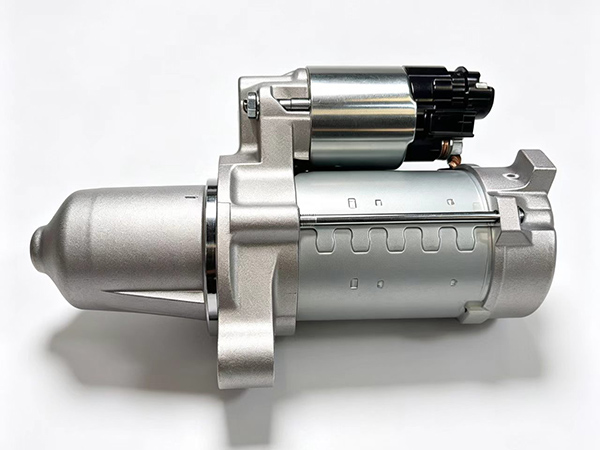
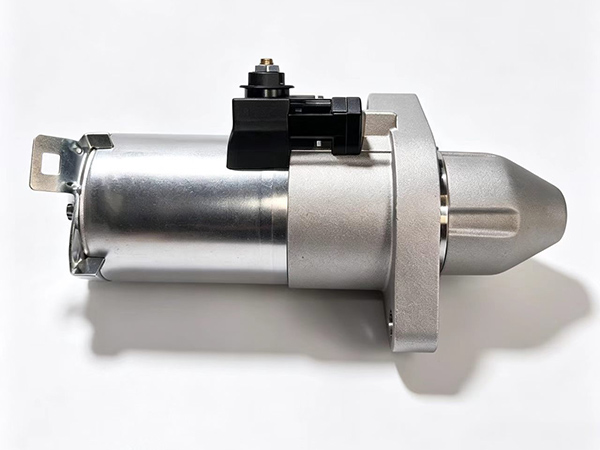
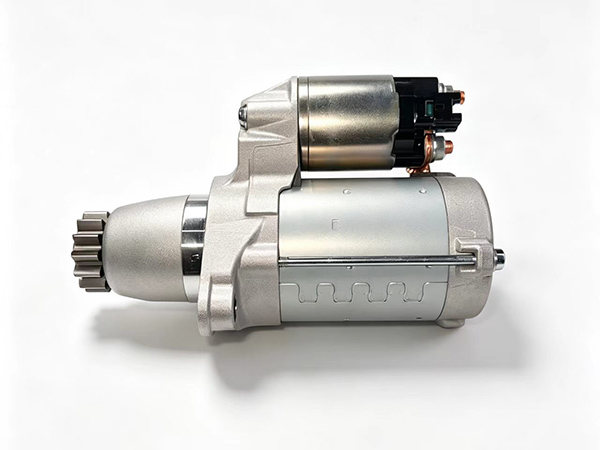
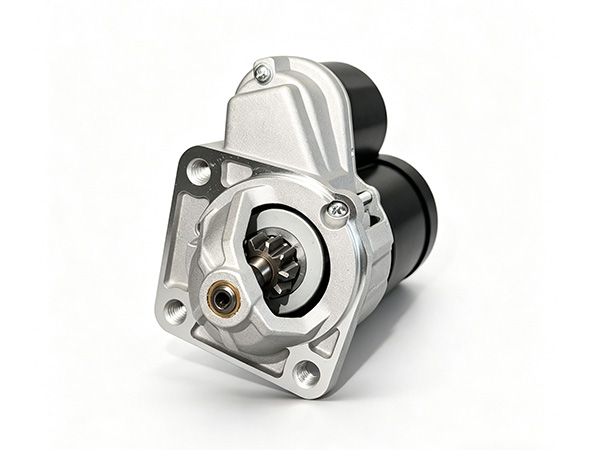
2026-09-01If the starter motor continues to spin after the engine has successfully started,it represents a serious mechanical‑electrical fault that requires immediate power cut‑off.The starter is only supposed to operate for a short cranking period.Once the engine fires,the starter pinion gear must disengage from the flywheel ring gear.Persistent running will produce loud screaming noise,overheat internal windings,wear gear teeth and even deform the starter armature within seconds.This dangerous failure occurs on 12‑volt light‑duty vehicles and 24‑volt heavy‑duty machinery,and its root causes fall into solenoid mechanical jamming,electrical circuit short‑circuit and mechanical return‑spring failure.
Stuck solenoid plunger is one of the most common reasons.Inside the solenoid,dirt,corrosion or metal debris can jam the plunger so it cannot retract after the starting signal disappears.Even when the operator releases the ignition or start button,heavy‑duty main contacts remain closed.Continuous battery current flows into the starter motor,keeping it rotating.Meanwhile,the shift lever stays pushed forward,holding the pinion gear meshed with the high‑speed flywheel.The flywheel drives the starter pinion at far above its rated rotational speed,generating huge centrifugal stress on armature windings.
Faulty electrical control circuits also trigger continuous starter operation.Short‑circuited start relay contacts may stick closed.Even without activating the start button,power keeps feeding to the solenoid control terminal.A defective ignition switch with internal short‑circuit can hold the starting circuit energized.In some modified or poorly‑wired equipment,incorrect wiring connects constant battery power to the starter control line.In these electrical‑fault scenarios,disconnecting the battery is the fastest way to stop the starter from running non‑stop.
Mechanical return‑spring failure inside the solenoid or bendix drive brings another risk.Fatigued,broken or deformed return springs lose enough tension to pull the plunger and bendix assembly back to the resting position.The solenoid contacts may open electrically,yet mechanical parts remain in engaged status.The flywheel drives the pinion gear backward,making the starter spin passively.In this special case,the starter motor itself is not powered,but it is still forced to rotate by engine power,which also causes severe damage.
Mis‑installation and foreign‑object jamming cannot be ignored.Metal fragments,dust and grease residue block the sliding movement of bendix splines.After startup,the bendix cannot slide backward and disengage.Improper starter mounting position may also restrict gear retraction travel.
Operators must take emergency measures immediately once this fault appears.Turning off the ignition key may not stop the starter.Disconnecting the battery negative terminal cuts power completely.After emergency shutdown,technicians inspect solenoid plunger movement,relay and ignition‑switch condition,check return‑spring integrity and clean bendix splines.Do not restart the equipment before root‑cause repair.If ignored,this fault will destroy the starter and scratch the expensive flywheel ring gear,leading to high overhaul costs for automotive,agricultural and construction machinery.
Google Academic Citation Formats
APA 7th Edition
Mishra,D.(2023).Analysis of continuous‑running faults of automotive starter motors.*International Journal of Automotive Electrical Faults*,6(4),54‑61.
MLA 9th Edition
Mishra,Deepak.“Analysis of Continuous‑Running Faults of Automotive Starter Motors.”*International Journal of Automotive Electrical Faults*,vol.6,no.4,2023,pp.54‑61.
IEEE Format
[1]D.Mishra,“Analysis of continuous‑running faults of automotive starter motors,”*Int.J.Autom.Electr.Faults*,vol.6,no.4,pp.54‑61,2023.