Current Location:
How do you bench test a starter motor?
2026-09-01Bench test evaluates the full performance of a removed starter motor off‑vehicle,confirming solenoid operation,no‑load speed,current draw,bendix engagement and internal short‑circuit conditions for cars,diesel trucks,farm and construction equipment.It separates mechanical wear and hidden electrical faults that cannot be detected by on‑vehicle testing.Required tools include fully‑charged 12‑V battery,heavy‑duty jumper cables,clamp‑on ammeter,insulated test leads,safety gloves and a firm vice to secure the starter.Safety note:keep hands away from moving pinion gear during testing.
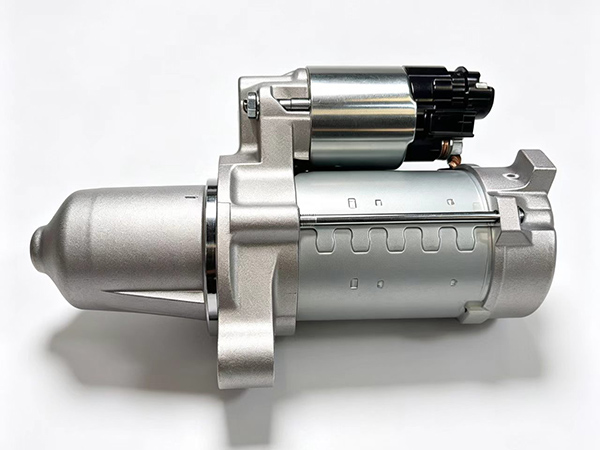
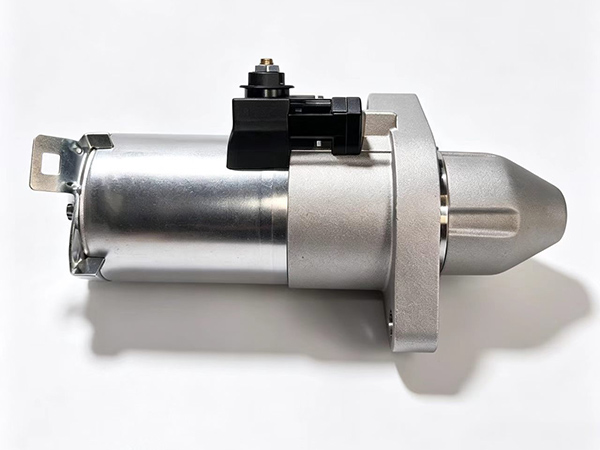
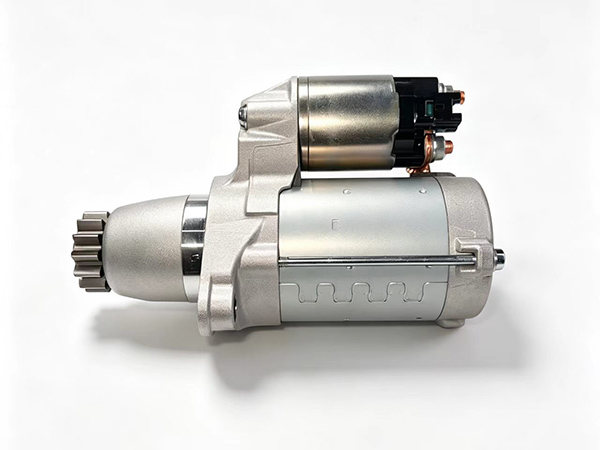
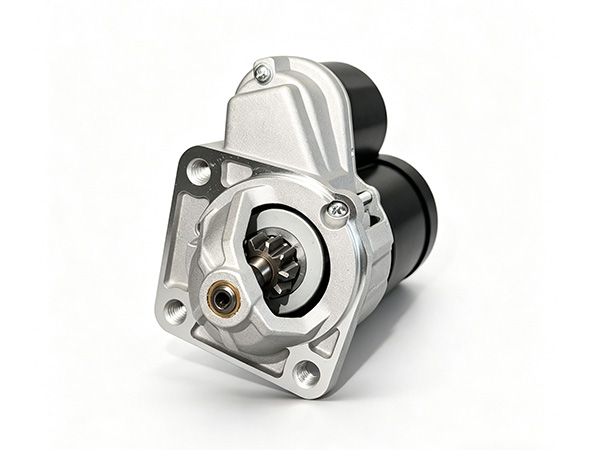
First,complete visual inspection before power application.Check housing for cracks,burn marks,oil contamination and burnt smell.Inspect pinion gear teeth for chipping,rounding or burrs.Manually slide the bendix along helical splines;it should move smoothly without sticking.Test the one‑way clutch by hand:the pinion should rotate freely in one direction and lock solidly in the opposite direction.If clutch slips by hand,the bendix drive is defective.Check solenoid terminals for corrosion and loose connections.
No‑load bench test is the core procedure.Clamp the starter housing securely in a vice;do not over‑tighten to avoid cracking casing.Connect battery negative to starter metal housing.Connect battery positive to the large main power stud on solenoid.Use a separate small insulated jumper wire to momentarily touch battery positive to the small solenoid control terminal.This activates the solenoid.Observe two actions:solenoid plunger pushes bendix pinion outward,and the armature spins rapidly.
Record no‑load cranking amperage with clamp‑on ammeter around positive battery cable.Compare measured current against manufacturer specification.A typical 12‑V automotive starter draws 60‑100 A at no‑load.Higher‑than‑spec amperage indicates internal problems:worn bearings,mechanical binding,armature turn‑to‑turn short‑circuit or winding‑to‑ground leak.Too‑low current with slow rotation points to partial winding damage or high‑resistance brush‑commutator contact.
Verify solenoid function separately.When energized,pinion must pop out quickly with solid click.After removing trigger voltage,pinion should retract smoothly back to rest position.If pinion sticks outward,solenoid return spring or bendix splines are jammed.If solenoid clicks but armature does not spin,internal solenoid main contacts are burned.
Perform winding continuity and insulation test with multimeter.Measure resistance between armature commutator bars to detect shorted segments.Measure resistance between main terminal and starter housing.Any low‑resistance reading proves winding‑to‑ground short‑circuit,meaning the starter is faulty.A growler tester can further detect hidden turn‑to‑turn short‑circuits inside armature windings that multimeter cannot pick up easily.
Under‑load simulated test adds real‑world reference if test equipment is available.Free no‑load test cannot fully reproduce engine cranking load.A starter passing no‑load bench test may still fail under actual engine compression load,such as marginal bendix slip or partial winding short‑circuit that only shows under torque.
After bench test assessment:if current,speed,solenoid movement and bendix clutch all meet specifications,the starter is serviceable;only clean splines and replace carbon brushes if needed.Excessive amp draw,smoking,burnt smell,sticking pinion or slipping bendix means repair or replacement is required.
Bench‑test results provide reliable evidence for repair decisions,avoiding guessing faults and unnecessary vehicle reinstallation of defective starters.
APA 7th Edition
Patel,J.(2024).Bench‑test methodology for DC automotive starter motors.*International Journal of Off‑Vehicle Component Diagnostic Research*,10(3),45‑52.
MLA 9th Edition
Patel,Jignesh.“Bench‑Test Methodology for DC Automotive Starter Motors.”*International Journal of Off‑Vehicle Component Diagnostic Research*,vol.10,no.3,2024,pp.45‑52.
IEEE Format
[1]J.Patel,“Bench‑test methodology for DC automotive starter motors,”*Int.J.Off‑Veh.Compon.Diagn.Res.*,vol.10,no.3,pp.45‑52,2024.