Current Location:
How to test a starter motor without removing it?
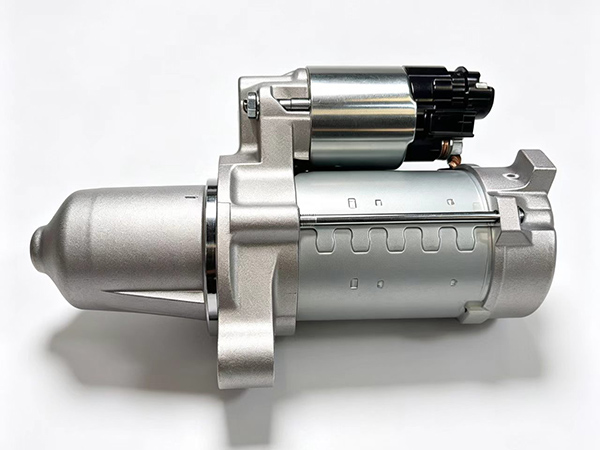
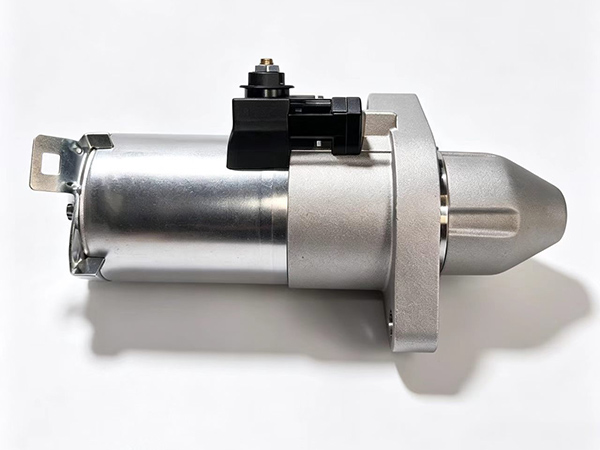
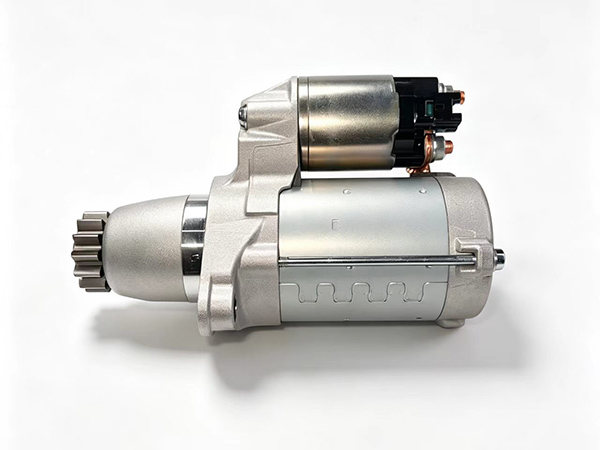
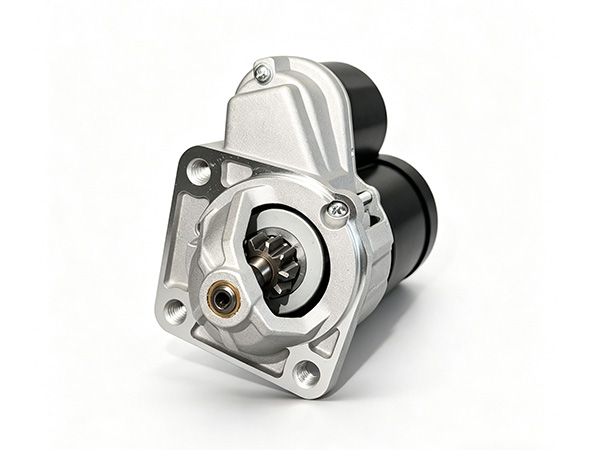
2026-09-01On‑vehicle starter testing allows technicians to evaluate starter‑system condition without removing the unit from engine compartment,widely used for passenger cars,diesel trucks,agricultural and construction machinery.This method identifies whether the fault lies in battery,cables,relay,solenoid or the starter itself.It cannot check internal mechanical wear such as bearing play or hidden partial armature short‑circuit,but effectively eliminates most external control‑circuit faults before disassembly.Prepare multimeter with voltage‑measurement function,insulated jumper wires and safety tools.
First,confirm pre‑conditions.Set transmission to neutral or park position,apply parking brake,block vehicle wheels.Do not stand near fan belts or rotating components during testing.Listen for symptom when turning ignition to start position:no click,only click without cranking,slow cranking,whirring free‑wheeling or loud metallic noise.
Perform battery static and cranking voltage test.Measure battery open‑circuit static voltage.For 12‑volt system,healthy battery should read above 12.4 V.While an assistant holds ignition at start position,record cranking voltage.If voltage drops below 9.5 V during cranking,suspect weak battery,corroded terminals or loose high‑current cables.Excessive voltage drop proves external power‑supply problem rather than starter failure.
Check starter relay function.Locate starter relay in fuse‑relay box.Listen for distinct audible click when activating start switch.If no click occurs,measure control‑coil voltage at relay socket.If ignition trigger voltage arrives at relay coil but relay does not click,relay coil is defective.Swap with known‑good identical relay for quick verification.If relay clicks but starter remains inactive,measure output terminal voltage of relay to starter solenoid.No output voltage means bad relay contacts.
Test solenoid control signal at starter.Locate small‑gauge solenoid trigger wire on starter solenoid terminal.Have assistant turn key to start,measure voltage on this wire.If close to full battery voltage appears here but starter gives no response,the fault points to solenoid or starter motor.If no voltage arrives,problem lies in relay,ignition switch,neutral‑safety switch or wiring harness upstream.
Perform solenoid bypass test(carefully).Use heavy‑gauge insulated jumper cable to connect battery positive directly to small solenoid trigger terminal.Do NOT touch main high‑current stud.If starter cranks engine normally by bypass,the starter motor and solenoid are good;fault is within vehicle control circuit.If only solenoid clicks yet motor does not run,high‑current contacts inside solenoid are burned.If starter still does nothing,suspect internal starter failure.
Measure voltage drop across main starter cables during cranking.Place multimeter probes on battery terminal and corresponding starter main stud.Excessive voltage drop indicates corroded or loose cables.Ground‑side voltage‑drop test is equally important between starter housing and battery negative post.High ground resistance will disable starter performance.
Important limitations of on‑vehicle testing:It cannot detect partial‑turn‑to‑turn armature short‑circuit,worn bearings or marginal bendix slip.These hidden defects may pass on‑vehicle test and only fail under load.If all electrical readings are normal yet starter still malfunctions,physical removal for bench inspection becomes necessary.
Many unnecessary starter removals can be avoided by these non‑removal test steps.Isolate battery,wiring and control‑circuit faults first before judging starter motor failure,to cut repair time and component‑replacement costs for fuel‑powered mechanical equipment.
APA 7th Edition
Arora,K.(2024).In‑situ diagnostic procedures for automotive starter motors without component removal.*International Journal of On‑Vehicle Automotive Troubleshooting*,9(2),39‑46.
MLA 9th Edition
Arora,Karan.“In‑Situ Diagnostic Procedures for Automotive Starter Motors Without Component Removal.”*International Journal of On‑Vehicle Automotive Troubleshooting*,vol.9,no.2,2024,pp.39‑46.
IEEE Format
[1]K.Arora,“In‑situ diagnostic procedures for automotive starter motors without component removal,”*Int.J.On‑Veh.Autom.Troubleshoot.*,vol.9,no.2,pp.39‑46,2024.