Current Location:
How to tell if starter motor solenoid is bad?
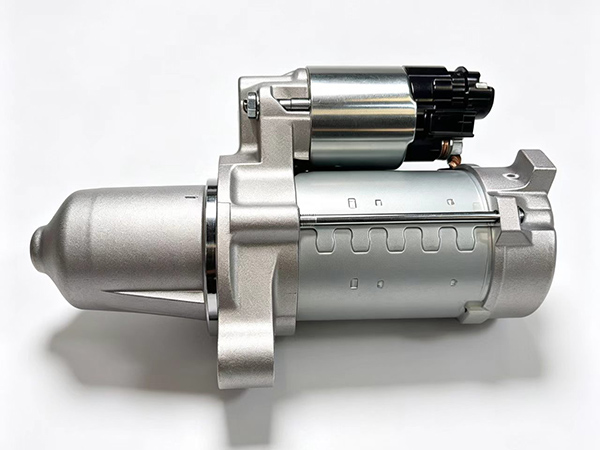
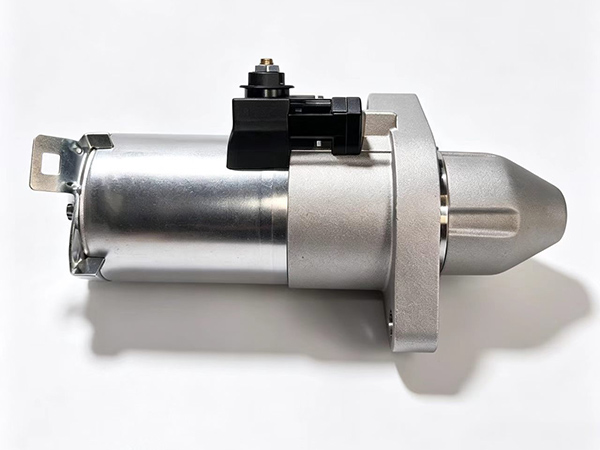
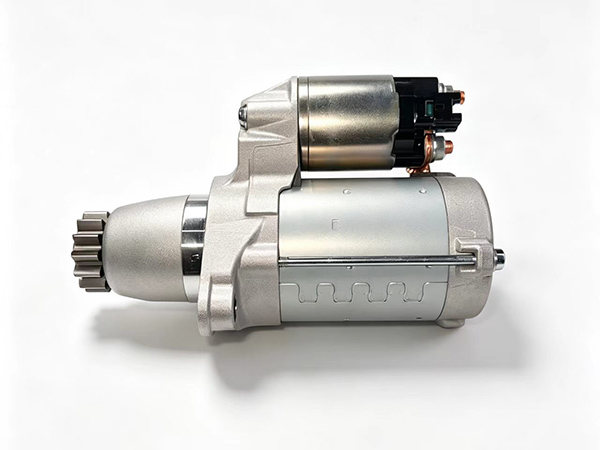
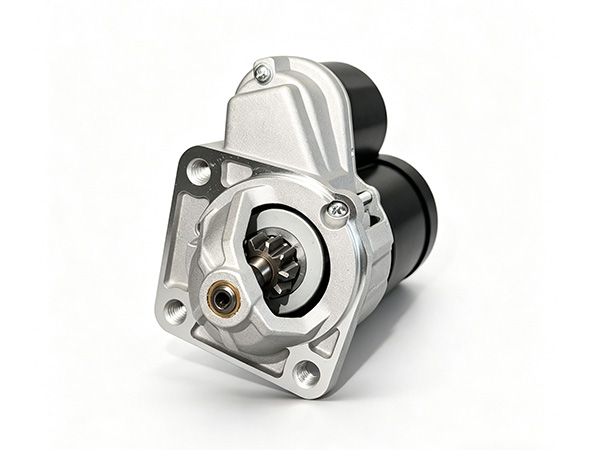
2026-09-01The starter solenoid acts as both a high‑current relay and mechanical push device for the bendix pinion on cars,trucks and industrial equipment.Faulty solenoids produce a range of typical symptoms that can be confused with bad battery,worn starter brushes or control‑circuit faults.A combination of listening symptoms,on‑vehicle voltage measurement and simple bypass testing will confirm solenoid condition without full starter disassembly.
First,observe key audible and operational symptoms.One common sign is a single sharp click from solenoid area when turning ignition key to crank,yet the starter motor does not spin.This click means the solenoid pull‑in coil works,but burned heavy‑duty main contacts fail to pass large current to the starter motor.Another symptom is repeated rapid clicking noise.This usually occurs when battery voltage collapses under load,but can also stem from solenoid coil internal resistance causing insufficient pull‑in force.
A defective solenoid may also produce no sound at all when cranking.When ignition key is turned to start position,there is zero click and no starter movement.This points to open‑circuit pull‑in or hold‑in coil inside solenoid,or total failure of solenoid.In some cases,solenoid pulls in but pinion gear sticks out and will not retract after engine starts.This condition keeps pinion meshed with spinning flywheel,creating loud grinding noise and quickly destroying both pinion and flywheel ring gear.
On‑vehicle voltage testing helps isolate the fault.With an assistant trying to crank engine,measure battery static voltage and cranking voltage.Then measure voltage at the small solenoid trigger wire terminal on starter.If near‑full battery voltage arrives at solenoid trigger terminal,but you only hear click and no motor rotation,solenoid main contacts are burned.If no trigger voltage arrives here,the fault lies upstream in relay,wiring or neutral safety switch,not the solenoid.
Perform insulated bypass test safely.Jumper battery positive directly to the small solenoid trigger terminal.If starter cranks engine normally during bypass,solenoid and starter motor are functional;problem is within vehicle control circuit.If solenoid clicks but motor still does not run,main high‑current contacts inside solenoid are eroded.If nothing happens at all,solenoid coil is open or short‑circuited.
Visual inspection after starter removal.Check solenoid housing for burn marks,melted insulation or oil contamination.Disassemble service‑type solenoid to inspect copper main contacts.Deep pitting,cratering and copper material transfer confirm contact failure.Measure continuity of pull‑in and hold‑in coil with multimeter.Infinite resistance reading indicates broken coil windings.Low resistance to casing means coil‑to‑ground short‑circuit.
Important mis‑diagnosis pitfalls.Weak battery or corroded terminals create rapid clicking that mimics bad solenoid.Worn starter brushes also produce“click‑but‑no‑crank”.That is why bypass test is critical:if direct power to solenoid trigger still fails to spin motor,the problem is solenoid or starter internal,not battery or wiring.
Bench‑test final confirmation.After removing starter,apply 12 V to solenoid trigger terminal.Pinion should pop out quickly and retract freely when power is removed.Slow movement or sticking pinion indicates solenoid spring fatigue or sticky plunger.Compare no‑load current draw against OEM specification.
If solenoid contacts are lightly burned,cleaning can be a temporary repair.Damaged coil or heavily eroded contacts require complete solenoid replacement.Accurate solenoid diagnosis prevents unnecessary starter‑motor replacement for fuel‑powered mechanical equipment.
APA 7th Edition
Patel,M.(2024).Diagnostic procedure for faulty starter solenoids in automotive systems.*International Journal of Automotive Starting‑Component Fault Diagnosis*,9(3),40‑47.
MLA 9th Edition
Patel,Mahesh.“Diagnostic Procedure for Faulty Starter Solenoids in Automotive Systems.”*International Journal of Automotive Starting‑Component Fault Diagnosis*,vol.9,no.3,2024,pp.41‑47.
IEEE Format
[1]M.Patel,“Diagnostic procedure for faulty starter solenoids in automotive systems,”*Int.J.Autom.Start.Compon.Fault Diagn.*,vol.9,no.3,pp.41‑47.