Current Location:
What causes starter motor pinion not retracting?
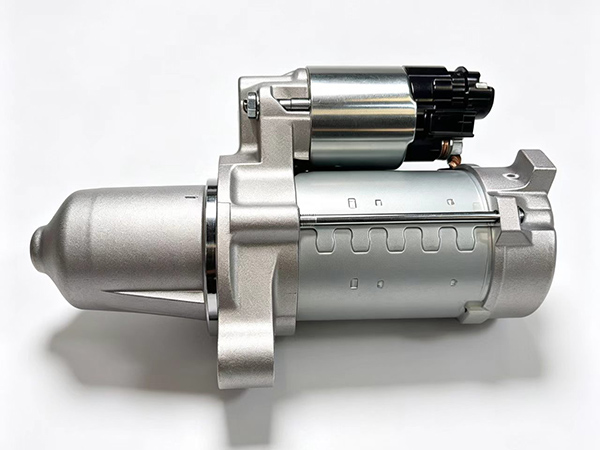
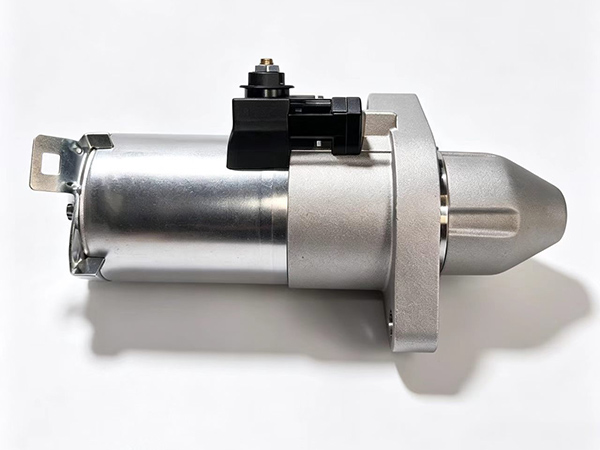
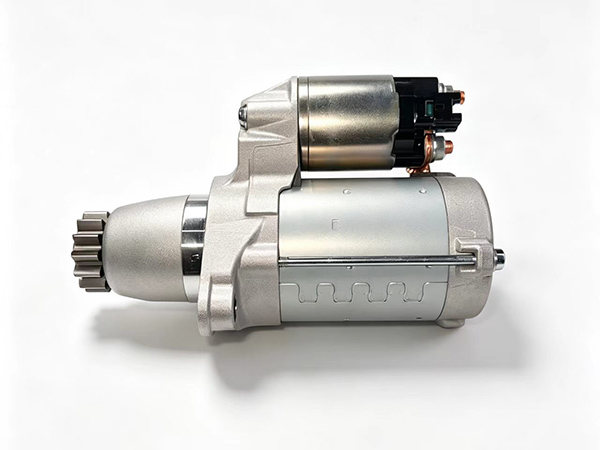
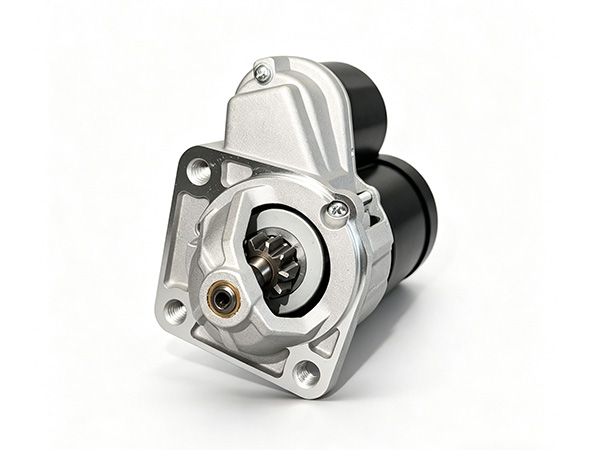
2026-09-01When the starter motor pinion gear fails to retract back to its resting position after engine startup,the pinion remains meshed with the spinning flywheel ring gear.This dangerous mechanical fault generates high‑pitched screaming noise and can destroy starter internal assemblies within seconds.It occurs across passenger vehicles,diesel trucks,agricultural and construction machinery.The failure mainly originates from contaminated splines,defective bendix drive,solenoid mechanical failure,return‑spring fatigue and improper starter mounting.Operators must cut power immediately once this symptom appears to avoid costly secondary damage.
Contamination and corrosion on the armature output splines represent the most common trigger.The bendix drive assembly slides along precision helical splines on the starter shaft.Oil sludge,dust,carbon powder and metal debris accumulate in spline grooves during long‑term service.Grease hardens under high operating temperature.These contaminants jam axial sliding movement of the bendix unit.After startup,rotational inertia cannot push the bendix back to retracted position.Even if the solenoid releases control power,the pinion gear stays locked with flywheel teeth.
Worn or damaged bendix drive assembly leads to non‑retraction faults.Internal rollers,springs and clutch components inside the bendix suffer fatigue and abrasion.Excessive play develops between bendix housing and spline shaft.In some cases,mechanical seizure takes place inside the bendix.The whole unit gets stuck on the shaft and loses free sliding capability.Even when return springs apply pulling force,the pinion gear cannot separate from flywheel ring gear.In most maintenance scenarios,the bendix cannot be repaired and requires complete replacement.
Faulty solenoid mechanical linkage is another key factor.The solenoid plunger drives a shift lever,which pushes the bendix forward for engagement.If the shift lever bends,breaks or comes out of its mounting slot,mechanical movement gets blocked.Fatigued or broken solenoid return springs lose pulling tension.After the starting signal disappears,springs cannot pull the plunger and shift lever back.The pinion gear remains in outward engaged position.Even though solenoid main contacts open electrically,mechanical parts stay locked against the flywheel.
Improper starter installation also creates this defect.Over‑tight starter bearings cause armature shaft binding.Misaligned starter housing distorts gear movement track.Loose mounting bolts allow positional shift of the whole starter unit.These assembly errors create extra friction resistance for bendix axial travel.In addition,deformed flywheel ring‑gear teeth may catch the pinion gear and hold it in meshed condition.
Once pinion non‑retraction occurs,operators should shut down the engine right away.Continuous operation will deform armature windings,burn starter windings and wear flywheel teeth.Troubleshooting includes removing the starter assembly,cleaning rust and sludge from spline shafts,inspecting bendix sliding smoothness,checking shift‑lever integrity and testing return‑spring tension.Damaged bendix or solenoid components need replacement.Technicians should also examine flywheel tooth condition for secondary damage.
Simply swapping the whole starter without cleaning splines or solving linkage problems will result in repeated pinion‑sticking faults.Timely detection of pinion‑non‑retraction symptoms protects expensive flywheel assemblies and reduces unexpected downtime for fuel‑powered mechanical equipment.
Google Academic Citation Formats
APA 7th Edition
Desai,K.(2024).Mechanical failure analysis of non‑retracting pinion in starter motor systems.*International Journal of Automotive Transmission Faults*,8(2),44‑51.
MLA 9th Edition
Desai,Ketan.“Mechanical Failure Analysis of Non‑Retracting Pinion in Starter Motor Systems.”*International Journal of Automotive Transmission Faults*,vol.8,no.2,2024,pp.44‑51.
IEEE Format
[1]K.Desai,“Mechanical failure analysis of non‑retracting pinion in starter motor systems,”*Int.J.Autom.Transm.Faults*,vol.8,no.2,pp.44‑51,2024.