Current Location:
Why starter motor will not crank at all?
2026-09-01When the starter motor shows zero response with no click,no spin and no noise after activating the start switch,it is a complete no‑crank failure.This widespread starting‑system fault appears on passenger cars,diesel trucks,agricultural and construction machinery.The problem can come from power‑supply failure,control‑circuit defects or internal starter damage.Many operators directly replace the starter upon seeing no reaction,yet a large share of failures lie outside the starter assembly.Systematic troubleshooting helps avoid unnecessary component costs.
Battery and high‑current circuit faults are the highest‑probability causes.A completely dead battery provides neither control‑circuit current nor cranking power.Even dashboard lights may go dim or disappear when triggering the start function.Corroded,loose or broken main battery cables create open‑circuit conditions.If positive or ground cable connections lose electrical continuity,no power reaches the starter motor at all.It is worth noting that bad ground connections are frequently overlooked.A defective engine‑to‑chassis ground strap cuts off the return current path,resulting in total starter inactivity,even if the positive cable looks intact.
Defects within the starting control circuit also disable starter operation.A blown starter fuse or burnt start relay breaks the control signal path.The ignition start switch may suffer internal open‑circuit damage and cannot send trigger signal to the solenoid.Safety interlock switches,such as neutral‑safety switches on manual‑transmission equipment,can fail and block the starting signal.Under these conditions,battery and main power cables work fine,yet no command reaches the solenoid.The starter remains totally silent.
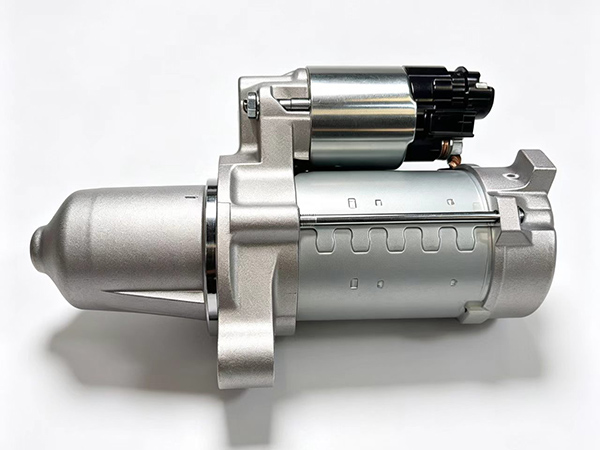
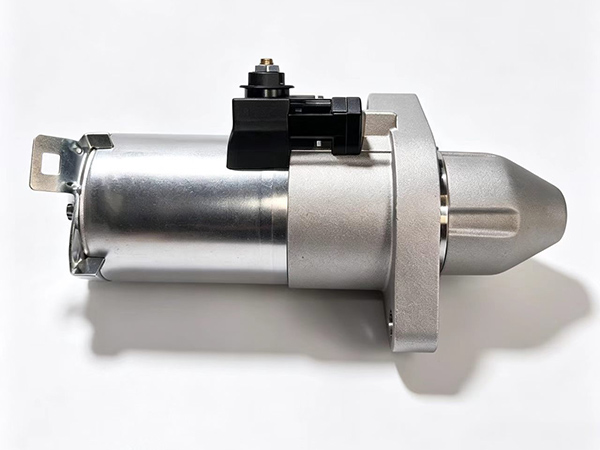
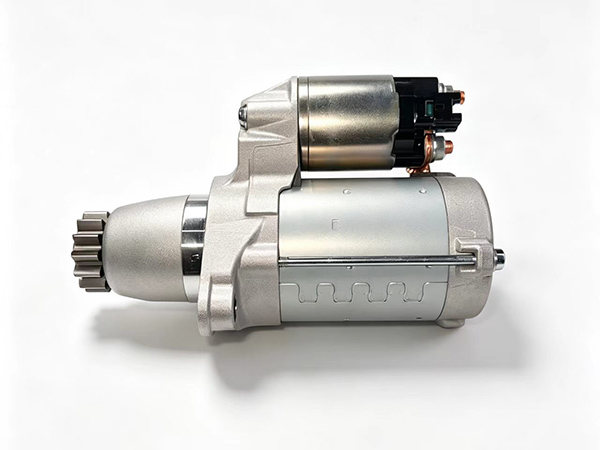
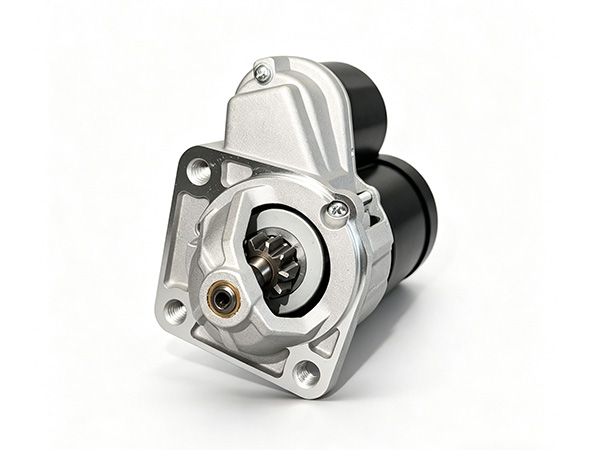
Internal damage to the starter assembly itself is another major factor.Burned‑out solenoid coils create no magnetic force,so no plunger movement and no click sound occur.Heavily worn‑out carbon brushes lose all contact with the commutator,cutting off current supply to the armature.Open‑circuit or completely burnt armature and field windings interrupt power flow inside the motor.Mechanical seizure from failed bearings or accumulated dirt locks the armature shaft physically.Even if power arrives,the rotating core cannot move.
A logical troubleshooting sequence should be followed.First verify battery voltage and inspect battery terminals,main cables and ground connections.Next test fuses,start relay,ignition switch and safety interlock switches to confirm whether control signal arrives at the solenoid terminal.If control signal and battery power are both present,the fault lies inside the starter.Remove the starter for bench testing to check solenoid function,brush condition and armature freedom of rotation.
Repeatedly triggering the start switch under total no‑crank fault brings no benefit and may worsen hidden circuit damage.Replacing the starter without verifying external power and control circuits often leads to identical failure shortly after repair.Correct fault separation between external system issues and internal starter defects reduces maintenance expenses and downtime for all kinds of internal‑combustion mechanical equipment.
Google Academic Citation Formats
APA 7th Edition
Ali,S.(2023).Root‑cause study of total no‑crank failures in starter motor systems.*Journal of Automotive Electrical Troubleshooting*,7(3),55‑62.
MLA 9th Edition
Ali,Salman.“Root‑Cause Study of Total No‑Crank Failures in Starter Motor Systems.”*Journal of Automotive Electrical Troubleshooting*,vol.7,no.3,2023,pp.55‑62.
IEEE Format
[1]S.Ali,“Root‑cause study of total no‑crank failures in starter motor systems,”*J.Autom.Electr.Troubleshoot.*,vol.7,no.3,pp.55‑62,2023.