Current Location:
Why does my starter motor click but not turn?
2026-09-01A clicking sound when turning the ignition key,yet the starter motor refuses to spin,ranks among the most frequent starting‑system complaints for cars,trucks and industrial machinery.This audible click originates from the starter solenoid,which engages mechanically,but insufficient power fails to rotate the armature.This symptom does not always mean the starter motor itself is broken.Technicians need to distinguish battery‑related issues,connection defects and internal starter faults to avoid unnecessary part replacement.
The leading cause is insufficient battery capacity or low terminal voltage.When battery state‑of‑charge drops,it can only supply enough small control‑circuit current to pull the solenoid plunger and produce a click.However,it cannot deliver the hundreds of high‑amperage cranking amps required to drive the starter motor.Cold weather accelerates this problem,as low temperatures reduce battery output performance.Corroded battery terminals,loose cable lugs or worn thick‑gauge main cables create excessive circuit resistance.Severe voltage drop occurs at connection points.Even a fully‑charged battery cannot transmit enough power to the starter,resulting in click‑without‑crank symptoms.
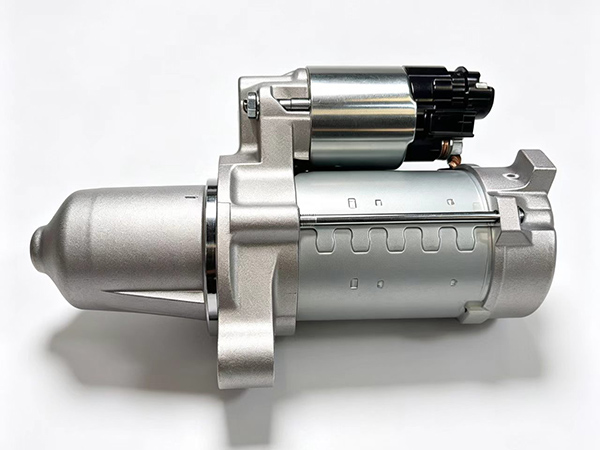
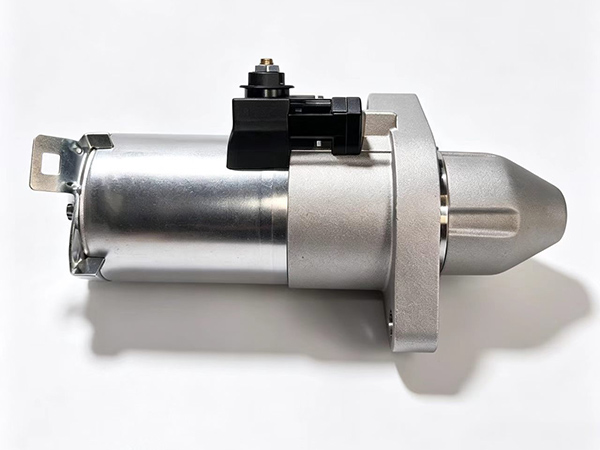
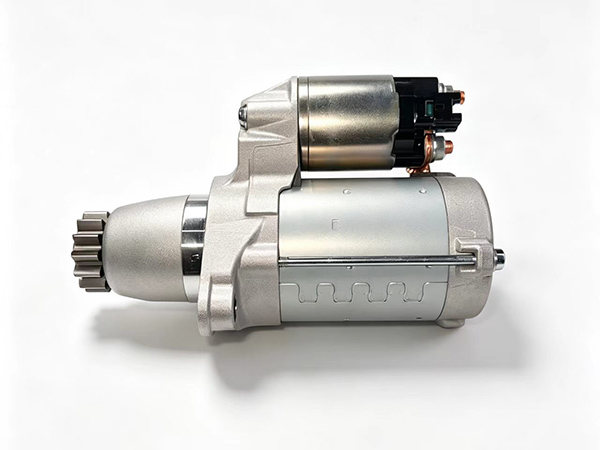
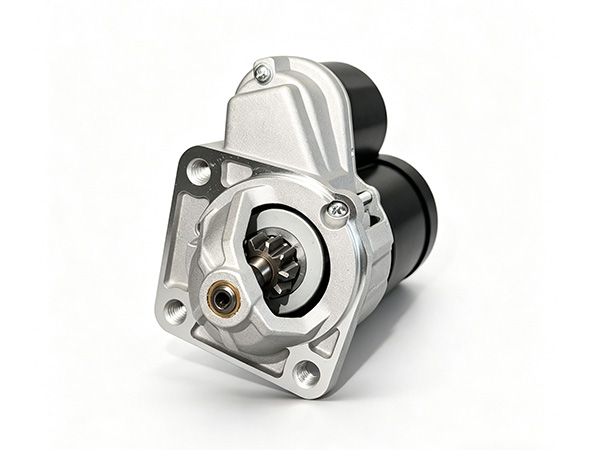
Internal solenoid damage represents another major root cause.The solenoid plunger can move and generate click noise,yet its large internal main contacts become burnt,pitted or carbon‑covered.Control‑circuit current pulls in the plunger,but poor contact blocks high‑current flow toward the starter motor windings.In this situation,battery and cables may test normal,yet no torque is produced.Repeated clicking usually points to badly eroded solenoid contacts.In many cases,solenoid replacement alone can resolve the problem instead of changing the whole starter assembly.
Defects inside the starter motor also trigger this failure.Severely worn‑out carbon brushes lose adequate contact pressure against the commutator.Current cannot reach armature windings even when the solenoid closes.Burned armature windings,open‑circuit field coils or broken internal connections cut off power transmission.Mechanical jamming may also lock the armature shaft.Dirt,bearing seizure or gear debris block shaft rotation.The solenoid still clicks,but mechanical obstruction prevents spinning movement.
Troubleshooting should follow a logical sequence.First test battery open‑circuit and cranking voltage.Inspect battery terminals,ground connections and heavy‑duty starter cables for looseness and corrosion.If electrical supply checks pass,the fault lies within the starter assembly.Bench testing can verify solenoid contact condition and armature freedom of rotation.Operators should avoid repeatedly triggering the start switch.Continuous clicking will further burn solenoid contacts and expand component damage.
Simply replacing the starter without checking battery and wiring will often lead to repeated identical failures.Correct diagnosis separates power‑supply faults from mechanical starter defects and helps equipment owners cut maintenance costs for automotive,farm and construction machinery.
Google Academic Citation Formats
APA 7th Edition
Kumar,P.(2024).Diagnostic analysis of click‑no‑crank faults in starter motor systems.*Journal of Automotive Troubleshooting Technology*,9(2),47‑54.
MLA 9th Edition
Kumar,Prashant.“Diagnostic Analysis of Click‑No‑Crank Faults in Starter Motor Systems.”*Journal of Automotive Troubleshooting Technology*,vol.9,no.2,2024,pp.47‑54.
IEEE Format
[1]P.Kumar,“Diagnostic analysis of click‑no‑crank faults in starter motor systems,”*J.Autom.Troubleshoot.Technol.*,vol.9,no.2,pp.47‑54,2024.