Current Location:
Why is starter motor spinning but not engaging flywheel?
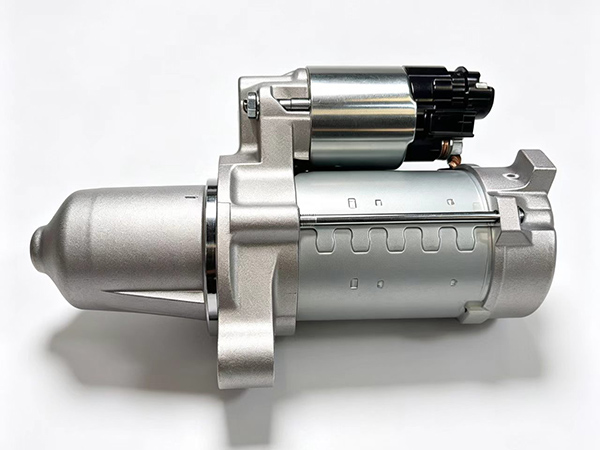
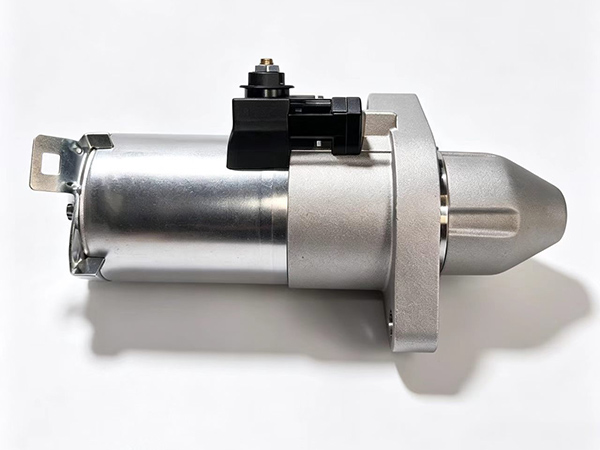
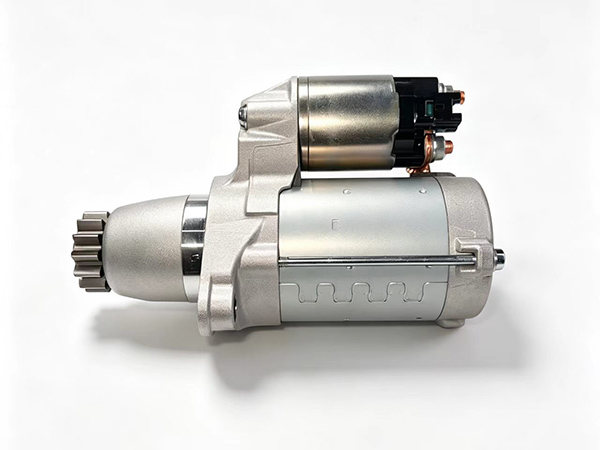
2026-09-01When the starter motor spins freely with a loud whirring noise,yet fails to mesh and turn the engine flywheel,it indicates that the internal DC motor works normally,but mechanical power cannot transfer to the crankshaft.This common starting‑system fault occurs across passenger cars,diesel trucks and heavy‑duty industrial equipment.The root cause mostly relates to the bendix drive assembly,solenoid mechanical linkage,pinion gear or mounting misalignment.Operators should avoid repeated cranking attempts,as continued mis‑engagement will chip gear teeth and cause expensive secondary damage to the flywheel ring gear.
The most frequent failure source is a defective bendix overrunning drive.The bendix rides on helical splines of the starter output shaft.Under normal conditions,rotation inertia pushes the bendix forward along splines so that the pinion gear moves outward to mesh with the flywheel.When internal splines become worn,corroded or packed with oil and dirt,the bendix cannot slide axially.The armature spins,while the pinion stays in the retracted position.In other cases,internal rollers and springs inside the bendix wear out.Even if the pinion touches flywheel teeth,the clutch slips and transmits zero cranking torque.A slipping bendix produces high‑pitched whirring without turning the engine over.
Faulty solenoid mechanical linkage is another important trigger.The solenoid generates electromagnetic force to pull a shift lever,which pushes the bendix assembly forward.If the shift lever is broken,worn or improperly installed,solenoid movement cannot push the pinion into full engagement.The starter motor spins,but the pinion never reaches the flywheel ring gear.Sometimes the return spring loses tension,restricting forward travel of the whole gear assembly.In this scenario,the solenoid may produce audible clicks,yet complete meshing never happens.
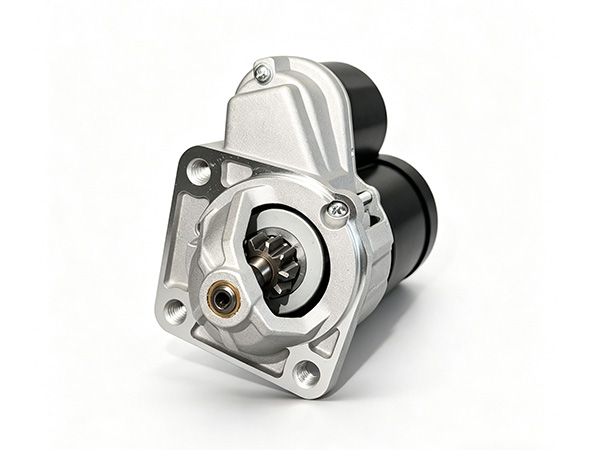
Improper starter mounting also creates this symptom.Loose mounting bolts allow the starter housing to shift slightly.The pinion gear cannot align correctly with flywheel teeth.Even small positional offset prevents full engagement.Damaged or distorted bell‑housing openings will also misalign the starter relative to the flywheel.Besides,heavily worn or broken pinion‑gear teeth cannot lock into flywheel ring‑gear teeth,leading to idle spinning.
Practical troubleshooting steps should be followed.First,inspect starter mounting bolts for tightness.Remove the starter and examine bendix splines for corrosion and contamination.Check pinion‑gear teeth for chipping and abrasion,and test whether the bendix can slide smoothly along the shaft.Damaged bendix assemblies cannot be repaired effectively in most cases;complete replacement of the bendix unit is required.Operators must also inspect the flywheel ring‑gear surface,because long‑time partial meshing can damage flywheel teeth.
Repeated cranking under this fault condition will worsen gear damage.After replacing worn components,technicians must verify pinion travel and meshing depth.Proper diagnosis avoids unnecessary whole‑starter replacement and protects costly flywheel assemblies for automotive,agricultural and construction machinery.
Google Academic Citation Formats
APA 7th Edition
Sharma,R.(2023).Mechanical failure analysis of starter motor non‑engagement faults.*International Journal of Vehicle Component Troubleshooting*,7(4),65‑72.
MLA 9th Edition
Sharma,Rakesh.“Mechanical Failure Analysis of Starter Motor Non‑Engagement Faults.”*International Journal of Vehicle Component Troubleshooting*,vol.7,no.4,2023,pp.65‑72.
IEEE Format
[1]R.Sharma,“Mechanical failure analysis of starter motor non‑engagement faults,”*Int.J.Veh.Compon.Troubleshoot.*,vol.7,no.4,pp.65‑72,2023.