Current Location:
Why starter motor turns slowly when starting engine?
2026-09-01Slow cranking means the starter motor rotates sluggishly when attempting to start the engine,without normal fast‑speed spinning.This widespread starting‑system problem appears on gasoline passenger cars,diesel trucks and heavy‑duty industrial machinery.Slow cranking prolongs startup time or even prevents ignition entirely,especially in cold weather.The fault originates from three major categories:insufficient electrical supply,internal starter degradation and excessive mechanical resistance from the engine.Accurate separation of these causes prevents replacing good‑condition starter units due to misdiagnosis.
Electrical‑system defects represent the highest‑probability cause.A weak or aged battery cannot maintain stable voltage under high cranking load.Even if lights and dashboard accessories work normally,battery voltage drops drastically the moment the starter activates.Low output voltage limits motor current and reduces torque,resulting in slow rotation.Cold ambient temperatures worsen battery performance significantly.Besides battery issues,poor circuit connections create large resistance.Corroded battery terminals,loose lugs,oxidized ground points and undersized power cables produce substantial voltage drop.The starter receives inadequate power input even with a healthy battery.
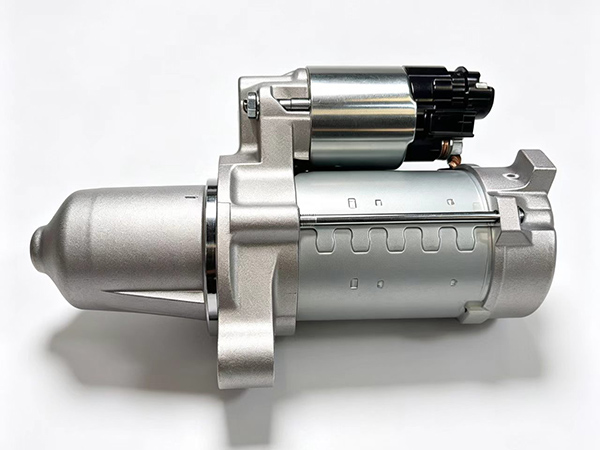
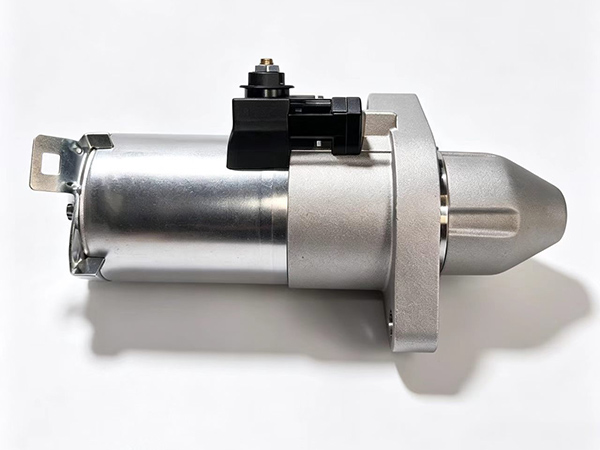
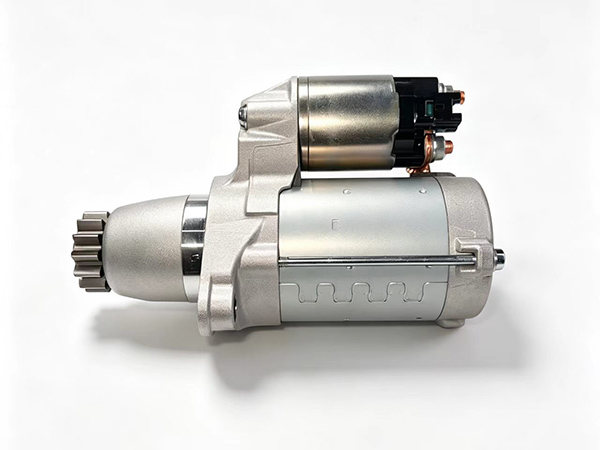
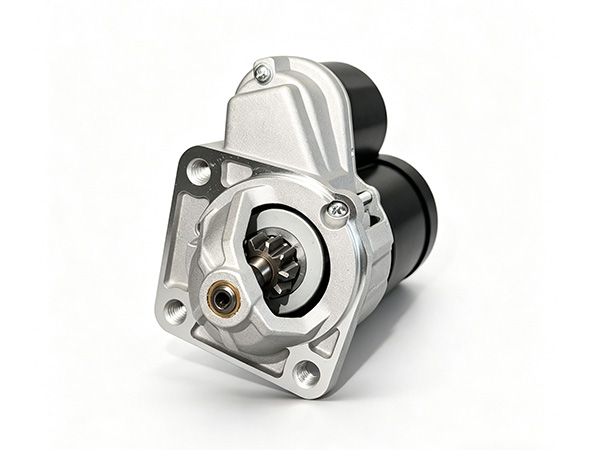
Internal wear and degradation of the starter motor itself is another main factor.Worn carbon brushes reduce effective current flow to the armature.When brush length shrinks and spring pressure weakens,contact resistance rises,and delivered torque declines.A dirty,burnt or uneven commutator surface further hinders stable current transmission.For permanent‑magnet starters,high‑temperature‑caused partial magnet demagnetization weakens magnetic‑field strength and cuts output torque.Short‑circuited armature windings also lower cranking performance.In these cases,battery and cables may test fine,yet the starter still turns sluggishly.
Excessive mechanical resistance from the engine will also make the starter rotate slowly.In low‑temperature environments,engine lubricating oil thickens sharply and increases friction resistance.Over‑tight engine bearings,partial piston seizure or heavy internal mechanical drag raises the load on the starter.Damaged flywheel ring gear or misaligned starter mounting creates extra binding friction.The starter must work under heavy overload,so its rotation speed drops visibly.This mechanical load can damage a perfectly functional starter if repeated cranking attempts continue.
Practical troubleshooting should follow a clear order.First measure battery voltage during cranking and inspect all high‑current cable connections.If electrical parts pass testing,remove the starter for bench inspection to check brushes,commutator and magnet condition.If the starter performs well on the bench,the problem lies inside the engine mechanical assembly.
Many equipment owners mistakenly replace the starter directly when seeing slow cranking.However,quite a number of slow‑cranking faults stem from batteries or wiring.Solving root‑cause issues rather than only swapping components can save maintenance costs and avoid repeated failure for automotive,farm and construction machinery.
Google Academic Citation Formats
APA 7th Edition
Patel,D.(2024).Root‑cause investigation of slow‑cranking starter motor faults.*Journal of Vehicle Starting‑System Diagnostics*,9(1),38‑45.
MLA 9th Edition
Patel,Dhaval.“Root‑Cause Investigation of Slow‑Cranking Starter Motor Faults.”*Journal of Vehicle Starting‑System Diagnostics*,vol.9,no.1,2024,pp.38‑45.
IEEE Format
[1]D.Patel,“Root‑cause investigation of slow‑cranking starter motor faults,”*J.Veh.Start.Syst.Diagn.*,vol.9,no.1,pp.38‑45,2024.