Current Location:
Why starter motor works cold but fails when hot?
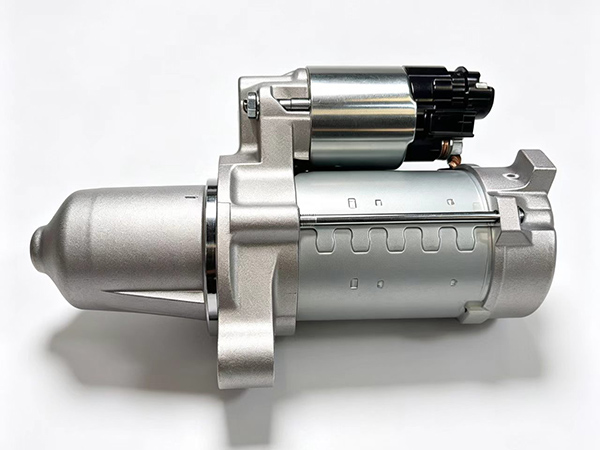
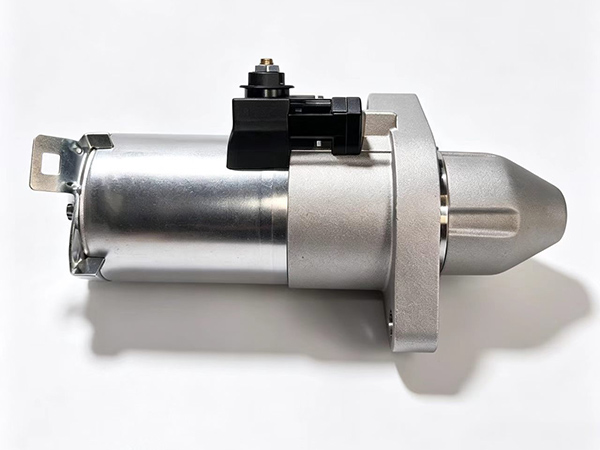
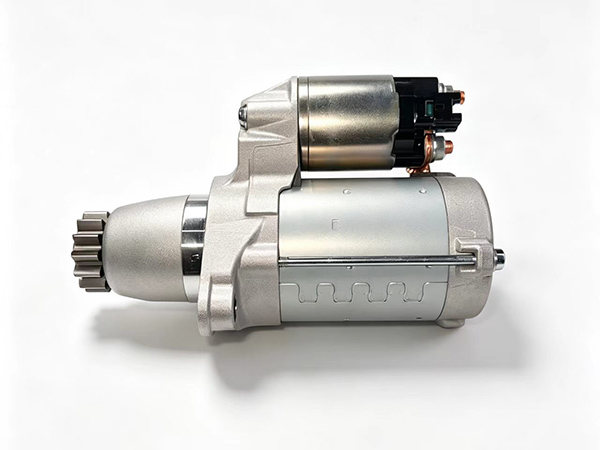
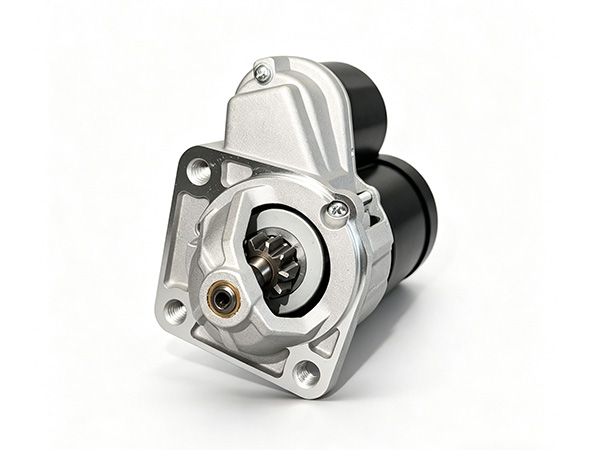
2026-09-01A starter motor that cranks normally when cold but stops working after getting hot is a typical temperature‑related intermittent fault on passenger cars,diesel trucks,agricultural and construction machinery.When the starter is cool,every start attempt responds well.After several cranking cycles or absorbing engine heat,cranking becomes intermittent or completely unavailable.Once fully cooled down,function recovers again.This phenomenon is mainly caused by thermal expansion of internal components,degraded carbon brushes,winding insulation defects and solenoid thermal failure.Many repair shops cannot reproduce the fault on cold bench tests,resulting in misdiagnosis.
Excessively worn carbon brushes are the most common cause.When carbon brushes approach their wear limit,remaining length is short.After the starter runs,heat raises internal temperature.Thermal expansion softens brush springs and increases internal clearances.Slight vibration breaks contact between brushes and commutator.The starter loses power supply and stops cranking.When components cool down,springs regain pressure and electrical conduction resumes.Tapping lightly on starter housing may trigger temporary recovery under hot failure state,which is a typical feature of brush‑related faults.
Damaged armature or field winding insulation brings thermal‑dependent open‑circuit.Micro‑cracks appear on winding insulation after long‑term service.At low temperature,crack gaps stay closed and copper wires maintain good contact.After heating,thermal expansion opens tiny gaps inside windings,breaking current path.The starter gives no‑crank response.After cooling,gaps contract and conductivity restores.Partial internal short‑circuit of windings also behaves similarly:resistance rises under high temperature,output torque drops sharply and cranking fails.
Heat‑affected solenoid assembly cannot be ignored.Solenoid coil resistance increases as temperature rises.Partially damaged solenoid windings produce insufficient magnetic pull‑in force when hot.The plunger cannot travel fully,causing no click or weak engagement.After cooling,coil resistance drops and solenoid works normally.Heat‑softened dirt and debris inside solenoid plunger also create jamming only under high‑temperature conditions.
Commutator‑related defects also trigger hot‑failure symptoms.Carbon dust accumulates between commutator copper segments.Under heating,thermal deformation changes contact pressure between brushes and commutator.Local high‑resistance points appear,leading to intermittent current flow.Minor commutator segment lifting caused by heat will break brush contact.Worn armature bearings create enlarged clearance when hot,leading to armature radial shaking and unstable brush contact.
External factors may also mimic this fault.High‑resistance battery cables or ground connections change contact characteristics under heat.When engine compartment temperature rises,connection resistance increases,limiting cranking current.After cooling,connection performance improves.
Effective troubleshooting requires reproducing the fault under hot state.After the starter fails,measure voltage at solenoid terminal and main power terminal to distinguish external wiring faults.If input power is normal,remove the starter and inspect brush residual length,spring tension,commutator surface and winding continuity.Bench testing under simulated heating conditions helps reproduce intermittent defects.
Replacing the starter only based on cold‑state good performance cannot solve hidden thermal‑related internal damage.Equipment operators should never ignore hot‑intermittent symptoms.If left unaddressed,it will eventually evolve into complete no‑crank failure,bringing unexpected downtime for fuel‑powered mechanical equipment.
APA 7th Edition
Singh,H.(2024).Hot‑state intermittent failure mechanism analysis of automotive starter motors.*International Journal of Automotive Component Thermal Fault Diagnosis*,9(3),40‑47.
MLA 9th Edition
Singh,Harjit.“Hot‑State Intermittent Failure Mechanism Analysis of Automotive Starter Motors.”*International Journal of Automotive Component Thermal Fault Diagnosis*,vol.9,no.3,2024,pp.40‑47.
IEEE Format
[1]H.Singh,“Hot‑state intermittent failure mechanism analysis of automotive starter motors,”*Int.J.Autom.Compon.Therm.Fault Diagn.*,vol.9,no.3,pp.40‑47,2024.