Current Location:
Why starter motor works hot but not cold?
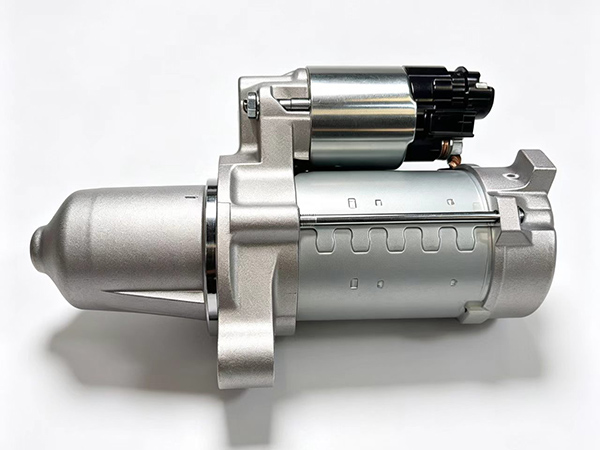
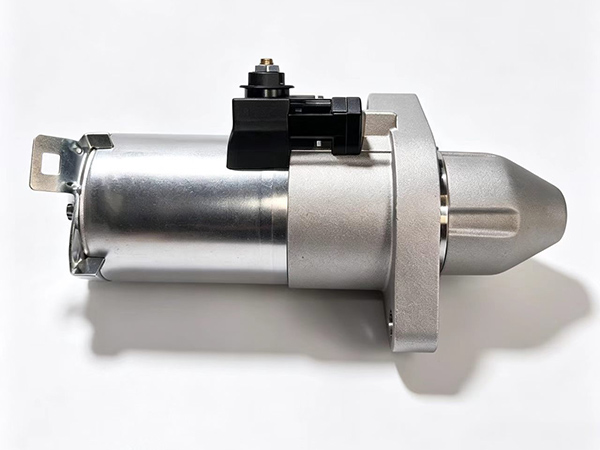
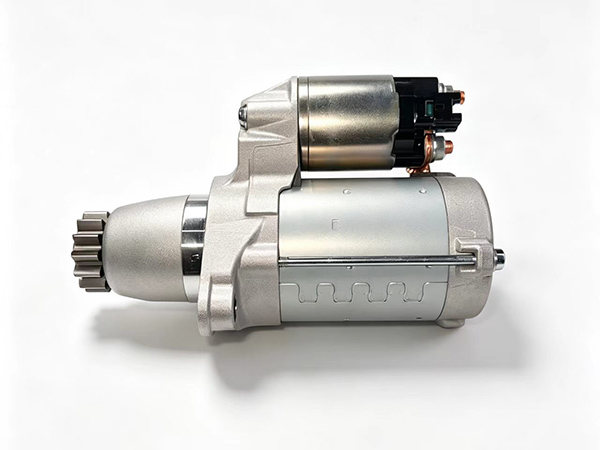
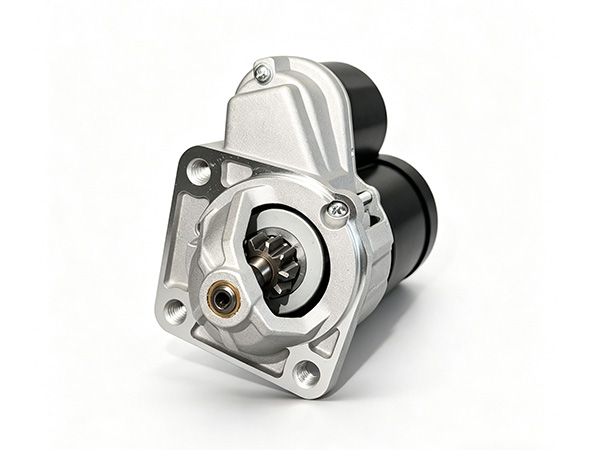
2026-09-01A starter motor that functions well when hot yet refuses to crank when cold is a tricky intermittent fault found in passenger cars,diesel trucks,farm and construction machinery.When ambient temperature is low,the starter shows no response or weak cranking.After several start attempts or engine heat warms the starter assembly,it works normally.This temperature‑related behaviour arises from material thermal contraction,worn electrical contacts,internal component wear and external wiring issues.Misdiagnosis often leads to unnecessary starter replacement,because temperature‑dependent faults are hard to reproduce during warm‑state bench inspection.
Worn carbon brushes are one of the leading causes.When brushes wear close to their service limit,physical brush length shortens.At cold temperature,metal brush springs contract slightly and lose adequate spring pressure.Contact between brushes and commutator becomes unstable or intermittent.Current cannot flow properly,so the starter does not operate.Once the starter heats up,thermal expansion pushes brushes against commutator firmly,and electrical conduction resumes.Vibration can also change contact conditions,creating random cold‑start failures.
Dirty,burnt or uneven commutator surface amplifies cold‑only failure.Carbon dust and oil residues fill gaps between commutator copper bars.Under cold conditions,contact resistance rises significantly.When temperature increases,metal expands and surface contact improves.Even minor pitting on commutator segments creates variable‑resistance points.The starter may click but not crank in cold state,and return to normal performance after warming‑up.
Internal wiring and solder‑joint defects also produce temperature‑sensitive symptoms.Cracked internal copper wires and fatigued soldering joints open gaps under cold‑state thermal contraction.The electrical path breaks,and the starter gives no reaction.After heat raises component temperature,thermal expansion closes tiny gaps and restores circuit continuity.Solenoid coils with partial internal winding damage may have higher resistance when cold.Insufficient magnetic force fails to pull in the plunger,while hot‑state resistance drops and solenoid functions normally.
External connection problems cannot be overlooked.Battery performance drops sharply in cold weather.A marginal‑condition battery delivers insufficient cranking current at low temperature,yet works acceptably when the battery warms after engine runs.Loose or corroded battery terminals create variable contact resistance.Cold‑state contraction increases resistance points;engine‑generated vibration and heat improve contact pressure.These external faults mimic internal starter cold‑failure symptoms.
Mechanical friction inside the starter also contributes.Cold‑thickened grease on armature bearings increases rotational drag.Worn bearings create larger clearances at low temperature,causing armature slight offset.After heating,lubricant flows better and clearance shrinks,reducing mechanical load.
Technicians should perform systematic troubleshooting.Test battery cranking voltage under cold conditions and inspect all cable terminals.Gently tap the starter housing while attempting cold cranking;temporary recovery points to brush or solenoid‑related defects.Remove the starter for bench cold‑simulation testing to check brush length,spring tension,commutator condition and internal wiring continuity.If starter performs well under cold bench conditions,the fault lies in battery or external wiring.
Many technicians misjudge cold‑no‑response hot‑ok faults as other system issues.Directly replacing batteries without inspecting starter internal parts,or swapping starter without testing battery,will not fix the root cause.Understanding thermal‑expansion‑related intermittent failure helps reduce repair costs and unexpected downtime for fuel‑powered mechanical equipment.
APA 7th Edition
Gupta,R.(2023).Temperature‑dependent intermittent failure analysis of automotive starter motors.*Journal of Vehicle Starting‑System Troubleshooting*,7(4),51‑58.
MLA 9th Edition
Gupta,Rakesh.“Temperature‑Dependent Intermittent Failure Analysis of Automotive Starter Motors.”*Journal of Vehicle Starting‑System Troubleshooting*,vol.7,no.4,2023,pp.51‑58.
IEEE Format
[1]R.Gupta,“Temperature‑dependent intermittent failure analysis of automotive starter motors,”*J.Veh.Start.Syst.Troubleshoot.*,vol.7,no.4,pp.51‑58,2023.