Current Location:
What is the difference between OEM and aftermarket starter motor?
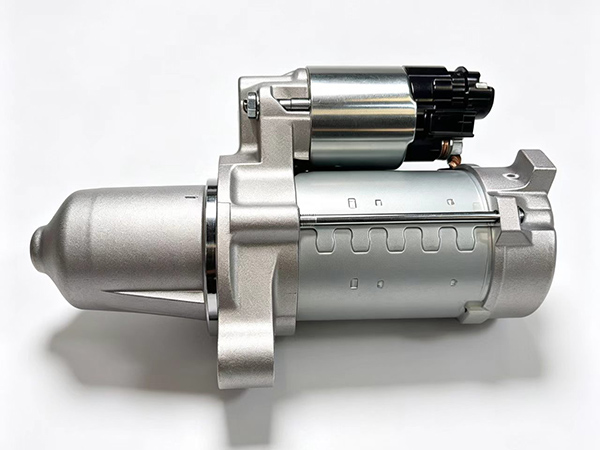
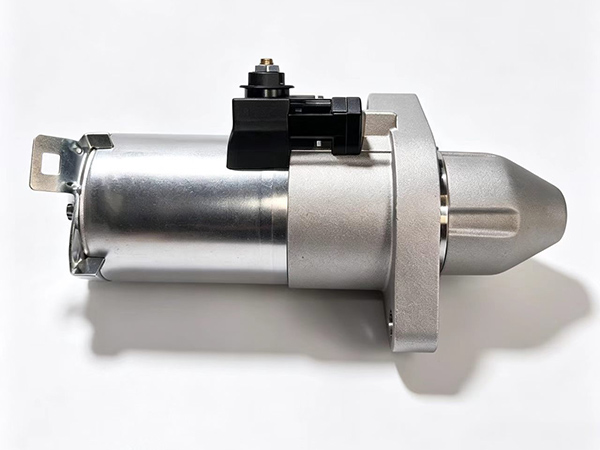
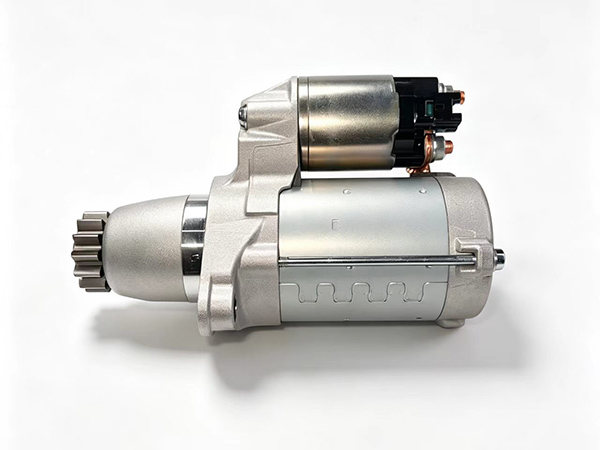
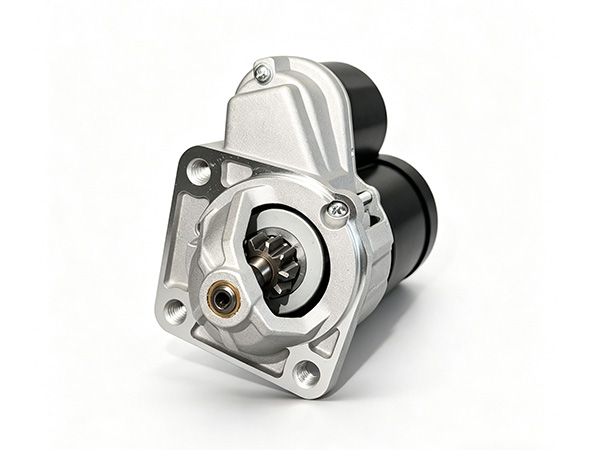
2026-09-02When replacing a failed starter motor,buyers are often faced with two main product categories:OEM starters and aftermarket starters.OEM(Original Equipment Manufacturer)starters are the exact‑specification units fitted to engines during factory production.Aftermarket starters refer to replacement parts manufactured by third‑party suppliers for repair and replacement markets.While both can start the engine,they differ greatly in manufacturing standards,material quality,dimensional tolerance,price,durability and application scenarios.Understanding these differences helps purchasers make cost‑effective decisions for automotive,agricultural and industrial engine equipment.
OEM starter motors follow strict original factory design standards.Every dimension,torque output,coil winding specification,pinion gear parameter and overrunning clutch structure strictly matches the engine’s original technical requirements.Raw materials and heat‑treatment processes are consistent with mass‑production vehicle standards.The tolerance of gear meshing,mounting flange and bolt holes is precisely controlled,which guarantees perfect installation fit without modification.OEM units undergo complete factory durability tests,vibration tests and cold‑start performance verification.Their biggest advantage is high compatibility and low failure rate.For critical equipment with high‑reliability requirements,OEM starters minimize risks such as gear grinding,poor engagement and sudden startup failure.However,obvious disadvantages are high purchase cost and limited supply channels.Genuine OEM parts usually carry premium pricing,and delivery cycles may be longer for some special engine models.
Aftermarket starter motors cover a wide quality spectrum,ranging from high‑quality equivalent alternatives to low‑cost low‑grade copies.Formal high‑grade aftermarket products refer to OE‑equivalent spare parts.They refer to OEM drawings and technical parameters,adopt qualified raw materials and complete testing procedures.Their overall performance is close to OEM level,at a much more competitive price.These products are widely used in repair workshops and general machinery replacement.On the contrary,low‑end aftermarket starters cut costs by using thinner copper coils,inferior brush materials,simplified clutch assemblies and imprecise gear processing.Although they can be installed physically and work temporarily,problems emerge quickly.Poor gear precision causes abnormal noise and accelerated flywheel ring‑gear wear.Inferior coils overheat easily under frequent startup conditions,leading to burnout and short service life.Some cheap aftermarket units cannot maintain stable torque in low‑temperature environments,resulting in difficult cold starting.
Fitment consistency is another key gap.OEM starters are produced for one specific engine model,so part numbers correspond one‑to‑one with equipment.Many aftermarket manufacturers adopt universal design to cover multiple engine models.Universal‑type starters may have minor deviations in pinion depth,mounting position or solenoid parameters.Even if they can be assembled,subtle mismatches will gradually generate secondary damage to flywheel and starting system.High‑quality aftermarket suppliers will strictly classify part numbers according to OEM numbers to avoid compatibility risks.
Warranty and practical application scenarios also separate the two types.Genuine OEM starters normally come with official manufacturer warranty,yet warranty periods are relatively fixed.Reputable aftermarket brands offer flexible warranty terms,some even provide longer warranty to attract customers.For usage scenarios,OEM starters are preferred for heavy‑duty machinery,frequently‑started industrial equipment and brand‑new equipment maintenance.High‑quality aftermarket starters are ideal choices for cost‑sensitive regular‑use engines.Low‑cost aftermarket copies are not recommended for core production equipment,despite attractive prices.
In short,OEM starters deliver stable performance and perfect compatibility at higher cost.Aftermarket products show huge quality differences among different brands.Buyers should not judge aftermarket parts only by price.Checking OEM cross‑reference numbers,manufacturer reputation and product test reports is essential before ordering.Selecting suitable starter solutions according to equipment importance and budget can balance reliability and procurement cost.
References
APA 7th Edition
Carter,J.(2025).OEM versus aftermarket automotive starter components:quality and compatibility comparison.*International Journal of Vehicle Spare Parts*,8(2),33‑47.
MLA 9th Edition
Carter,James.“OEM Versus Aftermarket Automotive Starter Components:Quality and Compatibility Comparison.”*International Journal of Vehicle Spare Parts*,vol.8,no.2,2025,pp.33‑47,
GB/T 7714‑2015
CARTER J.OEM versus aftermarket automotive starter components:quality and compatibility comparison[J].International Journal of Vehicle Spare Parts,2025,8(2):33‑47.