Current Location:
What specifications matter when buying starter motor
2026-09-02When purchasing a replacement or new starter motor,many buyers only focus on price and outer appearance while ignoring core technical specifications.Improper‑specification starters will result in hard cranking,frequent startup failures,abnormal gear grinding noise,burned‑out coils,and permanent damage to flywheel ring gears and vehicle battery systems.To avoid costly replacement cycles,purchasers must evaluate electrical parameters,torque‑power performance,mechanical fit dimensions,structural type,and environmental adaptability before placing orders.Every key specification directly determines service life,starting reliability and overall system compatibility.
Electrical specifications are the first threshold for matching.Voltage rating is non‑negotiable.Most light‑duty gasoline vehicles adopt a 12 V starter system,while heavy‑duty trucks,construction machinery and marine diesel engines require 24 V units.Installing a 12 V starter on a 24 V circuit will quickly burn internal copper coils.Conversely,a 24 V starter cannot generate sufficient cranking torque under 12 V power supply.Besides voltage,maximum current draw should be checked.Starter motors draw large transient current during cranking,normally ranging from 150 A to 500 A.The peak current must match battery discharge capacity and wire harness load capacity;excessive current will accelerate battery aging and trigger circuit safety risks.
Torque and power output decide whether the starter can crank the engine successfully under different temperatures and working conditions.Power is measured in kilowatts.Small‑displacement gasoline engines usually work well with 0.8 kW‑1.8 kW starters.High‑compression diesel engines and large industrial engines need 2.5 kW or higher power output.Torque reflects the rotating force to overcome engine compression resistance and oil viscous drag,especially critical in cold winter environments.Low‑torque products may perform well in warm weather but fail to turn the engine when temperature drops sharply.It is unwise to blindly pursue ultra‑high power.Over‑rated starters waste battery energy and increase unnecessary cost without practical benefits.
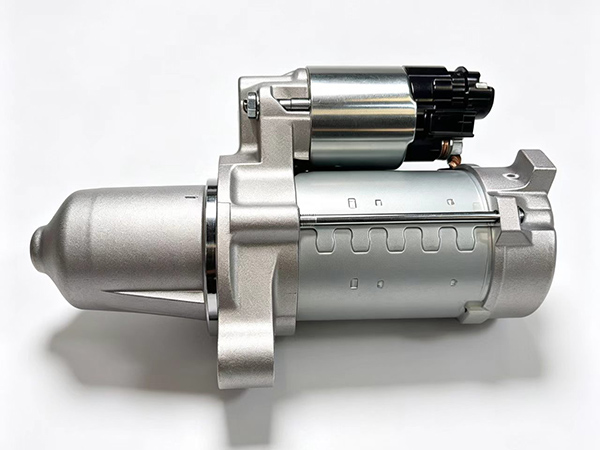
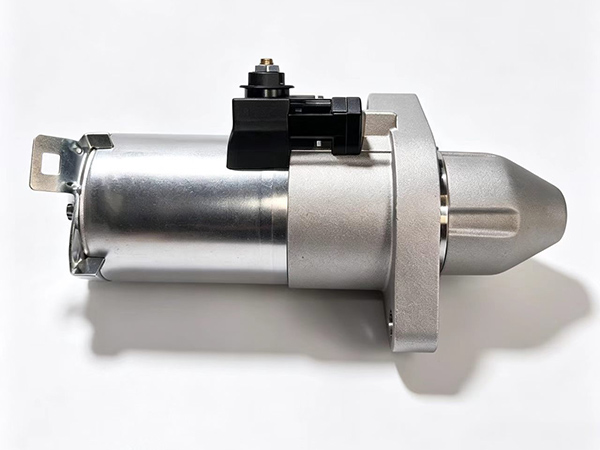
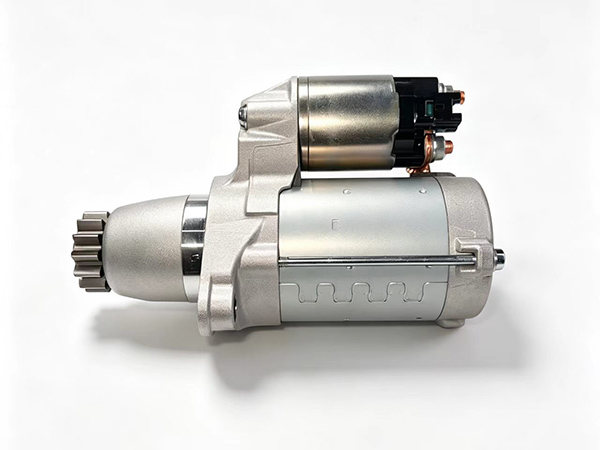
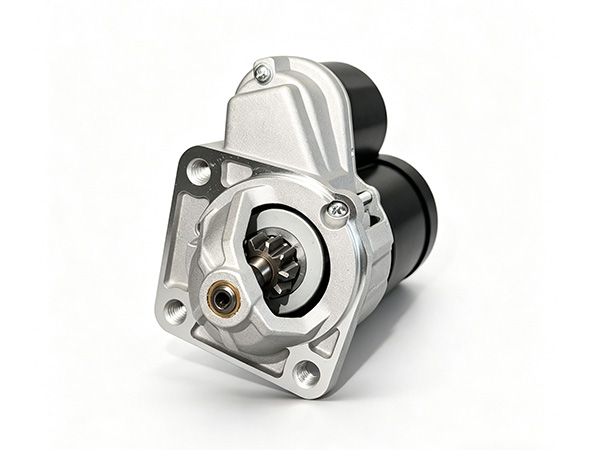
Mechanical fit specifications determine physical installation feasibility.Pinion gear parameters rank highest here:tooth count,module,pinion travel distance and rotation direction must align with the flywheel ring gear.Mismatched gear teeth produce harsh grinding noise,accelerate tooth wear and may cause gear jamming.Mounting dimensions include mounting hole spacing,bolt position,flange shape and overall housing length.Even with correct electrical performance,wrong mounting size makes installation impossible.For replacement scenarios,the most reliable reference is the original OEM part number printed on the old starter.Cross‑checking OEM numbers eliminates most compatibility mistakes caused by confusing similar‑looking casings.
Structural design and environmental‑resistant specifications influence long‑term durability.Two mainstream structures are direct‑drive starters and gear‑reduction starters.Gear‑reduction types deliver higher torque with relatively lighter weight and lower current consumption,widely applied on modern passenger cars and commercial equipment.Direct‑drive models feature simpler internal structure for low‑frequency startup scenarios.Buyers operating in dusty,humid or marine conditions should select sealed,dust‑proof and water‑resistant starters to prevent sediment and moisture from corroding solenoid and brush assemblies.In addition,check overrunning clutch quality and brush material;poor‑quality clutches will slip after short‑time use and lose cranking force.Distinguish brand‑new units from remanufactured products:remanufactured starters with formal quality assurance can serve cost‑sensitive projects,yet heavy‑duty continuous‑cycle applications prefer brand‑new high‑specification products.
In summary,qualified starter motor purchasing requires comprehensive comparison of electrical parameters,torque‑power output,mechanical fitting dimensions,structural type and environmental performance.Relying merely on appearance or price will lead to frequent after‑sales trouble.Referring to OEM official datasheets and technical manuals remains the most scientific approach to select suitable starter motors for gasoline,diesel and industrial engines.
References
APA 7th Edition
Automotive Engineering Research Group.(2025).Technical buying guide for automotive starter motors.*International Journal of Automotive Components*,7(2),45‑58.
MLA 9th Edition
Miller,Thomas.“Key Specifications for Starter Motor Procurement.”*Auto Mechanical Review*,vol.11,no.2,15 Mar.2025,pp.45‑58,
GB/T 7714‑2015
AUTOMOTIVE ENGINEERING RESEARCH GROUP.Technical buying guide for automotive starter motors[J/OL].International Journal of Automotive Components,2025,7(2):45‑58[2026‑09‑02].