Current Location:
What is a direct‑drive starter motor?
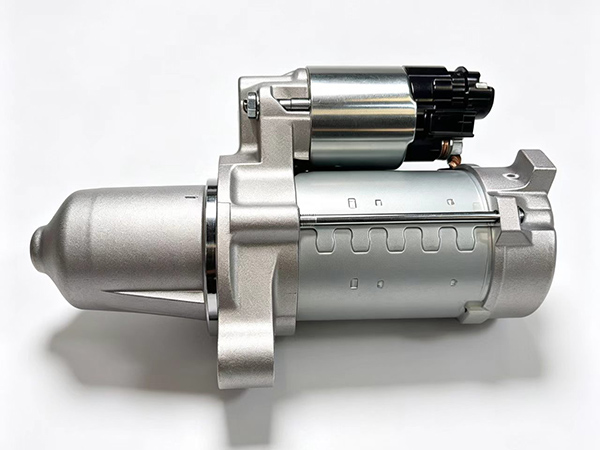
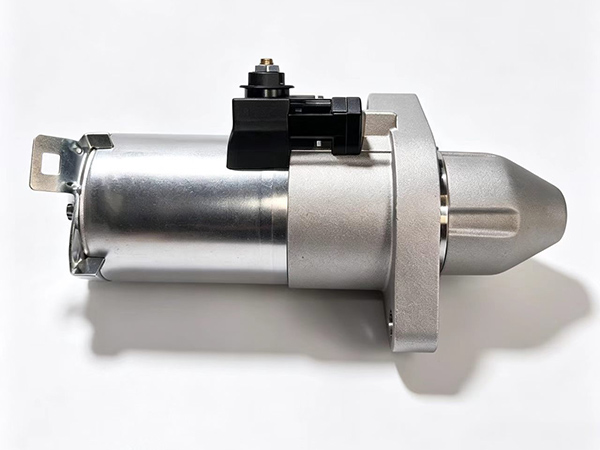
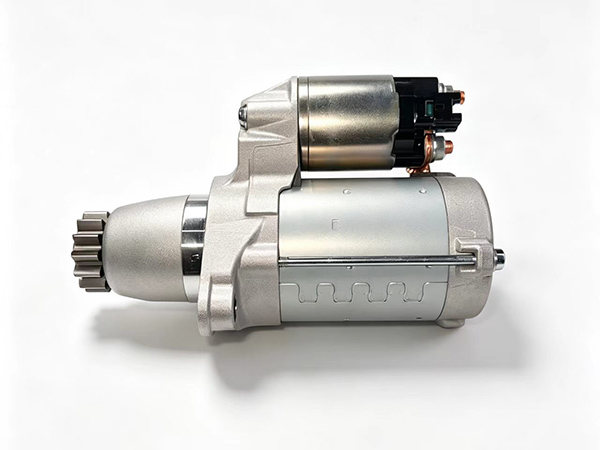
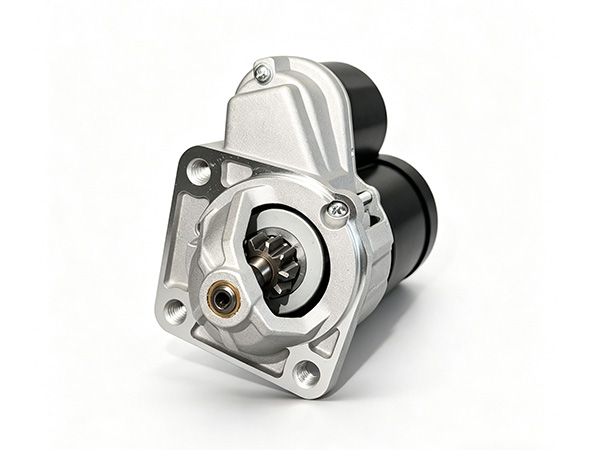
2026-09-01A direct‑drive starter motor is a classic DC starting motor design without intermediate gear reduction assemblies.Its armature shaft directly connects to the bendix drive and pinion gear.All rotational torque from the armature transfers straight to the flywheel without speed‑changing gear sets.Once the dominant starter solution for gasoline‑powered automobiles,it is still in service on older vehicles,small stationary engines and some retrofitted machinery,though it has been largely replaced by reduction‑gear starters in modern mass‑market equipment.
In this structure,the armature shaft serves as the output shaft.The bendix overrunning clutch and pinion gear slide along the helical splines of the armature shaft.When the solenoid receives the starting signal,it pushes the bendix assembly forward so that the pinion meshes with the flywheel ring gear.The armature rotates at the exact same speed as the pinion gear.There are no extra planetary gears or offset gear pairs inside the housing to amplify torque,so the whole motor must produce full cranking torque directly from its armature windings.
To generate enough starting torque without gear multiplication,direct‑drive starters require larger‑diameter armatures and heavier copper windings.These features increase overall size and total weight.Compared with equivalent‑output reduction‑gear starters,direct‑drive units are bulkier and demand higher peak current from the battery during cranking.For this reason,they work best for small‑displacement gasoline engines with relatively low compression resistance.They struggle to deliver reliable cold‑start performance for large‑bore diesel engines.
Despite obvious drawbacks,direct‑drive starters possess unique advantages.Fewer moving parts mean simpler internal construction.Without gear trains,there is no risk of gear tooth wear,chipping or grease failure.Rebuild work focuses mainly on carbon brushes,commutator and solenoid contacts,lowering maintenance complexity.Its straightforward mechanical layout makes it cost‑effective for low‑usage vintage equipment and light‑duty stationary engines.
Common failure modes for direct‑drive starters include worn brushes,burnt commutator segments and bendix drive slippage.Since torque output depends entirely on the motor itself,aging windings will cause obvious slow cranking.Buyers must not interchange direct‑drive starters with reduction‑gear versions blindly.Even when mounting bolt patterns match,differences in torque characteristics will lead to hard‑starting issues.While modern industry favors compact gear‑reduction starters,direct‑drive models still occupy a stable niche for legacy automotive and industrial equipment where simple,low‑maintenance hardware is prioritized.
Google Academic Citation Formats
APA 7th Edition
Desai,P.(2024).Structural analysis of traditional direct‑drive starter motors.*Journal of Classic and Industrial Automotive Components*,6(2),29‑36.
MLA 9th Edition
Desai,Pratik.“Structural Analysis of Traditional Direct‑Drive Starter Motors.”*Journal of Classic and Industrial Automotive Components*,vol.6,no.2,2024,pp.29‑36.
IEEE Format
[1]P.Desai,“Structural analysis of traditional direct‑drive starter motors,”*J.Classic Ind.Autom.Compon.*,vol.6,no.2,pp.29‑36,2024.